
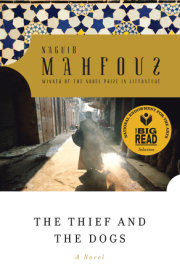

Winner of the Nobel Prize 

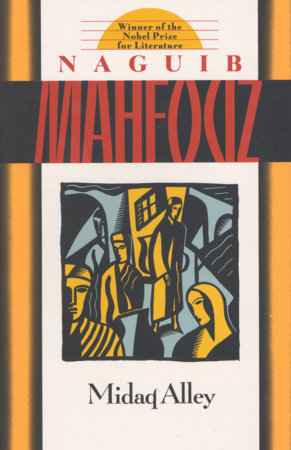
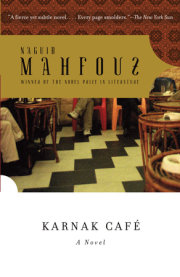
The characters in Naguib Mahfouz’s 1988 Nobel Prize-winning Midaq Alley vividly evoke the sights, sounds and smells of a hustling, teeming back alley of Cairo, Egypt. These people are members of an urban community caught between economic progress and deeply rooted traditions. First published in Arabic in 1947, the novel is a showcase for Mahfouz’s celebrated talent for rich and luxurious storytelling. Long after one finishes reading, the smell of fresh bread lingers, as does the image of the men gathering at the cafe for their nightly ritual.
  • WINNER | 1988
    Nobel Prize
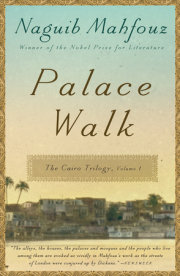
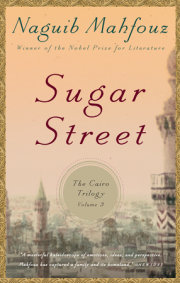
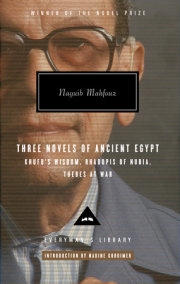
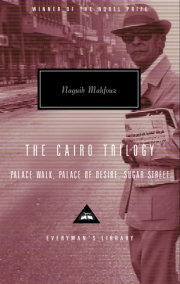
Naguib Mahfouz was born in Cairo in 1911 and began writing when he was seventeen. His nearly forty novels and hundreds of short stories range from re-imaginings of ancient myths to subtle commentaries on contemporary Egyptian politics and culture. Of his many works, the most famous is the Cairo Trilogy, consisting of Palace Walk (1956), Palace of Desire (1957), and Sugar Street (1957), which focuses on a Cairo family through three generations, from 1917 until 1952. In 1988, he was the first writer in Arabic to be awarded the Nobel Prize in Literature. He died in August 2006.  View titles by Naguib Mahfouz
Praise for Naguib Mahfouz:

"The greatest writer in one of the most widely understood languages in the world, a storyteller of the first order in any idiom." —Vanity Fair

"A Dickens of the Cairo cafes." —Newsweek

"The incredible variety of Naguib Mahfouz's writings continue to dazzle our eyes." —The Washington Post

"Naguib Mahfouz virtually invented the novel as an Arab form. He excels at fusing deep emotion and soap opera." —The New York Times Book Review

"Mahfouz's work is freshly nuanced and hauntingly lyrical. The Nobel Prize acknowledges the universal significance of his fiction." —Los Angeles Times Book Review

About

Winner of the Nobel Prize 

The characters in Naguib Mahfouz’s 1988 Nobel Prize-winning Midaq Alley vividly evoke the sights, sounds and smells of a hustling, teeming back alley of Cairo, Egypt. These people are members of an urban community caught between economic progress and deeply rooted traditions. First published in Arabic in 1947, the novel is a showcase for Mahfouz’s celebrated talent for rich and luxurious storytelling. Long after one finishes reading, the smell of fresh bread lingers, as does the image of the men gathering at the cafe for their nightly ritual.

Awards

  • WINNER | 1988
    Nobel Prize

Author

Naguib Mahfouz was born in Cairo in 1911 and began writing when he was seventeen. His nearly forty novels and hundreds of short stories range from re-imaginings of ancient myths to subtle commentaries on contemporary Egyptian politics and culture. Of his many works, the most famous is the Cairo Trilogy, consisting of Palace Walk (1956), Palace of Desire (1957), and Sugar Street (1957), which focuses on a Cairo family through three generations, from 1917 until 1952. In 1988, he was the first writer in Arabic to be awarded the Nobel Prize in Literature. He died in August 2006.  View titles by Naguib Mahfouz

Praise

Praise for Naguib Mahfouz:

"The greatest writer in one of the most widely understood languages in the world, a storyteller of the first order in any idiom." —Vanity Fair

"A Dickens of the Cairo cafes." —Newsweek

"The incredible variety of Naguib Mahfouz's writings continue to dazzle our eyes." —The Washington Post

"Naguib Mahfouz virtually invented the novel as an Arab form. He excels at fusing deep emotion and soap opera." —The New York Times Book Review

"Mahfouz's work is freshly nuanced and hauntingly lyrical. The Nobel Prize acknowledges the universal significance of his fiction." —Los Angeles Times Book Review