
Books for Arab American Heritage Month
In honor of Arab American Heritage Month in April, we are sharing books by Arab and Arab American authors that share their culture, history, and personal lives.


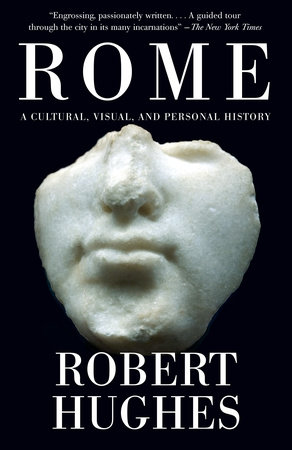
“In his engrossing, passionately written new book, Rome: A Cultural, Visual, and Personal History, Robert Hughes, the former art critic for Time magazine and the author of critically acclaimed works like The Fatal Shore, gives us a guided tour through the city in its many incarnations, excavating the geologic layers of its cultural past and creating an indelible portrait of a city in love with spectacle and power . . . The reader need not agree with Mr. Hughes’s acerbic assessments or even be interested in Rome as a destination on the map to relish this volume, so captivating is his narrative. Although his book is a biography of Rome, it is also an acutely written historical essay informed by his wide-ranging knowledge of art, architecture and classical literature, and a thought-provoking meditation on how gifted artists (like Bernini and Michelangelo) and powerful politicians and church leaders (like Augustus, Mussolini and Pope Sixtus V) can reshape the map and mood of a city. . . . razor-sharp portraits . . . intriguing asides . . . vigorous, pictorial prose.” —Michiko Kakutani, New York Times
“A fascinating personal history of the Italian capital, “Rome” begins with an exegesis on the founding myth of Romulus and Remus and ends with a rant about how the city has lost its “Dolce Vita”-era glory.” —Stephen Heyman, New York Times Magazine blog
“. . . freewheeling, massive, magisterial . . . It’s very much, as billed in the subtitle, a “personal” history—one animated by historical persons and personalities as seen through the personality of the author. . . . our guide conjures up a well-known work of genius and makes it new, moving effortlessly from biography to art to engineering as he illuminates its every detail.” —Will Heinrich, New York Observer
“Ever since Livy dipped his quill and Gibbon marked his proofs, histories of Rome have been a dime a dozen. But there is only one Robert Hughes—only one writer, it’s safe to say, who would describe the ancient city as ‘Calcutta on the Mediterranean’ and then convince you of the rightness of that vision. . . . This is vintage Hughes, and reading his strenuous, argumentative, vitally impassioned prose you are reminded just how insipid, prim, and nervously conventional most history and art history writing is. Hughes could be writing about Lady Gaga’s choice of nail polish or manuals of plumbing and it would still be tonic. In fact, being the kind of writer whose head—even when communing with Michelangelo—is never lost in the stars, he does write about Roman plumbing, and reminds us that the word itself has everything to do with the lead from which its engineering masterpieces were fashioned. So although the ostensible subject of his book is the Eternal City, the real tour d’horizon it offers is a walking tour of the hard-structured, brightly lit, and capacious expanse that is the Hughes brain. It’s an organ that is Olympian—in that it can survey, in a unified vision, the rolling sweep of the centuries—but without any other sort of lofty detachment. . . . [N]o one will put this book down feeling deprived of historical company, for it is essentially history as portrait gallery—almost all of it painted with unforgettable sharpness. . . . Without laboring the point, Hughes catches in this exhilarating, rambunctious book something that has eluded more solemnly exhaustive accounts.” —Simon Schama, Newsweek
“Robert Hughes wastes no time luring readers into his love affair with Rome. . . . Like the Rome of his description, Hughes is driven by appetites and passions. His big books are feasts of information, opinion and fascinating detail—too much to digest but nourishing even in small bites. Rome is one of those. It’s a sweeping, personal history that races from the city’s beginnings to its current state as a woefully crowded tourist attraction. Fortunately, the author pauses for Hughes-style reflection. No ordinary tour guide, he makes the story compelling by focusing on art. With typical bravado, wit and rage, he puts art and architecture in sharp social, political, religious and historical context.” —Suzanne Muchnic, Los Angeles Times
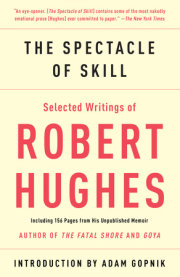
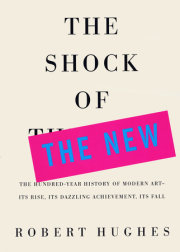
“With elegance and beauty, Hughes majestically conducts us through the rich history of Rome . . . In a delightful guide, Hughes—whose The Shock of the New was recently named by Britain's Guardian one of the 100 greatest nonfiction books of the 20th century—provides a sometimes cantankerous but always captivating tour through the remarkable depth and breadth of the ancient city.” —Publisher’s Weekly (starred)
“In his engrossing, passionately written new book, Rome: A Cultural, Visual, and Personal History, Robert Hughes, the former art critic for Time magazine and the author of critically acclaimed works like The Fatal Shore, gives us a guided tour through the city in its many incarnations, excavating the geologic layers of its cultural past and creating an indelible portrait of a city in love with spectacle and power . . . The reader need not agree with Mr. Hughes’s acerbic assessments or even be interested in Rome as a destination on the map to relish this volume, so captivating is his narrative. Although his book is a biography of Rome, it is also an acutely written historical essay informed by his wide-ranging knowledge of art, architecture and classical literature, and a thought-provoking meditation on how gifted artists (like Bernini and Michelangelo) and powerful politicians and church leaders (like Augustus, Mussolini and Pope Sixtus V) can reshape the map and mood of a city. . . . razor-sharp portraits . . . intriguing asides . . . vigorous, pictorial prose.” —Michiko Kakutani, New York Times
“A fascinating personal history of the Italian capital, “Rome” begins with an exegesis on the founding myth of Romulus and Remus and ends with a rant about how the city has lost its “Dolce Vita”-era glory.” —Stephen Heyman, New York Times Magazine blog
“. . . freewheeling, massive, magisterial . . . It’s very much, as billed in the subtitle, a “personal” history—one animated by historical persons and personalities as seen through the personality of the author. . . . our guide conjures up a well-known work of genius and makes it new, moving effortlessly from biography to art to engineering as he illuminates its every detail.” —Will Heinrich, New York Observer
“Ever since Livy dipped his quill and Gibbon marked his proofs, histories of Rome have been a dime a dozen. But there is only one Robert Hughes—only one writer, it’s safe to say, who would describe the ancient city as ‘Calcutta on the Mediterranean’ and then convince you of the rightness of that vision. . . . This is vintage Hughes, and reading his strenuous, argumentative, vitally impassioned prose you are reminded just how insipid, prim, and nervously conventional most history and art history writing is. Hughes could be writing about Lady Gaga’s choice of nail polish or manuals of plumbing and it would still be tonic. In fact, being the kind of writer whose head—even when communing with Michelangelo—is never lost in the stars, he does write about Roman plumbing, and reminds us that the word itself has everything to do with the lead from which its engineering masterpieces were fashioned. So although the ostensible subject of his book is the Eternal City, the real tour d’horizon it offers is a walking tour of the hard-structured, brightly lit, and capacious expanse that is the Hughes brain. It’s an organ that is Olympian—in that it can survey, in a unified vision, the rolling sweep of the centuries—but without any other sort of lofty detachment. . . . [N]o one will put this book down feeling deprived of historical company, for it is essentially history as portrait gallery—almost all of it painted with unforgettable sharpness. . . . Without laboring the point, Hughes catches in this exhilarating, rambunctious book something that has eluded more solemnly exhaustive accounts.” —Simon Schama, Newsweek
“Robert Hughes wastes no time luring readers into his love affair with Rome. . . . Like the Rome of his description, Hughes is driven by appetites and passions. His big books are feasts of information, opinion and fascinating detail—too much to digest but nourishing even in small bites. Rome is one of those. It’s a sweeping, personal history that races from the city’s beginnings to its current state as a woefully crowded tourist attraction. Fortunately, the author pauses for Hughes-style reflection. No ordinary tour guide, he makes the story compelling by focusing on art. With typical bravado, wit and rage, he puts art and architecture in sharp social, political, religious and historical context.” —Suzanne Muchnic, Los Angeles Times
“With elegance and beauty, Hughes majestically conducts us through the rich history of Rome . . . In a delightful guide, Hughes—whose The Shock of the New was recently named by Britain's Guardian one of the 100 greatest nonfiction books of the 20th century—provides a sometimes cantankerous but always captivating tour through the remarkable depth and breadth of the ancient city.” —Publisher’s Weekly (starred)
In honor of Arab American Heritage Month in April, we are sharing books by Arab and Arab American authors that share their culture, history, and personal lives.
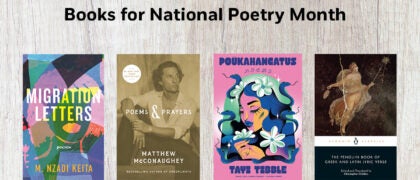
For National Poetry Month in April, we are sharing poetry collections and books about poetry by authors who have their own stories to tell. These poets delve into history, reimagine the present, examine poetry itself—from traditional poems many know and love to poems and voices that are new and original.