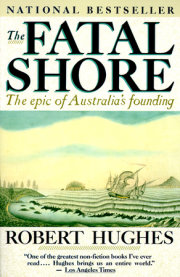
The Fatal Shore

The epic of Australia's founding

Look inside
Winner of the Duff Cooper Prize

The history of the birth of Australia which came out of the suffereing and brutality of England’s infamous convict transportation system. With 16 pages of illustrations and 3 maps.

"A brilliant and enduring achievement...history of the highest order combining thorough research with vivid narrative and thoughtful assessment." —Arthur M. Schlesinger

"A magnificent history, with a richness of detail that is as mesmerizing as it is horrifying." —The Washington Post Book World
  • WINNER | 1987
    Duff Cooper Prize
© Joyce Ravid
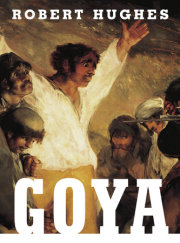
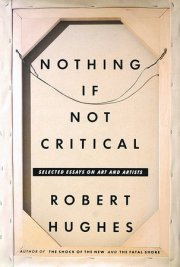
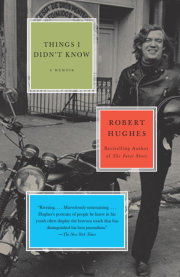
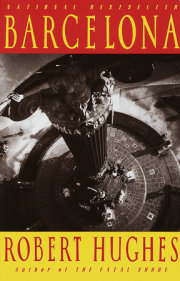
Robert Hughes was born in Australia in 1938. In 1970 he moved to the United States to become chief art critic for Time, a position he held until 2001. His books include The Shock of the New,
The Fatal Shore, Nothing if Not Critical, The Culture of Complaint, Barcelona, Goya, Things I Didn’t Know, and Rome. He is a New York Public Library Literary Lion, and was the recipient of a number of literary awards and prizes, including two Frank Jewett-Mather Awards. He is widely held as the most respected art critic of our time. View titles by Robert Hughes
"One of the greatest non-fiction books I’ve ever read . . . Hughes brings us an entire world." —Los Angeles Times

"A great achievement: Hughes has a story to tell as vivid, large-scale, and appalling as anything by Dickens or Solzhenitsyn, but one that’s virtually unknown—until the writing of this splendid book." —Susan Sontag

"Engrossing . . . richly peopled with bizarre and compelling characters." —The New York Times Book Review

"A magnificent history, with a richness of detail that is as mesmerizing as it is horrifying. . . . It is both passionate and compassionate." —The Washington Post Book World

"Splendid . . . Robert Hughes combines the narrative skills of the authors of Mutiny on the Bounty with the sharp eye of de Tocqueville." —Gorde Vidal

"A brilliant and enduring achievement . . . history of the highest order combining thorough research with vivid narrative and thoughtful assessment." —Arthur M. Schlesinger

About

Winner of the Duff Cooper Prize

The history of the birth of Australia which came out of the suffereing and brutality of England’s infamous convict transportation system. With 16 pages of illustrations and 3 maps.

"A brilliant and enduring achievement...history of the highest order combining thorough research with vivid narrative and thoughtful assessment." —Arthur M. Schlesinger

"A magnificent history, with a richness of detail that is as mesmerizing as it is horrifying." —The Washington Post Book World

Awards

  • WINNER | 1987
    Duff Cooper Prize

Author

© Joyce Ravid
Robert Hughes was born in Australia in 1938. In 1970 he moved to the United States to become chief art critic for Time, a position he held until 2001. His books include The Shock of the New,
The Fatal Shore, Nothing if Not Critical, The Culture of Complaint, Barcelona, Goya, Things I Didn’t Know, and Rome. He is a New York Public Library Literary Lion, and was the recipient of a number of literary awards and prizes, including two Frank Jewett-Mather Awards. He is widely held as the most respected art critic of our time. View titles by Robert Hughes

Praise

"One of the greatest non-fiction books I’ve ever read . . . Hughes brings us an entire world." —Los Angeles Times

"A great achievement: Hughes has a story to tell as vivid, large-scale, and appalling as anything by Dickens or Solzhenitsyn, but one that’s virtually unknown—until the writing of this splendid book." —Susan Sontag

"Engrossing . . . richly peopled with bizarre and compelling characters." —The New York Times Book Review

"A magnificent history, with a richness of detail that is as mesmerizing as it is horrifying. . . . It is both passionate and compassionate." —The Washington Post Book World

"Splendid . . . Robert Hughes combines the narrative skills of the authors of Mutiny on the Bounty with the sharp eye of de Tocqueville." —Gorde Vidal

"A brilliant and enduring achievement . . . history of the highest order combining thorough research with vivid narrative and thoughtful assessment." —Arthur M. Schlesinger