
Books for Arab American Heritage Month
In honor of Arab American Heritage Month in April, we are sharing books by Arab and Arab American authors that share their culture, history, and personal lives.


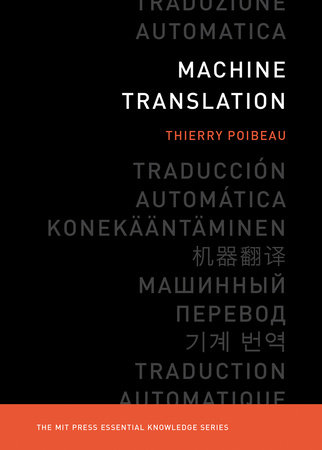
The dream of a universal translation device goes back many decades, long before Douglas Adams's fictional Babel fish provided this service in The Hitchhiker's Guide to the Galaxy. Since the advent of computers, research has focused on the design of digital machine translation tools—computer programs capable of automatically translating a text from a source language to a target language. This has become one of the most fundamental tasks of artificial intelligence. This volume in the MIT Press Essential Knowledge series offers a concise, nontechnical overview of the development of machine translation, including the different approaches, evaluation issues, and market potential. The main approaches are presented from a largely historical perspective and in an intuitive manner, allowing the reader to understand the main principles without knowing the mathematical details.
The book begins by discussing problems that must be solved during the development of a machine translation system and offering a brief overview of the evolution of the field. It then takes up the history of machine translation in more detail, describing its pre-digital beginnings, rule-based approaches, the 1966 ALPAC (Automatic Language Processing Advisory Committee) report and its consequences, the advent of parallel corpora, the example-based paradigm, the statistical paradigm, the segment-based approach, the introduction of more linguistic knowledge into the systems, and the latest approaches based on deep learning. Finally, it considers evaluation challenges and the commercial status of the field, including activities by such major players as Google and Systran.
The dream of a universal translation device goes back many decades, long before Douglas Adams's fictional Babel fish provided this service in The Hitchhiker's Guide to the Galaxy. Since the advent of computers, research has focused on the design of digital machine translation tools—computer programs capable of automatically translating a text from a source language to a target language. This has become one of the most fundamental tasks of artificial intelligence. This volume in the MIT Press Essential Knowledge series offers a concise, nontechnical overview of the development of machine translation, including the different approaches, evaluation issues, and market potential. The main approaches are presented from a largely historical perspective and in an intuitive manner, allowing the reader to understand the main principles without knowing the mathematical details.
The book begins by discussing problems that must be solved during the development of a machine translation system and offering a brief overview of the evolution of the field. It then takes up the history of machine translation in more detail, describing its pre-digital beginnings, rule-based approaches, the 1966 ALPAC (Automatic Language Processing Advisory Committee) report and its consequences, the advent of parallel corpora, the example-based paradigm, the statistical paradigm, the segment-based approach, the introduction of more linguistic knowledge into the systems, and the latest approaches based on deep learning. Finally, it considers evaluation challenges and the commercial status of the field, including activities by such major players as Google and Systran.











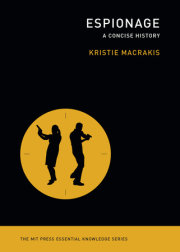


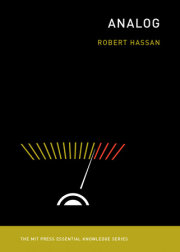
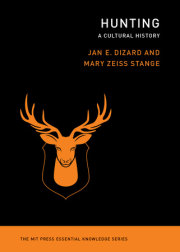


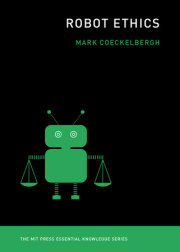




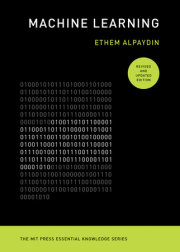

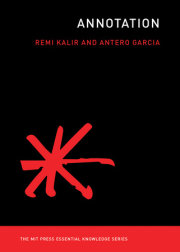
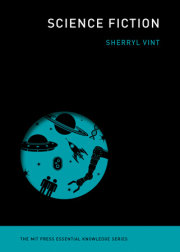
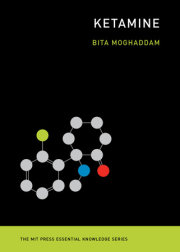













In honor of Arab American Heritage Month in April, we are sharing books by Arab and Arab American authors that share their culture, history, and personal lives.
For National Poetry Month in April, we are sharing poetry collections and books about poetry by authors who have their own stories to tell. These poets delve into history, reimagine the present, examine poetry itself—from traditional poems many know and love to poems and voices that are new and original.
/