Books for Arab American Heritage Month
In honor of Arab American Heritage Month in April, we are sharing books by Arab and Arab American authors that share their culture, history, and personal lives.
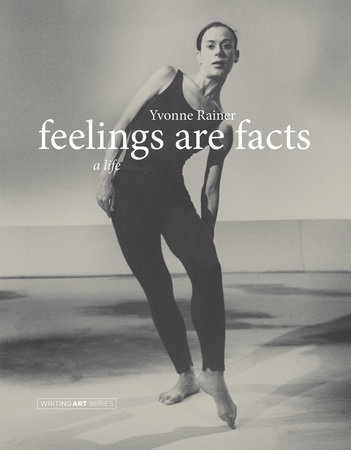
If you're interested in Plato, you're reading the wrong book. If you're interested in difficult childhoods, sexual misadventures, aesthetics, cultural history, and the reasons that a club sandwich and other meals—including breakfast—have remained in the memory of the present writer, keep reading.
—from Feelings Are Facts
In this memoir, dancer, choreographer, and filmmaker Yvonne Rainer traces her personal and artistic coming of age. Feelings Are Facts (the title comes from a dictum by Rainer's one-time psychotherapist) uses diary entries, letters, program notes, excerpts from film scripts, snapshots, and film-frame enlargements to present a vivid portrait of an extraordinary artist and woman in postwar America.
Rainer tells of a California childhood in which she was farmed out by her parents to foster families and orphanages, of sexual and intellectual initiations in San Francisco and Berkeley, and of artistic discoveries and accomplishments in the New York City dance world. Rainer studied with Martha Graham and Merce Cunningham in the late 1950s and early 1960s, cofounded the Judson Dance Theater in 1962, hobnobbed with New York artists including Robert Rauschenberg, Robert Morris (her lover and partner for several years), and Yoko Ono, and became involved with feminist and antiwar causes in the 1970s and 1980s. Rainer writes about how she constructed her dances—including The Mind Is a Muscle and its famous section, Trio A, as well as the recent After Many a Summer Dies the Swan—and about turning from dance to film and back to dance. And she writes about meeting her longtime partner Martha Gever and discovering the pleasures of domestic life.

Particularly fascinating are her descriptions of her intentions in creating certain dances and the struggle between directing dancers and allowing improvisation to color the work. The explorations of the Judson crew, including Rainer, continue to influence contemporary dance, and Rainer's chronicle of her journey as an artist is a winning addition to the literature about this groundbreaking era.
—Publishers Weekly—If you're interested in Plato, you're reading the wrong book. If you're interested in difficult childhoods, sexual misadventures, aesthetics, cultural history, and the reasons that a club sandwich and other meals—including breakfast—have remained in the memory of the present writer, keep reading.
—from Feelings Are Facts
In this memoir, dancer, choreographer, and filmmaker Yvonne Rainer traces her personal and artistic coming of age. Feelings Are Facts (the title comes from a dictum by Rainer's one-time psychotherapist) uses diary entries, letters, program notes, excerpts from film scripts, snapshots, and film-frame enlargements to present a vivid portrait of an extraordinary artist and woman in postwar America.
Rainer tells of a California childhood in which she was farmed out by her parents to foster families and orphanages, of sexual and intellectual initiations in San Francisco and Berkeley, and of artistic discoveries and accomplishments in the New York City dance world. Rainer studied with Martha Graham and Merce Cunningham in the late 1950s and early 1960s, cofounded the Judson Dance Theater in 1962, hobnobbed with New York artists including Robert Rauschenberg, Robert Morris (her lover and partner for several years), and Yoko Ono, and became involved with feminist and antiwar causes in the 1970s and 1980s. Rainer writes about how she constructed her dances—including The Mind Is a Muscle and its famous section, Trio A, as well as the recent After Many a Summer Dies the Swan—and about turning from dance to film and back to dance. And she writes about meeting her longtime partner Martha Gever and discovering the pleasures of domestic life.
Particularly fascinating are her descriptions of her intentions in creating certain dances and the struggle between directing dancers and allowing improvisation to color the work. The explorations of the Judson crew, including Rainer, continue to influence contemporary dance, and Rainer's chronicle of her journey as an artist is a winning addition to the literature about this groundbreaking era.
—Publishers Weekly—In honor of Arab American Heritage Month in April, we are sharing books by Arab and Arab American authors that share their culture, history, and personal lives.
For National Poetry Month in April, we are sharing poetry collections and books about poetry by authors who have their own stories to tell. These poets delve into history, reimagine the present, examine poetry itself—from traditional poems many know and love to poems and voices that are new and original.