
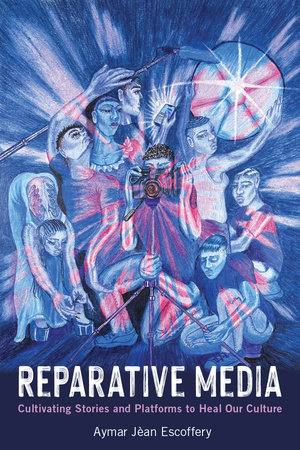




Reparative Media

Cultivating Stories and Platforms to Heal Our Culture

Ebook
On sale Dec 16, 2025 | 312 Pages | 9780262384643

See Additional Formats
How to repair our culture by reimagining how we make media and use technology to connect with one another.

Can producing stories and developing platforms to support people who have been harmed by multiple, intersecting systems heal those systems? In Reparative Media, Aymar Jèan Escoffery argues that this is exactly how we repair our culture and heal harms from racism, sexism, classism, homophobia, transphobia, ableism, and religious discrimination: by reconsidering how we make media, how we connect through technology, and how we generate knowledge.

Based on five years of deep, complex work cocreating an independent alternative to platforms like Netflix and YouTube, the author reveals the process behind developing OTV | Open Television to stream stories by diverse creators. The book shows that planting seeds for a more community-based media and tech ecosystem can also reform corporate systems better than so-called diversity, equity, and inclusion (DEI) programs, as the platform helped elevate creators on social media and in Hollywood at companies like HBO, Netflix, and more. Combining theory and practice, local production and global distribution, Chicago and Hollywood, the book paints a portrait of what a healing media ecosystem looks like—and shows how communal ways of knowing can cultivate reparative media, technology, and research that benefit everyone no matter how they identify.
Aymar Jèan Escoffery is the Margaret Walker Professor of Communication Studies and Director of the Media and Data Equity (MADE) Lab at Northwestern University. He is the author of Open TV, cofounder of the Emmy- and Webby-nominated platform OTV | Open Television, co–executive producer of Jules Rosskam’s Sundance Award-winning Desire Lines, juror for the Peabody Awards, and affiliate of the Berkman Klein Center for Internet and Society at Harvard University.

About

How to repair our culture by reimagining how we make media and use technology to connect with one another.

Can producing stories and developing platforms to support people who have been harmed by multiple, intersecting systems heal those systems? In Reparative Media, Aymar Jèan Escoffery argues that this is exactly how we repair our culture and heal harms from racism, sexism, classism, homophobia, transphobia, ableism, and religious discrimination: by reconsidering how we make media, how we connect through technology, and how we generate knowledge.

Based on five years of deep, complex work cocreating an independent alternative to platforms like Netflix and YouTube, the author reveals the process behind developing OTV | Open Television to stream stories by diverse creators. The book shows that planting seeds for a more community-based media and tech ecosystem can also reform corporate systems better than so-called diversity, equity, and inclusion (DEI) programs, as the platform helped elevate creators on social media and in Hollywood at companies like HBO, Netflix, and more. Combining theory and practice, local production and global distribution, Chicago and Hollywood, the book paints a portrait of what a healing media ecosystem looks like—and shows how communal ways of knowing can cultivate reparative media, technology, and research that benefit everyone no matter how they identify.

Author

Aymar Jèan Escoffery is the Margaret Walker Professor of Communication Studies and Director of the Media and Data Equity (MADE) Lab at Northwestern University. He is the author of Open TV, cofounder of the Emmy- and Webby-nominated platform OTV | Open Television, co–executive producer of Jules Rosskam’s Sundance Award-winning Desire Lines, juror for the Peabody Awards, and affiliate of the Berkman Klein Center for Internet and Society at Harvard University.