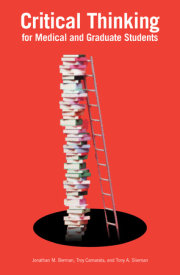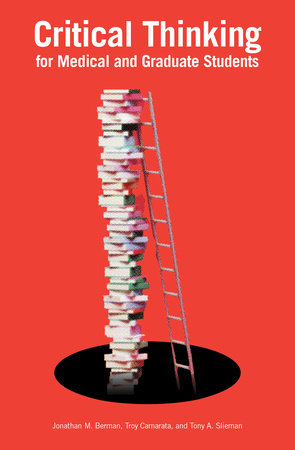

The definitive handbook on critical thinking for medical and graduate students in biomedical sciences.

First-year medical and graduate students in biomedical sciences face a variety of challenges in learning to study, feeling as though they belong, and learning to adopt the intellectual habits of their chosen profession. Crucial to their success in this key career period is learning critical thinking, which involves slowing down, as well as considering causality, epistemology, ethics, and one’s own cognitive biases. This book addresses these challenges by teaching evidence-based study habits, “the hidden curriculum,” and how to think about complex topics in biomedicine, especially for underrepresented students.

With a wealth of practical examples and case studies, this accessibly written book presents complex topics from a variety of fields such as philosophy and logic in a digestible format for the target audience.
Introduction
1 How Do We Know What’s True?
2 The Social Dimension of Science
3 Bias: Lies You Tell Yourself
4 Unraveling Reason: Logic, Logical Fallacies, and Rhetorical Fallacies
5 Cultivating Competence: Expertise, Self-Assessment, and Professionalism
6 Thinking with Numbers 1: Probability
7 From Curious to Hypothesis
8 Thinking with Numbers 2: Statistics
9 Science/Conscience: Ethics in Science and Medicine
10 Dangerous Deviations: Medical and Scientific Misconduct
11 The Science of Deception: Pseudoscience and “Alternative” Medicine
12 Reading the Literature
13 Hidden Curriculum
14 How to Write Scientifically
15 A Blueprint for Learning: How to Prepare for Class, Bloom’s Taxonomy, and Learning Objectives
16 Test Talk: How Exams Work
17 Academic Toolbox: Study Strategies, Time Management, and Group Dynamics
18 The Art of Information Juggling
19 Grow Through Feedback: Evaluative Judgment
Conclusion
Jonathan M. Berman is Assistant Professor in the Department of Biomedical and Anatomical Sciences at NYITCOM–Arkansas. He served as national cochair of the 2017 March for Science and is the author of Anti-vaxxers (MIT Press).

Troy Camarata is Associate Professor and Founding Faculty, Baptist University College of Osteopathic Medicine. His passion for developmental biology has evolved into a love for student learning.

Tony A. Slieman is Director of Academic Affairs and Associate Professor of Biomedical and Anatomical Sciences at NYITCOM–Arkansas. He has been an educator for over 25 years.

About

The definitive handbook on critical thinking for medical and graduate students in biomedical sciences.

First-year medical and graduate students in biomedical sciences face a variety of challenges in learning to study, feeling as though they belong, and learning to adopt the intellectual habits of their chosen profession. Crucial to their success in this key career period is learning critical thinking, which involves slowing down, as well as considering causality, epistemology, ethics, and one’s own cognitive biases. This book addresses these challenges by teaching evidence-based study habits, “the hidden curriculum,” and how to think about complex topics in biomedicine, especially for underrepresented students.

With a wealth of practical examples and case studies, this accessibly written book presents complex topics from a variety of fields such as philosophy and logic in a digestible format for the target audience.

Table of Contents

Introduction
1 How Do We Know What’s True?
2 The Social Dimension of Science
3 Bias: Lies You Tell Yourself
4 Unraveling Reason: Logic, Logical Fallacies, and Rhetorical Fallacies
5 Cultivating Competence: Expertise, Self-Assessment, and Professionalism
6 Thinking with Numbers 1: Probability
7 From Curious to Hypothesis
8 Thinking with Numbers 2: Statistics
9 Science/Conscience: Ethics in Science and Medicine
10 Dangerous Deviations: Medical and Scientific Misconduct
11 The Science of Deception: Pseudoscience and “Alternative” Medicine
12 Reading the Literature
13 Hidden Curriculum
14 How to Write Scientifically
15 A Blueprint for Learning: How to Prepare for Class, Bloom’s Taxonomy, and Learning Objectives
16 Test Talk: How Exams Work
17 Academic Toolbox: Study Strategies, Time Management, and Group Dynamics
18 The Art of Information Juggling
19 Grow Through Feedback: Evaluative Judgment
Conclusion

Author

Jonathan M. Berman is Assistant Professor in the Department of Biomedical and Anatomical Sciences at NYITCOM–Arkansas. He served as national cochair of the 2017 March for Science and is the author of Anti-vaxxers (MIT Press).

Troy Camarata is Associate Professor and Founding Faculty, Baptist University College of Osteopathic Medicine. His passion for developmental biology has evolved into a love for student learning.

Tony A. Slieman is Director of Academic Affairs and Associate Professor of Biomedical and Anatomical Sciences at NYITCOM–Arkansas. He has been an educator for over 25 years.