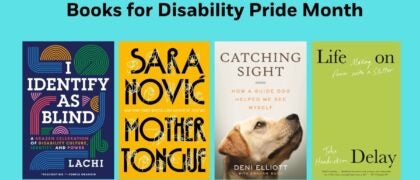
Books for Jewish American Heritage Month
In celebration of Jewish American Heritage Month in May, we are sharing books by authors who share their individual stories, experiences, and lives. Find our full collection of books here.
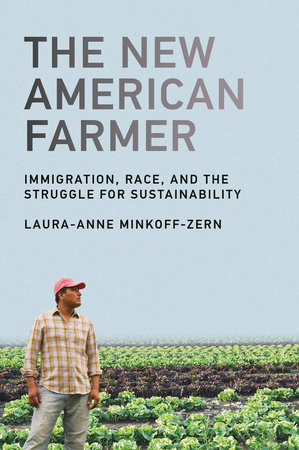
Although the majority of farms in the United States have US-born owners who identify as white, a growing number of new farmers are immigrants, many of them from Mexico, who originally came to the United States looking for work in agriculture. In The New American Farmer, Laura-Anne Minkoff-Zern explores the experiences of Latino/a immigrant farmers as they transition from farmworkers to farm owners, offering a new perspective on racial inequity and sustainable farming. She finds that many of these new farmers rely on farming practices from their home countries—including growing multiple crops simultaneously, using integrated pest management, maintaining small-scale production, and employing family labor—most of which are considered alternative farming techniques in the United States.
Drawing on extensive interviews with farmers and organizers, Minkoff-Zern describes the social, economic, and political barriers immigrant farmers must overcome, from navigating USDA bureaucracy to racialized exclusion from opportunities. She discusses, among other topics, the history of discrimination against farm laborers in the United States; the invisibility of Latino/a farmers to government and universities; new farmers' sense of agrarian and racial identity; and the future of the agrarian class system.
Minkoff-Zern argues that immigrant farmers, with their knowledge and experience of alternative farming practices, are—despite a range of challenges—actively and substantially contributing to the movement for an ecological and sustainable food system. Scholars and food activists should take notice.

Although the majority of farms in the United States have US-born owners who identify as white, a growing number of new farmers are immigrants, many of them from Mexico, who originally came to the United States looking for work in agriculture. In The New American Farmer, Laura-Anne Minkoff-Zern explores the experiences of Latino/a immigrant farmers as they transition from farmworkers to farm owners, offering a new perspective on racial inequity and sustainable farming. She finds that many of these new farmers rely on farming practices from their home countries—including growing multiple crops simultaneously, using integrated pest management, maintaining small-scale production, and employing family labor—most of which are considered alternative farming techniques in the United States.
Drawing on extensive interviews with farmers and organizers, Minkoff-Zern describes the social, economic, and political barriers immigrant farmers must overcome, from navigating USDA bureaucracy to racialized exclusion from opportunities. She discusses, among other topics, the history of discrimination against farm laborers in the United States; the invisibility of Latino/a farmers to government and universities; new farmers' sense of agrarian and racial identity; and the future of the agrarian class system.
Minkoff-Zern argues that immigrant farmers, with their knowledge and experience of alternative farming practices, are—despite a range of challenges—actively and substantially contributing to the movement for an ecological and sustainable food system. Scholars and food activists should take notice.
In celebration of Jewish American Heritage Month in May, we are sharing books by authors who share their individual stories, experiences, and lives. Find our full collection of books here.
For Mental Health Awareness Month in May, we are sharing books to educate and raise awareness about mental health and the various factors that may affect it, and to provide tools and resources for student wellness. Find our full collection of titles here.
Each May, we honor the stories, histories, and cultures of Asian Americans, Native Hawaiians, and Pacific Islanders. Below is a selection of acclaimed fiction and nonfiction books by AANHPI creators to share with your students this month and throughout the year. Find our full collection of titles for Higher Education here.