Books for Jewish American Heritage Month
In celebration of Jewish American Heritage Month in May, we are sharing books by authors who share their individual stories, experiences, and lives. Find our full collection of books here.
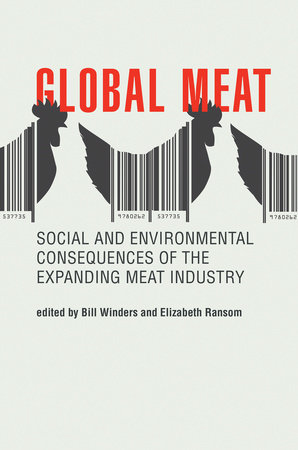
Global meat production and consumption have risen sharply and steadily over the past five decades, with per capita meat consumption almost doubling since 1960. The expanding global meat industry, meanwhile, driven by new trade policies and fueled by government subsidies, is dominated by just a few corporate giants. Industrial farming—the intensive production of animals and fish—has spread across the globe. Millions of acres of land are now used for pastures, feed crops, and animal waste reservoirs. Drawing on concrete examples, the contributors to Global Meat explore the implications of the rise of a global meat industry for a range of social and environmental issues, including climate change, clean water supplies, hunger, workers' rights, and the treatment of animals.
Three themes emerge from their discussions: the role of government and corporations in shaping the structure of the global meat industry; the paradox of simultaneous rising meat production and greater food insecurity; and the industry's contribution to social and environmental injustice. Contributors address such specific topics as the dramatic increase in pork production and consumption in China; land management by small-scale cattle farmers in the Amazon; the effect on the climate of rising greenhouse gas emissions from cattle raised for meat; and the tensions between economic development and animal welfare.
Contributors
Conner Bailey, Robert M. Chiles, Celize Christy, Riva C. H. Denny, Carrie Freshour, Philip H. Howard, Elizabeth Ransom, Tom Rudel, Mindi Schneider, Nhuong Tran, Bill Winders

Global meat production and consumption have risen sharply and steadily over the past five decades, with per capita meat consumption almost doubling since 1960. The expanding global meat industry, meanwhile, driven by new trade policies and fueled by government subsidies, is dominated by just a few corporate giants. Industrial farming—the intensive production of animals and fish—has spread across the globe. Millions of acres of land are now used for pastures, feed crops, and animal waste reservoirs. Drawing on concrete examples, the contributors to Global Meat explore the implications of the rise of a global meat industry for a range of social and environmental issues, including climate change, clean water supplies, hunger, workers' rights, and the treatment of animals.
Three themes emerge from their discussions: the role of government and corporations in shaping the structure of the global meat industry; the paradox of simultaneous rising meat production and greater food insecurity; and the industry's contribution to social and environmental injustice. Contributors address such specific topics as the dramatic increase in pork production and consumption in China; land management by small-scale cattle farmers in the Amazon; the effect on the climate of rising greenhouse gas emissions from cattle raised for meat; and the tensions between economic development and animal welfare.
Contributors
Conner Bailey, Robert M. Chiles, Celize Christy, Riva C. H. Denny, Carrie Freshour, Philip H. Howard, Elizabeth Ransom, Tom Rudel, Mindi Schneider, Nhuong Tran, Bill Winders
In celebration of Jewish American Heritage Month in May, we are sharing books by authors who share their individual stories, experiences, and lives. Find our full collection of books here.
For Mental Health Awareness Month in May, we are sharing books to educate and raise awareness about mental health and the various factors that may affect it, and to provide tools and resources for student wellness. Find our full collection of titles here.
Each May, we honor the stories, histories, and cultures of Asian Americans, Native Hawaiians, and Pacific Islanders. Below is a selection of acclaimed fiction and nonfiction books by AANHPI creators to share with your students this month and throughout the year. Find our full collection of titles for Higher Education here.