


















Books for Jewish American Heritage Month
In celebration of Jewish American Heritage Month in May, we are sharing books by authors who share their individual stories, experiences, and lives. Find our full collection of books here.
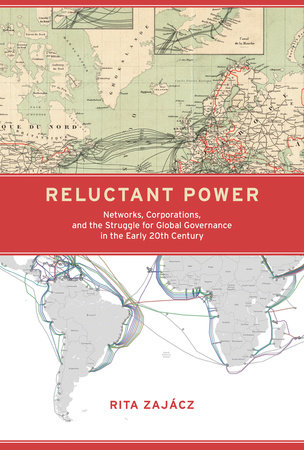
In Reluctant Power, Rita Zajácz examines how early twentieth century American policymakers sought to gain control over radiotelegraphy networks in an effort to advance the global position of the United States. Doing so, she develops an analytical framework for understanding the struggle for network control that can be applied not only to American attempts to establish a global radio network in the early twentieth century but also to current US efforts to retain control of the internet.
In the late nineteenth century, Britain was seen to control both the high seas and the global cable communication network under the sea. By the turn of the twentieth century, Britain's geopolitical rivals, including the United States, looked to radiotelegraphy that could circumvent Britain's dominance. Zajácz traces policymakers' attempts to grapple with both a new technology—radiotelegraphy—and a new corporate form: the multinational corporation, which managed the network and acted as a crucial intermediary. She argues that both foreign policy and domestic radio legislation were shaped by the desire to harness radiotelegraphy for geopolitical purposes and reveals how communication policy and aspects of the American legal system adjusted to the demands of a rising power. The United States was a reluctant power during the early twentieth century, because policymakers were unsure that companies headquartered in the United States were sufficiently American and doubted that their strategies served the national interest.
In Reluctant Power, Rita Zajácz examines how early twentieth century American policymakers sought to gain control over radiotelegraphy networks in an effort to advance the global position of the United States. Doing so, she develops an analytical framework for understanding the struggle for network control that can be applied not only to American attempts to establish a global radio network in the early twentieth century but also to current US efforts to retain control of the internet.
In the late nineteenth century, Britain was seen to control both the high seas and the global cable communication network under the sea. By the turn of the twentieth century, Britain's geopolitical rivals, including the United States, looked to radiotelegraphy that could circumvent Britain's dominance. Zajácz traces policymakers' attempts to grapple with both a new technology—radiotelegraphy—and a new corporate form: the multinational corporation, which managed the network and acted as a crucial intermediary. She argues that both foreign policy and domestic radio legislation were shaped by the desire to harness radiotelegraphy for geopolitical purposes and reveals how communication policy and aspects of the American legal system adjusted to the demands of a rising power. The United States was a reluctant power during the early twentieth century, because policymakers were unsure that companies headquartered in the United States were sufficiently American and doubted that their strategies served the national interest.
In celebration of Jewish American Heritage Month in May, we are sharing books by authors who share their individual stories, experiences, and lives. Find our full collection of books here.
For Mental Health Awareness Month in May, we are sharing books to educate and raise awareness about mental health and the various factors that may affect it, and to provide tools and resources for student wellness. Find our full collection of titles here.
Each May, we honor the stories, histories, and cultures of Asian Americans, Native Hawaiians, and Pacific Islanders. Below is a selection of acclaimed fiction and nonfiction books by AANHPI creators to share with your students this month and throughout the year. Find our full collection of titles for Higher Education here.