Books for Jewish American Heritage Month
In celebration of Jewish American Heritage Month in May, we are sharing books by authors who share their individual stories, experiences, and lives. Find our full collection of books here.


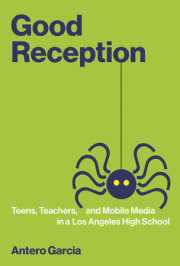
Schools and school districts have one approach to innovation: buy more technology. In Good Reception, Antero Garcia describes what happens when educators build on the ways students already use technology outside of school to help them learn in the classroom. As a teacher in a public high school in South Central Los Angeles, Garcia watched his students' nearly universal adoption of mobile devices. Whether recent immigrants from Central America or teens who had spent their entire lives in Los Angeles, the majority of his students relied on mobile devices to connect with family and friends and to keep up with complex social networks. Garcia determined to discover how these devices and student predilection for gameplay, combined with an evolving “culture of participation,” could be used in the classroom.
Garcia charts a year in the life of his ninth-grade English class, first surveying mobile media use on campus and then documenting a year-long experiment in creating a “wireless critical pedagogy” by incorporating mobile media and games in classroom work. He describes the design and implementation of “Ask Anansi,” an alternate reality game that allows students to conduct inquiry-based research around questions that interest them (including “Why is the food at South Central High School so bad?”). Garcia cautions that the transformative effect on education depends not on the glorification of devices but on teacher support and a trusting teacher-student relationship.
Schools and school districts have one approach to innovation: buy more technology. In Good Reception, Antero Garcia describes what happens when educators build on the ways students already use technology outside of school to help them learn in the classroom. As a teacher in a public high school in South Central Los Angeles, Garcia watched his students' nearly universal adoption of mobile devices. Whether recent immigrants from Central America or teens who had spent their entire lives in Los Angeles, the majority of his students relied on mobile devices to connect with family and friends and to keep up with complex social networks. Garcia determined to discover how these devices and student predilection for gameplay, combined with an evolving “culture of participation,” could be used in the classroom.
Garcia charts a year in the life of his ninth-grade English class, first surveying mobile media use on campus and then documenting a year-long experiment in creating a “wireless critical pedagogy” by incorporating mobile media and games in classroom work. He describes the design and implementation of “Ask Anansi,” an alternate reality game that allows students to conduct inquiry-based research around questions that interest them (including “Why is the food at South Central High School so bad?”). Garcia cautions that the transformative effect on education depends not on the glorification of devices but on teacher support and a trusting teacher-student relationship.
In celebration of Jewish American Heritage Month in May, we are sharing books by authors who share their individual stories, experiences, and lives. Find our full collection of books here.
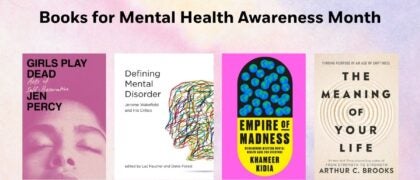
For Mental Health Awareness Month in May, we are sharing books to educate and raise awareness about mental health and the various factors that may affect it, and to provide tools and resources for student wellness. Find our full collection of titles here.
Each May, we honor the stories, histories, and cultures of Asian Americans, Native Hawaiians, and Pacific Islanders. Below is a selection of acclaimed fiction and nonfiction books by AANHPI creators to share with your students this month and throughout the year. Find our full collection of titles for Higher Education here.