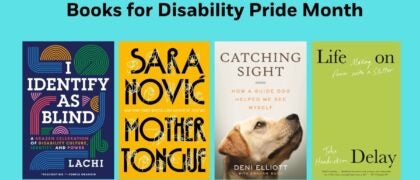
Books for Arab American Heritage Month
In honor of Arab American Heritage Month in April, we are sharing books by Arab and Arab American authors that share their culture, history, and personal lives.
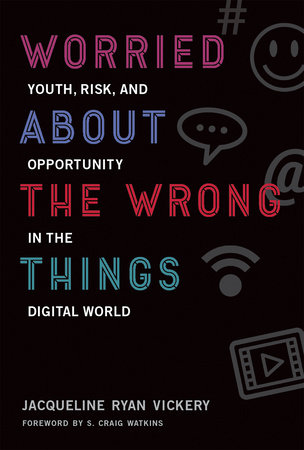
It's a familiar narrative in both real life and fiction, from news reports to television storylines: a young person is bullied online, or targeted by an online predator, or exposed to sexually explicit content. The consequences are bleak; the young person is shunned, suicidal, psychologically ruined. In this book, Jacqueline Ryan Vickery argues that there are other urgent concerns about young people's online experiences besides porn, predators, and peers. We need to turn our attention to inequitable opportunities for participation in a digital culture. Technical and material obstacles prevent low-income and other marginalized young people from the positive, community-building, and creative experiences that are possible online.
Vickery explains that cautionary tales about online risk have shaped the way we think about technology and youth. She analyzes the discourses of risk in popular culture, journalism, and policy, and finds that harm-driven expectations, based on a privileged perception of risk, enact control over technology. Opportunity-driven expectations, on the other hand, based on evidence and lived experience, produce discourses that acknowledge the practices and agency of young people rather than seeing them as passive victims who need to be protected.
Vickery first addresses how the discourses of risk regulate and control technology, then turns to the online practices of youth at a low-income, minority-majority Texas high school. She considers the participation gap and the need for schools to teach digital literacies, privacy, and different online learning ecologies. Finally, she shows that opportunity-driven expectations can guide young people's online experiences in ways that balance protection and agency.

It's a familiar narrative in both real life and fiction, from news reports to television storylines: a young person is bullied online, or targeted by an online predator, or exposed to sexually explicit content. The consequences are bleak; the young person is shunned, suicidal, psychologically ruined. In this book, Jacqueline Ryan Vickery argues that there are other urgent concerns about young people's online experiences besides porn, predators, and peers. We need to turn our attention to inequitable opportunities for participation in a digital culture. Technical and material obstacles prevent low-income and other marginalized young people from the positive, community-building, and creative experiences that are possible online.
Vickery explains that cautionary tales about online risk have shaped the way we think about technology and youth. She analyzes the discourses of risk in popular culture, journalism, and policy, and finds that harm-driven expectations, based on a privileged perception of risk, enact control over technology. Opportunity-driven expectations, on the other hand, based on evidence and lived experience, produce discourses that acknowledge the practices and agency of young people rather than seeing them as passive victims who need to be protected.
Vickery first addresses how the discourses of risk regulate and control technology, then turns to the online practices of youth at a low-income, minority-majority Texas high school. She considers the participation gap and the need for schools to teach digital literacies, privacy, and different online learning ecologies. Finally, she shows that opportunity-driven expectations can guide young people's online experiences in ways that balance protection and agency.
In honor of Arab American Heritage Month in April, we are sharing books by Arab and Arab American authors that share their culture, history, and personal lives.
For National Poetry Month in April, we are sharing poetry collections and books about poetry by authors who have their own stories to tell. These poets delve into history, reimagine the present, examine poetry itself—from traditional poems many know and love to poems and voices that are new and original.