
Books for Jewish American Heritage Month
In celebration of Jewish American Heritage Month in May, we are sharing books by authors who share their individual stories, experiences, and lives. Find our full collection of books here.


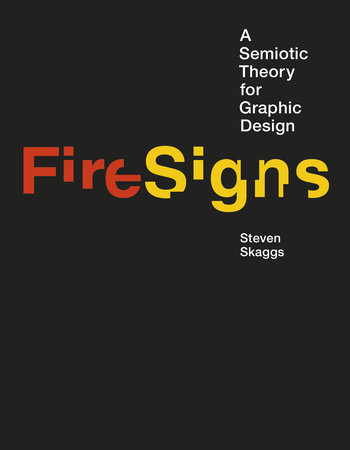
Graphic design has been an academic discipline since the post-World War II era, but it has yet to develop a coherent theoretical foundation. Instead, it proceeds through styles, genres, and imitation, drawing on sources that range from the Bauhaus to deconstructionism. In FireSigns, Steven Skaggs offers the foundation for a semiotic theory of graphic design, exploring semiotic concepts from design and studio art perspectives and offering useful conceptual tools for practicing designers.
Semiotics is the study of signs and significations; graphic design creates visual signs meant to create a certain effect in the mind (a “FireSign”). Skaggs provides a network of explicit concepts and terminology for a practice that has made implicit use of semiotics without knowing it. He offers an overview of the metaphysics of visual perception and the notion of visual entities, and, drawing on the pragmatic semiotics of the philosopher Charles Sanders Peirce, looks at visual experience as a product of the action of signs. He introduces three conceptual tools for analyzing works of graphic design—semantic profiles, the functional matrix, and the visual gamut—that allow visual “personality types” to emerge and enable a greater understanding of the range of possibilities for visual elements. Finally, he applies these tools to specific analyses of typography.
Graphic design has been an academic discipline since the post-World War II era, but it has yet to develop a coherent theoretical foundation. Instead, it proceeds through styles, genres, and imitation, drawing on sources that range from the Bauhaus to deconstructionism. In FireSigns, Steven Skaggs offers the foundation for a semiotic theory of graphic design, exploring semiotic concepts from design and studio art perspectives and offering useful conceptual tools for practicing designers.
Semiotics is the study of signs and significations; graphic design creates visual signs meant to create a certain effect in the mind (a “FireSign”). Skaggs provides a network of explicit concepts and terminology for a practice that has made implicit use of semiotics without knowing it. He offers an overview of the metaphysics of visual perception and the notion of visual entities, and, drawing on the pragmatic semiotics of the philosopher Charles Sanders Peirce, looks at visual experience as a product of the action of signs. He introduces three conceptual tools for analyzing works of graphic design—semantic profiles, the functional matrix, and the visual gamut—that allow visual “personality types” to emerge and enable a greater understanding of the range of possibilities for visual elements. Finally, he applies these tools to specific analyses of typography.

![Taking [A]part](https://images.penguinrandomhouse.com/cover/9780262552592?width=180)







In celebration of Jewish American Heritage Month in May, we are sharing books by authors who share their individual stories, experiences, and lives. Find our full collection of books here.
For Mental Health Awareness Month in May, we are sharing books to educate and raise awareness about mental health and the various factors that may affect it, and to provide tools and resources for student wellness. Find our full collection of titles here.
Each May, we honor the stories, histories, and cultures of Asian Americans, Native Hawaiians, and Pacific Islanders. Below is a selection of acclaimed fiction and nonfiction books by AANHPI creators to share with your students this month and throughout the year. Find our full collection of titles for Higher Education here.