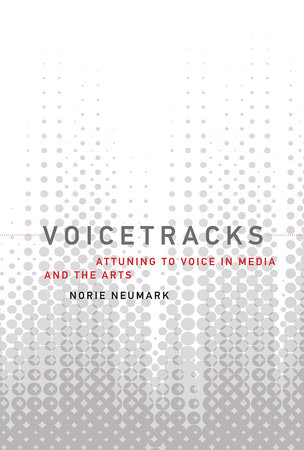

Moved by the Aboriginal understandings of songlines or dreaming tracks, Norie Neumark's Voicetracks seeks to deepen an understanding of voice through listening to a variety of voicing/sound/voice projects from Australia, Europe and the United States. Not content with the often dry tone of academic writing, the author engages a “wayfaring” process that brings together theories of sound, animal, and posthumanist studies in order to change the ways we think about and act with the assemblages of living creatures, things, places, and histories around us.
Neumark evokes both the literal—the actual voices within the works she examines—and the metaphorical—in a new materialist exploration of voice encompassing human, animal, thing, and assemblages. She engages with artists working with animal sounds and voices; voices of place, placed voices in installation works; voices of technology; and “unvoicing,” disturbances in the image/voice relationship and in the idea of what voice is. She writes about remixes, the Barbie Liberation Organisation, and breath in Beijing, about cat videos, speaking fences in Australia, and an artist who reads (to) the birds. Finally, she considers ethics and politics, and describes how her own work has shaped her understandings and apprehensions of voice.
Moved by the Aboriginal understandings of songlines or dreaming tracks, Norie Neumark's Voicetracks seeks to deepen an understanding of voice through listening to a variety of voicing/sound/voice projects from Australia, Europe and the United States. Not content with the often dry tone of academic writing, the author engages a “wayfaring” process that brings together theories of sound, animal, and posthumanist studies in order to change the ways we think about and act with the assemblages of living creatures, things, places, and histories around us.
Neumark evokes both the literal—the actual voices within the works she examines—and the metaphorical—in a new materialist exploration of voice encompassing human, animal, thing, and assemblages. She engages with artists working with animal sounds and voices; voices of place, placed voices in installation works; voices of technology; and “unvoicing,” disturbances in the image/voice relationship and in the idea of what voice is. She writes about remixes, the Barbie Liberation Organisation, and breath in Beijing, about cat videos, speaking fences in Australia, and an artist who reads (to) the birds. Finally, she considers ethics and politics, and describes how her own work has shaped her understandings and apprehensions of voice.