
Books for Jewish American Heritage Month
In celebration of Jewish American Heritage Month in May, we are sharing books by authors who share their individual stories, experiences, and lives. Find our full collection of books here.


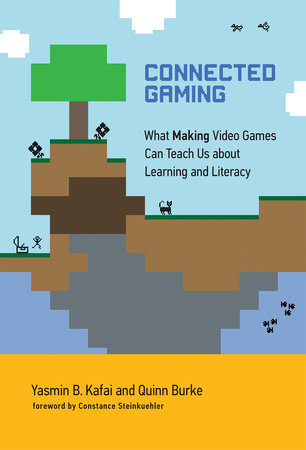
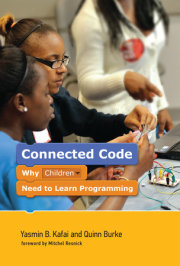
Over the last decade, video games designed to teach academic content have multiplied. Students can learn about Newtonian physics from a game or prep for entry into the army. An emphasis on the instructionist approach to gaming, however, has overshadowed the constructionist approach, in which students learn by designing their own games themselves. In this book, Yasmin Kafai and Quinn Burke discuss the educational benefits of constructionist gaming—coding, collaboration, and creativity—and the move from “computational thinking” toward “computational participation.”
Kafai and Burke point to recent developments that support a shift to game making from game playing, including the game industry's acceptance, and even promotion, of “modding” and the growth of a DIY culture. Kafai and Burke show that student-designed games teach not only such technical skills as programming but also academic subjects. Making games also teaches collaboration, as students frequently work in teams to produce content and then share their games with in class or with others online. Yet Kafai and Burke don't advocate abandoning instructionist for constructionist approaches. Rather, they argue for a more comprehensive, inclusive idea of connected gaming in which both making and gaming play a part.
Over the last decade, video games designed to teach academic content have multiplied. Students can learn about Newtonian physics from a game or prep for entry into the army. An emphasis on the instructionist approach to gaming, however, has overshadowed the constructionist approach, in which students learn by designing their own games themselves. In this book, Yasmin Kafai and Quinn Burke discuss the educational benefits of constructionist gaming—coding, collaboration, and creativity—and the move from “computational thinking” toward “computational participation.”
Kafai and Burke point to recent developments that support a shift to game making from game playing, including the game industry's acceptance, and even promotion, of “modding” and the growth of a DIY culture. Kafai and Burke show that student-designed games teach not only such technical skills as programming but also academic subjects. Making games also teaches collaboration, as students frequently work in teams to produce content and then share their games with in class or with others online. Yet Kafai and Burke don't advocate abandoning instructionist for constructionist approaches. Rather, they argue for a more comprehensive, inclusive idea of connected gaming in which both making and gaming play a part.
In celebration of Jewish American Heritage Month in May, we are sharing books by authors who share their individual stories, experiences, and lives. Find our full collection of books here.
For Mental Health Awareness Month in May, we are sharing books to educate and raise awareness about mental health and the various factors that may affect it, and to provide tools and resources for student wellness. Find our full collection of titles here.
Each May, we honor the stories, histories, and cultures of Asian Americans, Native Hawaiians, and Pacific Islanders. Below is a selection of acclaimed fiction and nonfiction books by AANHPI creators to share with your students this month and throughout the year. Find our full collection of titles for Higher Education here.