
Books for Jewish American Heritage Month
In celebration of Jewish American Heritage Month in May, we are sharing books by authors who share their individual stories, experiences, and lives. Find our full collection of books here.


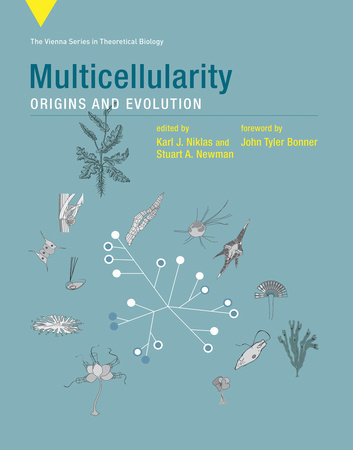
The evolution of multicellularity raises questions regarding genomic and developmental commonalities and discordances, selective advantages and disadvantages, physical determinants of development, and the origins of morphological novelties. It also represents a change in the definition of individuality, because a new organism emerges from interactions among single cells. This volume considers these and other questions, with contributions that explore the origins and consequences of the evolution of multicellularity, addressing a range of topics, organisms, and experimental protocols.
Each section focuses on selected topics or particular lineages that present a significant insight or challenge. The contributors consider the fossil record of the paleontological circumstances in which animal multicellularity evolved; cooptation, recurrent patterns, modularity, and plausible pathways for multicellular evolution in plants; theoretical approaches to the amoebozoa and fungi (cellular slime molds having long provided a robust model system for exploring the evolution of multicellularity), plants, and animals; genomic toolkits of metazoan multicellularity; and philosophical aspects of the meaning of individuality in light of multicellular evolution.
Contributors
Maja Adamska, Argyris Arnellos, Juan A. Arias, Eugenio Azpeitia, Mariana Benítez, Adriano Bonforti, John Tyler Bonner, Peter L. Conlin, A. Keith Dunker, Salva Duran-Nebreda, Ana E. Escalante, Valeria Hernández-Hernández, Kunihiko Kaneko, Andrew H. Knoll, Stephan G. König, Daniel J. G. Lahr, Ottoline Leyser, Alan C. Love, Raul Montañez, Emilio Mora van Cauwelaert, Alvaro Moreno, Vidyanand Nanjundiah, Aurora M. Nedelcu, Stuart A. Newman, Karl J. Niklas, William C. Ratcliff, Iñaki Ruiz-Trillo, Ricard Solé
The evolution of multicellularity raises questions regarding genomic and developmental commonalities and discordances, selective advantages and disadvantages, physical determinants of development, and the origins of morphological novelties. It also represents a change in the definition of individuality, because a new organism emerges from interactions among single cells. This volume considers these and other questions, with contributions that explore the origins and consequences of the evolution of multicellularity, addressing a range of topics, organisms, and experimental protocols.
Each section focuses on selected topics or particular lineages that present a significant insight or challenge. The contributors consider the fossil record of the paleontological circumstances in which animal multicellularity evolved; cooptation, recurrent patterns, modularity, and plausible pathways for multicellular evolution in plants; theoretical approaches to the amoebozoa and fungi (cellular slime molds having long provided a robust model system for exploring the evolution of multicellularity), plants, and animals; genomic toolkits of metazoan multicellularity; and philosophical aspects of the meaning of individuality in light of multicellular evolution.
Contributors
Maja Adamska, Argyris Arnellos, Juan A. Arias, Eugenio Azpeitia, Mariana Benítez, Adriano Bonforti, John Tyler Bonner, Peter L. Conlin, A. Keith Dunker, Salva Duran-Nebreda, Ana E. Escalante, Valeria Hernández-Hernández, Kunihiko Kaneko, Andrew H. Knoll, Stephan G. König, Daniel J. G. Lahr, Ottoline Leyser, Alan C. Love, Raul Montañez, Emilio Mora van Cauwelaert, Alvaro Moreno, Vidyanand Nanjundiah, Aurora M. Nedelcu, Stuart A. Newman, Karl J. Niklas, William C. Ratcliff, Iñaki Ruiz-Trillo, Ricard Solé


















In celebration of Jewish American Heritage Month in May, we are sharing books by authors who share their individual stories, experiences, and lives. Find our full collection of books here.
For Mental Health Awareness Month in May, we are sharing books to educate and raise awareness about mental health and the various factors that may affect it, and to provide tools and resources for student wellness. Find our full collection of titles here.
Each May, we honor the stories, histories, and cultures of Asian Americans, Native Hawaiians, and Pacific Islanders. Below is a selection of acclaimed fiction and nonfiction books by AANHPI creators to share with your students this month and throughout the year. Find our full collection of titles for Higher Education here.