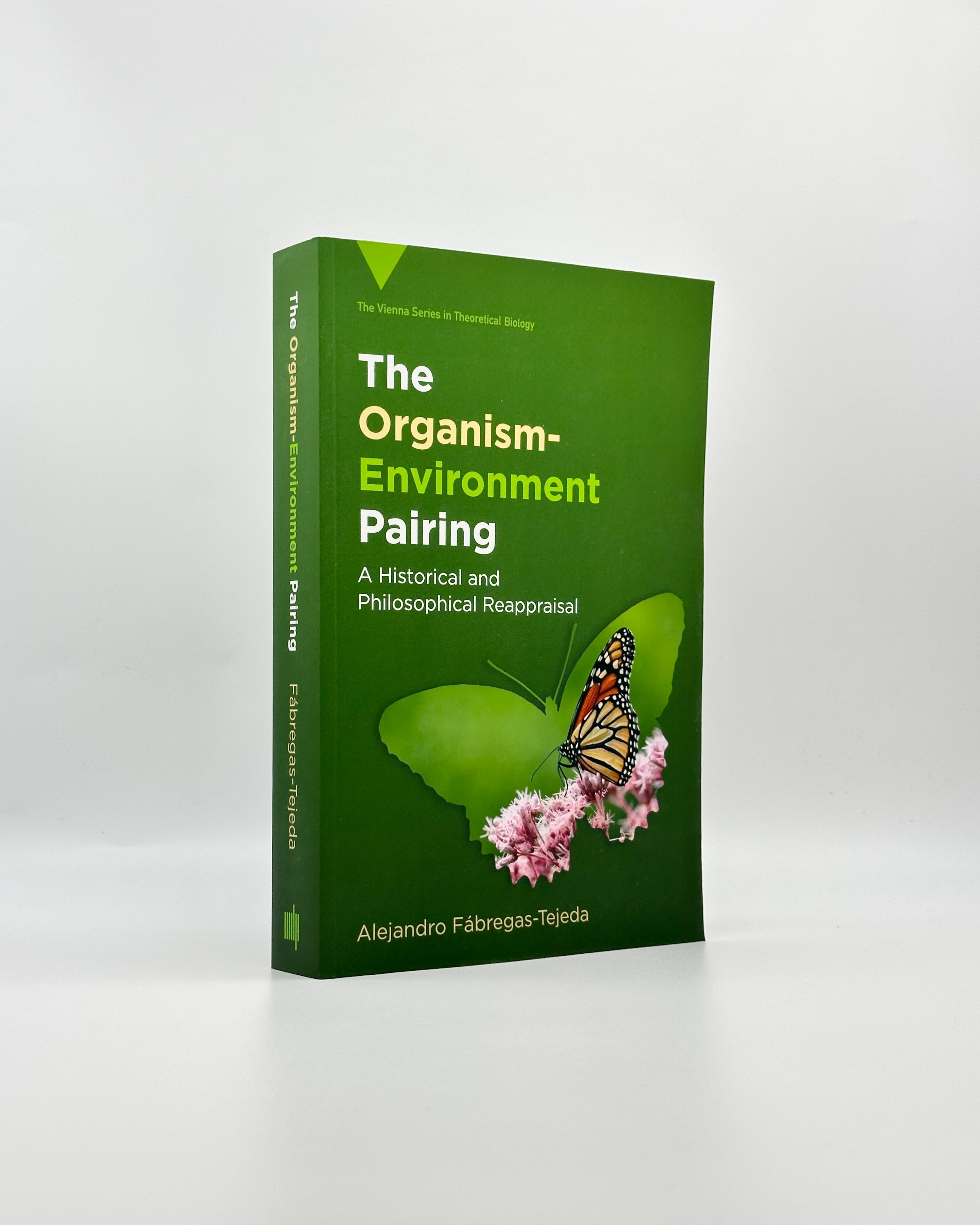
The Organism-Environment Pairing

A Historical and Philosophical Reappraisal

Paperback
$90.00 US
On sale May 12, 2026 | 448 Pages | 9780262052825

See Additional Formats
A historical and philosophical exploration of the organism-environment relationship and its role in shaping biological thought.

In this first systematic book-length examination of the organism-environment relationship in the life sciences, Alejandro Fábregas-Tejeda addresses a crucial gap in our understanding of a foundational building block of modern biology. Taking an integrated history and philosophy of science (&HPS) approach, he asks questions such as: Are organisms and environments symmetrically related, or do fundamental asymmetries underlie this relationship? Can we draw clear boundaries between organism and environment, or are they inseparable? What precisely constitutes an organismal environment? These issues have gained urgency in light of postgenomic research revealing complex environmental influences on development and organism-environment interactions.

Fábregas-Tejeda examines early twentieth-century theoretical biology and contemporary debates across evolutionary biology, ecology, developmental biology, and philosophy of biology. Contrasting the two periods, he illuminates the epistemic and ontological nature of the organism-environment relationship and its explanatory and heuristic roles in biology. The Organism-Environment Pairing shows how new insights from evolutionary developmental biology, ecology, niche construction theory, and phenotypic plasticity research have further complicated our understanding of this relationship.
Alejandro Fábregas-Tejeda, a Mexican historian and philosopher of biology, is Postdoctoral Research Fellow at the Centre for Logic and Philosophy of Science, KU Leuven.
Alejandro Fábregas-Tejeda View titles by Alejandro Fábregas-Tejeda
ENDORSEMENTS

“This long-overdue history and philosophy of the ‘environment’ concept illuminates how biology thinks about one of its most fundamental ideas. A rewarding, eye-opening read for historians, philosophers, and scientists alike.”
—Tobias Uller, Professor of Evolutionary Biology, Lund University; coauthor of Evolution Evolving and Evolutionary Causation


“A formidable achievement, massive in scope, meticulously researched, densely argued, and timely. Fábregas-Tejeda’s book is the definitive work on the history of thinking about the complex relation between organism and environment.”
—Denis Walsh, Professor, University of Toronto; author of Organisms, Agency, and Evolution

“Fábregas-Tejeda's discerning analysis brings much-needed conceptual clarity to the enigmatic yet essential subject of biology—the organism-environment relationship. A lively, engaging book that will inform practicing biologists as well as philosophers and historians of science.”
—Sonia E. Sultan, Alan M. Dachs Professor of Science, Wesleyan University; author of Organism and Environment

“A tour de force of integrated history and philosophy of biology. With impressive breadth and conceptual clarity, this outstanding monograph reshapes how we think about organisms, environments, and their entanglements.”
—Daniel J. Nicholson, Assistant Professor, George Mason University; author of What Is Life? Revisited

About

A historical and philosophical exploration of the organism-environment relationship and its role in shaping biological thought.

In this first systematic book-length examination of the organism-environment relationship in the life sciences, Alejandro Fábregas-Tejeda addresses a crucial gap in our understanding of a foundational building block of modern biology. Taking an integrated history and philosophy of science (&HPS) approach, he asks questions such as: Are organisms and environments symmetrically related, or do fundamental asymmetries underlie this relationship? Can we draw clear boundaries between organism and environment, or are they inseparable? What precisely constitutes an organismal environment? These issues have gained urgency in light of postgenomic research revealing complex environmental influences on development and organism-environment interactions.

Fábregas-Tejeda examines early twentieth-century theoretical biology and contemporary debates across evolutionary biology, ecology, developmental biology, and philosophy of biology. Contrasting the two periods, he illuminates the epistemic and ontological nature of the organism-environment relationship and its explanatory and heuristic roles in biology. The Organism-Environment Pairing shows how new insights from evolutionary developmental biology, ecology, niche construction theory, and phenotypic plasticity research have further complicated our understanding of this relationship.

Author

Alejandro Fábregas-Tejeda, a Mexican historian and philosopher of biology, is Postdoctoral Research Fellow at the Centre for Logic and Philosophy of Science, KU Leuven.
Alejandro Fábregas-Tejeda View titles by Alejandro Fábregas-Tejeda

Praise

ENDORSEMENTS

“This long-overdue history and philosophy of the ‘environment’ concept illuminates how biology thinks about one of its most fundamental ideas. A rewarding, eye-opening read for historians, philosophers, and scientists alike.”
—Tobias Uller, Professor of Evolutionary Biology, Lund University; coauthor of Evolution Evolving and Evolutionary Causation


“A formidable achievement, massive in scope, meticulously researched, densely argued, and timely. Fábregas-Tejeda’s book is the definitive work on the history of thinking about the complex relation between organism and environment.”
—Denis Walsh, Professor, University of Toronto; author of Organisms, Agency, and Evolution

“Fábregas-Tejeda's discerning analysis brings much-needed conceptual clarity to the enigmatic yet essential subject of biology—the organism-environment relationship. A lively, engaging book that will inform practicing biologists as well as philosophers and historians of science.”
—Sonia E. Sultan, Alan M. Dachs Professor of Science, Wesleyan University; author of Organism and Environment

“A tour de force of integrated history and philosophy of biology. With impressive breadth and conceptual clarity, this outstanding monograph reshapes how we think about organisms, environments, and their entanglements.”
—Daniel J. Nicholson, Assistant Professor, George Mason University; author of What Is Life? Revisited

Books for Women’s History Month

In honor of Women’s History Month in March, we are sharing books by women who have shaped history and have fought for their communities. Our list includes books about women who fought for racial justice, abortion rights, equality in the workplace, and ranges in topics from women in politics and prominent women in history to

Read more