
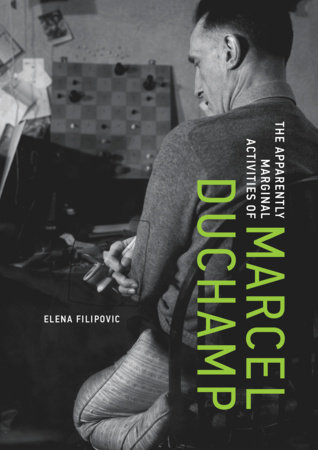
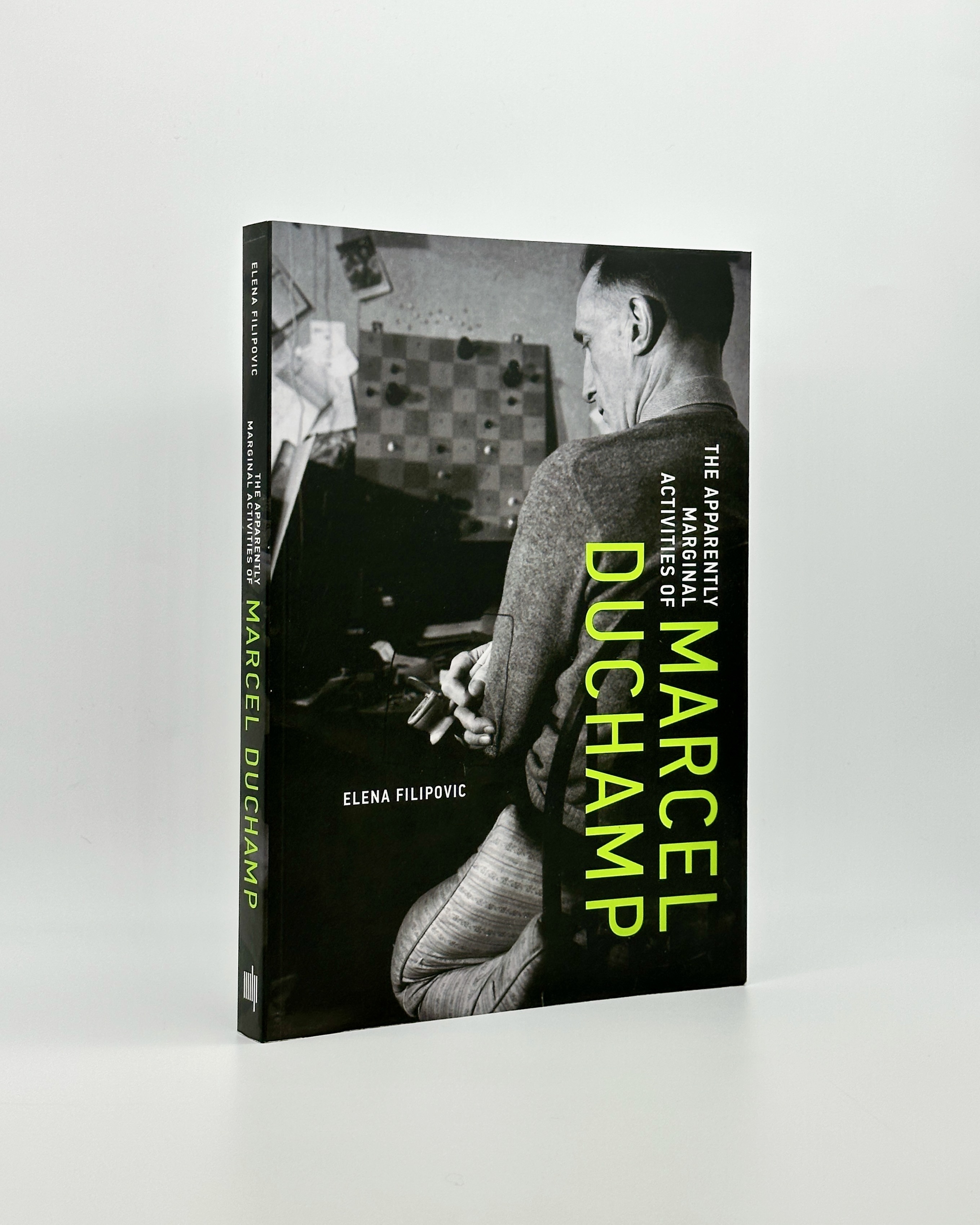

The Apparently Marginal Activities of Marcel Duchamp

Paperback
$39.95 US
On sale May 05, 2026 | 360 Pages | 9780262058780

A new understanding of Marcel Duchamp and his significance as an artist through an investigation of his non-art activities—archiving, art-dealing, and, most persistently, curating.

This groundbreaking and richly illustrated book tells a new story of the twentieth century's most influential artist, recounted not so much through his artwork as through his “non-art” work. Marcel Duchamp is largely understood in critical and popular discourse in terms of the objects he produced, whether readymade or meticulously fabricated. Elena Filipovic asks us instead to understand Duchamp's art through activities not normally seen as artistic—from exhibition making and art dealing to administrating and publicizing. These were no occasional pursuits; Filipovic argues that for Duchamp, these fugitive tasks were a veritable lifework.

Drawing on many rarely seen images, Filipovic traces a variety of practices and projects undertaken by Duchamp from 1913 to 1969, from his invention of the readymade to the release of his last, posthumous work. She examines Duchamp's note writing, archiving, and quasi-photographic activities, which resulted in the Box of 1914 and the Green Box; his art dealing, marketing, and curating that culminated in experimental exhibitions for the Surrealists and his miniature museum, The Boîte-en-valise; and his administrative efforts and clandestine maneuvering in order to posthumously embed his Étant donnés into a museum. Demonstrating how those activities reflect the artist's questioning of reproduction and originality, as well as photography and the exhibition, Filipovic proposes that Duchamp's “non-art” labor, and in particular his curatorial strategies, more than merely accompanied his more famous artworks; in a certain sense, they made them.

Through Duchamp's elusive but vital activities he revised the idea of what a modern artist could be. With this fascinating book, Filipovic in turn revises the very idea of Duchamp.
INTRODUCTION: A HISTORY OF MARCEL DUCHAMP AND OTHER FICTIONS
1 NOTES FOR A THEORY OF THE WORK OF ART
2 “I MYSELF WILL EXHIBIT NOTHING”
3 THE DEAD END OF THE MUSEUM
CONCLUSION: THE INVENTION OF AN EMPTY STUDIO
Elena Filipovic is Director and Curator of Kunsthalle Basel. She is the author of David Hammons: Bliz-aard Ball Sale (Afterall Books/MIT Press) and The Apparently Marginal Activities of Marcel Duchamp (MIT Press).
"Filipovic presents an intricate, philisophically complex but fascinating thesis, accompanied by lush illustrations." Art Quarterly


"Filipovic’s lucid and richly illustrated text is a joy to read for how it reveals what was plainly there but never fully seen, for the deceptive simplicity, and far-reaching implications, of its claims."
—James Miller, The Brooklyn Rail

About

A new understanding of Marcel Duchamp and his significance as an artist through an investigation of his non-art activities—archiving, art-dealing, and, most persistently, curating.

This groundbreaking and richly illustrated book tells a new story of the twentieth century's most influential artist, recounted not so much through his artwork as through his “non-art” work. Marcel Duchamp is largely understood in critical and popular discourse in terms of the objects he produced, whether readymade or meticulously fabricated. Elena Filipovic asks us instead to understand Duchamp's art through activities not normally seen as artistic—from exhibition making and art dealing to administrating and publicizing. These were no occasional pursuits; Filipovic argues that for Duchamp, these fugitive tasks were a veritable lifework.

Drawing on many rarely seen images, Filipovic traces a variety of practices and projects undertaken by Duchamp from 1913 to 1969, from his invention of the readymade to the release of his last, posthumous work. She examines Duchamp's note writing, archiving, and quasi-photographic activities, which resulted in the Box of 1914 and the Green Box; his art dealing, marketing, and curating that culminated in experimental exhibitions for the Surrealists and his miniature museum, The Boîte-en-valise; and his administrative efforts and clandestine maneuvering in order to posthumously embed his Étant donnés into a museum. Demonstrating how those activities reflect the artist's questioning of reproduction and originality, as well as photography and the exhibition, Filipovic proposes that Duchamp's “non-art” labor, and in particular his curatorial strategies, more than merely accompanied his more famous artworks; in a certain sense, they made them.

Through Duchamp's elusive but vital activities he revised the idea of what a modern artist could be. With this fascinating book, Filipovic in turn revises the very idea of Duchamp.

Table of Contents

INTRODUCTION: A HISTORY OF MARCEL DUCHAMP AND OTHER FICTIONS
1 NOTES FOR A THEORY OF THE WORK OF ART
2 “I MYSELF WILL EXHIBIT NOTHING”
3 THE DEAD END OF THE MUSEUM
CONCLUSION: THE INVENTION OF AN EMPTY STUDIO

Author

Elena Filipovic is Director and Curator of Kunsthalle Basel. She is the author of David Hammons: Bliz-aard Ball Sale (Afterall Books/MIT Press) and The Apparently Marginal Activities of Marcel Duchamp (MIT Press).

Praise

"Filipovic presents an intricate, philisophically complex but fascinating thesis, accompanied by lush illustrations." Art Quarterly


"Filipovic’s lucid and richly illustrated text is a joy to read for how it reveals what was plainly there but never fully seen, for the deceptive simplicity, and far-reaching implications, of its claims."
—James Miller, The Brooklyn Rail

Books for Asian American, Native Hawaiian, and Pacific Islander Heritage Month

Each May, we honor the stories, histories, and cultures of Asian Americans, Native Hawaiians, and Pacific Islanders. Below is a selection of acclaimed fiction and nonfiction books by AANHPI creators to share with your students this month and throughout the year. Find our full collection of titles for Higher Education here.

Read more