




Vajont

The Political Ecology of an Unnatural Disaster

The sobering political implications of a disaster—the Vajont landslide in Italy in 1963—and how it speaks directly to our present environmental crisis.

On October 9, 1963, 2,000 people perished in the Belluno mountains, not far from Venice, engulfed by a wave of water and mud unleashed by a massive landslide that crashed into the basin at the foot of Mount Toc. Science, power, and memory are entangled in the vortex of the Vajont Dam disaster—a stark reminder that these domains are inherently political, even when they are presented as natural.

It might be tempting to interpret the Vajont disaster as a perfect metaphor for the Anthropocene, where humans act as a geological force capable of moving mountains. But in Vajont, Marco Armiero takes a different path to reveal the political implications of this disaster, which was anything but natural. Viewed from the cemetery where its 2,000 victims lie, the disaster’s true cause becomes evident: It was not humanity that was responsible, but a specific way of organizing and subordinating both human and nonhuman nature in the service of profit for the very few.

In this book, the author argues that the Vajont disaster speaks directly to our current planetary predicament—as well as our deluded notion that we can solve it through technological fixes and neutral science.
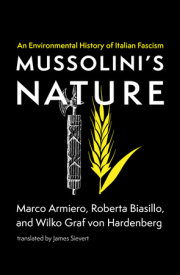
Marco Armiero is an ICREA Research Professor at the Institute for the History of Science, Autonomous University of Barcelona, and the Catalan Institution for Research and Advanced Studies. He is on the Board of Directors of the International Consortium for Environmental History Organizations and is the author of Wasteocene and a coauthor of Mussolini’s Nature (MIT Press).
ENDORSEMENTS

“Marco Armiero's brilliant analysis of the Vajont tragedy—a disaster caused by hubristic terraforming—is a powerful critique of technological overreach and technocratic indifference to the voices of the marginalized. This is a book of urgent relevance to the world of the Anthropocene.”
—Amitav Ghosh, author of The Great Derangement

“Marco Armiero has written a hard-hitting, judicious account of a devastating 1963 flood disaster in northern Italy that beautifully spells out the natural limits to human history. Vajont is the perfect antidote in a world in which the arrogance of the powerful seems to know no limits.”
—Ted Steinberg, author of Acts of God: The Unnatural History of Natural Disaster in America

“Resistance speaks in many voices. Through his extraordinary stories, Marco Armiero has shown us that it is expressed not only in words, but also in bodies, in places, and in undisciplined ways of thinking about problems. Vajont is one of those books that will stay with you for a long time, revealing what lies beneath the surface of what politics calls an ‘environmental tragedy.’”
—Serenella Iovino, James Gordon Hanes Distinguished Professor in Humanities, University of North Carolina, Chapel Hill

About

The sobering political implications of a disaster—the Vajont landslide in Italy in 1963—and how it speaks directly to our present environmental crisis.

On October 9, 1963, 2,000 people perished in the Belluno mountains, not far from Venice, engulfed by a wave of water and mud unleashed by a massive landslide that crashed into the basin at the foot of Mount Toc. Science, power, and memory are entangled in the vortex of the Vajont Dam disaster—a stark reminder that these domains are inherently political, even when they are presented as natural.

It might be tempting to interpret the Vajont disaster as a perfect metaphor for the Anthropocene, where humans act as a geological force capable of moving mountains. But in Vajont, Marco Armiero takes a different path to reveal the political implications of this disaster, which was anything but natural. Viewed from the cemetery where its 2,000 victims lie, the disaster’s true cause becomes evident: It was not humanity that was responsible, but a specific way of organizing and subordinating both human and nonhuman nature in the service of profit for the very few.

In this book, the author argues that the Vajont disaster speaks directly to our current planetary predicament—as well as our deluded notion that we can solve it through technological fixes and neutral science.

Author

Marco Armiero is an ICREA Research Professor at the Institute for the History of Science, Autonomous University of Barcelona, and the Catalan Institution for Research and Advanced Studies. He is on the Board of Directors of the International Consortium for Environmental History Organizations and is the author of Wasteocene and a coauthor of Mussolini’s Nature (MIT Press).

Praise

ENDORSEMENTS

“Marco Armiero's brilliant analysis of the Vajont tragedy—a disaster caused by hubristic terraforming—is a powerful critique of technological overreach and technocratic indifference to the voices of the marginalized. This is a book of urgent relevance to the world of the Anthropocene.”
—Amitav Ghosh, author of The Great Derangement

“Marco Armiero has written a hard-hitting, judicious account of a devastating 1963 flood disaster in northern Italy that beautifully spells out the natural limits to human history. Vajont is the perfect antidote in a world in which the arrogance of the powerful seems to know no limits.”
—Ted Steinberg, author of Acts of God: The Unnatural History of Natural Disaster in America

“Resistance speaks in many voices. Through his extraordinary stories, Marco Armiero has shown us that it is expressed not only in words, but also in bodies, in places, and in undisciplined ways of thinking about problems. Vajont is one of those books that will stay with you for a long time, revealing what lies beneath the surface of what politics calls an ‘environmental tragedy.’”
—Serenella Iovino, James Gordon Hanes Distinguished Professor in Humanities, University of North Carolina, Chapel Hill

Books for Women’s History Month

In honor of Women’s History Month in March, we are sharing books by women who have shaped history and have fought for their communities. Our list includes books about women who fought for racial justice, abortion rights, equality in the workplace, and ranges in topics from women in politics and prominent women in history to

Read more