Roman Fever

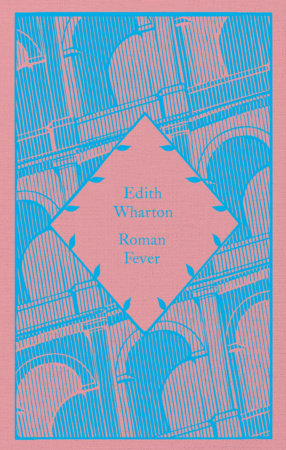
Cover Design or Artwork by Coralie Bickford-Smith
Hardcover
$28.00 US
On sale Mar 09, 2027 | 208 Pages | 9780241820247

Little Clothbound Classics: irresistible, mini editions of short stories, novellas, and essays from the world’s greatest writers, designed by the award-winning Coralie Bickford-Smith.

In these elegant and devastating tales of deception, desire, and social intrigue, Edith Wharton exposes the brittle veneer of civility that masks human ambition and longing. From the sunlit terraces of Rome to the drawing rooms of New York, Wharton’s characters navigate a world bound by class and convention yet charged with emotional undercurrents they barely understand. In “Roman Fever,” two middle-aged women confront the unspoken rivalries that have shadowed their friendship for decades; in “Mrs. Manstey’s View,” a lonely widow’s cherished glimpse of life beyond her window becomes the stage for a quiet tragedy; and in “After Holbein,” the elaborate pretenses of two aging New Yorkers reveal the haunting persistence of vanity and illusion. These Wharton works are the latest to join the Little Clothbound Classic series designed by Coralie Bickford-Smith.
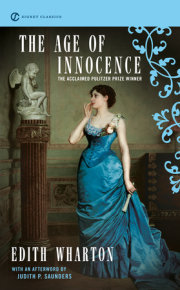
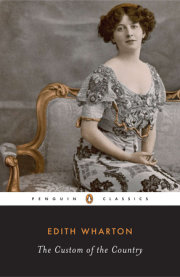
The upper stratum of New York society into which Edith Wharton was born in 1862 provided her with an abundance of material as a novelist but did not encourage her growth as an artist. Educated by tutors and governesses, she was raised for only one career: marriage. But her marriage, in 1885, to Edward Wharton was an emotional disappointment, if not a disaster. She suffered the first of a series of nervous breakdowns in 1894. In spite of the strain of her marriage, or perhaps because of it, she began to write fiction and published her first story in 1889. Her first published book was a guide to interior decorating, but this was followed by several novels and story collections. They were written while the Whartons lived in Newport and New York, traveled in Europe, and built their grand home, the Mount, in Lenox, Massachusetts. In Europe, she met Henry James, who became her good friend, traveling companion, and the sternest but most careful critic of her fiction. The House of Mirth (1905) was both a resounding critical success and a bestseller, as was Ethan Frome (1911). In 1913 the Whartons were divorced, and Edith took up permanent residence in France.  Her subject, however, remained America, especially the moneyed New York of her youth. Her great satiric novel, The Custom of the Country was published in 1913 and The Age of Innocence won her the Pulitzer Prize in 1921. In her later years, she enjoyed the admiration of a new generation of writers, including Sinclair Lewis and F. Scott Fitzgerald. In all, she wrote some 30 books, including an autobiography, A Backward Glance (1934). She died at her villa near Paris in 1937. View titles by Edith Wharton

About

Little Clothbound Classics: irresistible, mini editions of short stories, novellas, and essays from the world’s greatest writers, designed by the award-winning Coralie Bickford-Smith.

In these elegant and devastating tales of deception, desire, and social intrigue, Edith Wharton exposes the brittle veneer of civility that masks human ambition and longing. From the sunlit terraces of Rome to the drawing rooms of New York, Wharton’s characters navigate a world bound by class and convention yet charged with emotional undercurrents they barely understand. In “Roman Fever,” two middle-aged women confront the unspoken rivalries that have shadowed their friendship for decades; in “Mrs. Manstey’s View,” a lonely widow’s cherished glimpse of life beyond her window becomes the stage for a quiet tragedy; and in “After Holbein,” the elaborate pretenses of two aging New Yorkers reveal the haunting persistence of vanity and illusion. These Wharton works are the latest to join the Little Clothbound Classic series designed by Coralie Bickford-Smith.

Author

The upper stratum of New York society into which Edith Wharton was born in 1862 provided her with an abundance of material as a novelist but did not encourage her growth as an artist. Educated by tutors and governesses, she was raised for only one career: marriage. But her marriage, in 1885, to Edward Wharton was an emotional disappointment, if not a disaster. She suffered the first of a series of nervous breakdowns in 1894. In spite of the strain of her marriage, or perhaps because of it, she began to write fiction and published her first story in 1889. Her first published book was a guide to interior decorating, but this was followed by several novels and story collections. They were written while the Whartons lived in Newport and New York, traveled in Europe, and built their grand home, the Mount, in Lenox, Massachusetts. In Europe, she met Henry James, who became her good friend, traveling companion, and the sternest but most careful critic of her fiction. The House of Mirth (1905) was both a resounding critical success and a bestseller, as was Ethan Frome (1911). In 1913 the Whartons were divorced, and Edith took up permanent residence in France.  Her subject, however, remained America, especially the moneyed New York of her youth. Her great satiric novel, The Custom of the Country was published in 1913 and The Age of Innocence won her the Pulitzer Prize in 1921. In her later years, she enjoyed the admiration of a new generation of writers, including Sinclair Lewis and F. Scott Fitzgerald. In all, she wrote some 30 books, including an autobiography, A Backward Glance (1934). She died at her villa near Paris in 1937. View titles by Edith Wharton

Books for LGBTQIA+ Pride Month

In June we celebrate Lesbian, Gay, Bisexual, Transgender, Queer, Intersex, and Asexual + (LGBTQIA+) Pride Month, which honors the 1969 Stonewall riots in Manhattan. Pride Month is a time to both celebrate the accomplishments of those in the LGBTQ+ community and recognize the ongoing struggles faced by many across the world who wish to live
Read more