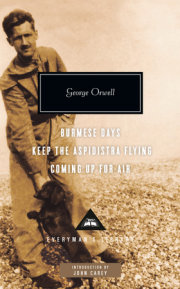
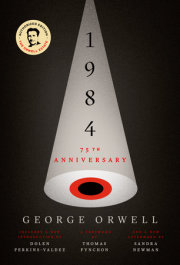
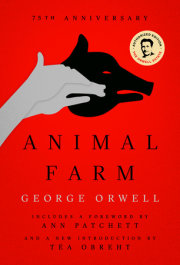
Books for Jewish American Heritage Month
In celebration of Jewish American Heritage Month in May, we are sharing books by authors who share their individual stories, experiences, and lives. Find our full collection of books here.
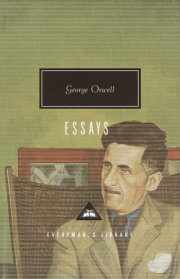
The Lion and the Unicorn
A Hanging
Politics and the English Language
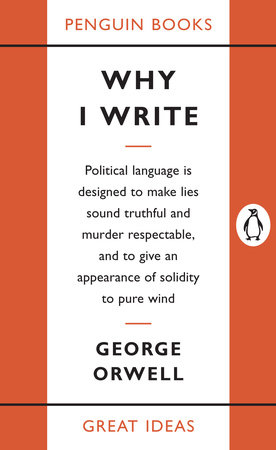
From a very early age, perhaps the age of five or six, I knew that when I grew up I should be a writer. Between the ages of about seventeen and twenty-four I tried to abandon this idea, but I did so with the consciousness that I was outraging my true nature and that sooner or later I should have to settle down and write books.
I was the middle child of three, but there was a gap of five years on either side, and I barely saw my father before I was eight. For this and other reasons I was somewhat lonely, and I soon developed disagreeable mannerisms which made me unpopular throughout my schooldays. I had the lonely child's habit of making up stories and holding conversations with imaginary persons, and I think from the very start my literary ambitions were mixed up with the feeling of being isolated and undervalued. I knew that I had a facility with words and a power of facing unpleasant facts, and I felt that this created a sort of private world in which I could get my own back for my failure in everyday life. Nevertheless the volume of serious - i.e. seriously intended - writing which I produced all through my childhood and boyhood would not amount to half a dozen pages. I wrote my first poem at the age of four or five, my mother taking it down to dictation.
The Lion and the Unicorn
A Hanging
Politics and the English Language
From a very early age, perhaps the age of five or six, I knew that when I grew up I should be a writer. Between the ages of about seventeen and twenty-four I tried to abandon this idea, but I did so with the consciousness that I was outraging my true nature and that sooner or later I should have to settle down and write books.
I was the middle child of three, but there was a gap of five years on either side, and I barely saw my father before I was eight. For this and other reasons I was somewhat lonely, and I soon developed disagreeable mannerisms which made me unpopular throughout my schooldays. I had the lonely child's habit of making up stories and holding conversations with imaginary persons, and I think from the very start my literary ambitions were mixed up with the feeling of being isolated and undervalued. I knew that I had a facility with words and a power of facing unpleasant facts, and I felt that this created a sort of private world in which I could get my own back for my failure in everyday life. Nevertheless the volume of serious - i.e. seriously intended - writing which I produced all through my childhood and boyhood would not amount to half a dozen pages. I wrote my first poem at the age of four or five, my mother taking it down to dictation.
In celebration of Jewish American Heritage Month in May, we are sharing books by authors who share their individual stories, experiences, and lives. Find our full collection of books here.
For Mental Health Awareness Month in May, we are sharing books to educate and raise awareness about mental health and the various factors that may affect it, and to provide tools and resources for student wellness. Find our full collection of titles here.
Each May, we honor the stories, histories, and cultures of Asian Americans, Native Hawaiians, and Pacific Islanders. Below is a selection of acclaimed fiction and nonfiction books by AANHPI creators to share with your students this month and throughout the year. Find our full collection of titles for Higher Education here.
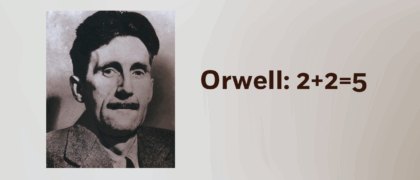
Orwell: 2+2=5 is a 2025 documentary film, directed and produced by Raoul Peck. It follows the life and career of George Orwell, and how his political observations are still relevant in present day, particularly the lessons from his novel Nineteen Eighty-Four. George Orwell (1903–1950) served with the Imperial Police in Burma, fought with the Republicans during the Spanish Civil War, and