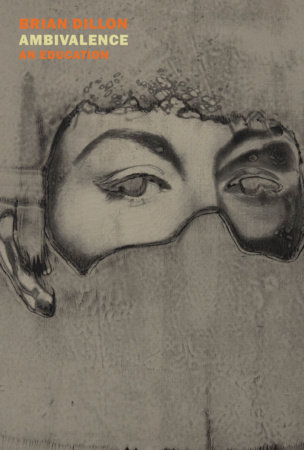
Ambivalence

An Education

Paperback
$16.95 US
On sale Sep 08, 2026 | 144 Pages | 9798896231103

See Additional Formats
A coming-of-age memoir set in late-twentieth-century Dublin, recounting writer and critic Brian Dillon's first encounters with pivotal writers in his life—Virginia Woolf, Samuel Beckett, Walter Benjamin, and others—and in the process arguing for the transformative power of art, literature, and learning.

Ambivalence is the writer Brian Dillon’s coming-of-age memoir set in Ireland between 1987 and 1995. When Dillon was sixteen, his mother died, and he stopped caring about school. While he courted failure, his real education was going on elsewhere: with books, music, films and television. When against all odds he made it to college, his head was already full of avant-garde writing, art, and ideas. Could he live up to the hopes and dreams he attached to culture? Halfway through college his father died, and the stakes of Dillon’s education seemed even higher.

Ambivalence explores what learning meant to its author, what it enabled and denied, between the ages of seventeen and twenty-six, when he left his native Dublin. It’s at once a memoir of that city in the 1980s and 1990s, an uncynical portrait of the adolescent and early-adult mind, and an intimate defense of radical thinking about literature and life. In vivid present-tense fragments, Dillon describes his first encounters with writers such as Virginia Woolf, Walter Benjamin, Samuel Beckett, Roland Barthes and Jacques Derrida. He recalls being seduced by ambivalence, ambiguity and androgyny—on the page and in the life he hoped his reading would transfigure.

The era he describes seemed to demand new ways of thinking about aesthetics and politics. Today, when rights are fragile, arts and humanities attacked, and students dismissed as radicals or narcissists, Ambivalence is an argument for the poetic and revolutionary force of changing yourself and even the world by changing what you know.
Brian Dillon is an Irish writer based in London. His books include Affinities, Suppose a Sentence, Essayism, The Great Explosion (shortlisted for the Ondaatje Prize), Objects in This Mirror: Essays, I Am Sitting in a Room, Sanctuary, Tormented Hope: Nine Hypochondriac Lives (shortlisted for the Wellcome Book Prize) and In the Dark Room, which won the Irish Book Award for nonfiction. His writing has appeared in the Guardian, New York Times, London Review of Books, the New Yorker, New York Review of Books, frieze and Artforum. He has curated exhibitions for Tate and Hayward galleries.
Ambivalence tells the story of a mind making itself up, changing, deleting, willfully transforming itself. . . . This reader trusts people who doubt themselves and their ideas, and Ambivalence honors a productive and essential trust between writer and reader. This is an exceptional work.” —Lynne Tillman

“This is a brilliant book, which I couldn’t put down. It tells the story of an education that reads like the evocation of an entirely dead world of philosophy, theory and letters in the late 1980s and ’90s. It works because of its steadfast refusal of sentimentality. Dillon writes about himself as if he were someone else, someone not in any way clearly visible. Just faint lines on a page. Yet somehow, in its impersonality and distancing, Dillon conjures an intimacy, a compelling and genuinely shaking pathos rather than sham authenticity. Dillon asks, ‘Does education still keep its promises?’ On the evidence of the prose of this book, it does. And for us, as confusing as one’s intellectual formation always looks in retrospect, it must.” —Simon Critchley, author of Mysticism

About

A coming-of-age memoir set in late-twentieth-century Dublin, recounting writer and critic Brian Dillon's first encounters with pivotal writers in his life—Virginia Woolf, Samuel Beckett, Walter Benjamin, and others—and in the process arguing for the transformative power of art, literature, and learning.

Ambivalence is the writer Brian Dillon’s coming-of-age memoir set in Ireland between 1987 and 1995. When Dillon was sixteen, his mother died, and he stopped caring about school. While he courted failure, his real education was going on elsewhere: with books, music, films and television. When against all odds he made it to college, his head was already full of avant-garde writing, art, and ideas. Could he live up to the hopes and dreams he attached to culture? Halfway through college his father died, and the stakes of Dillon’s education seemed even higher.

Ambivalence explores what learning meant to its author, what it enabled and denied, between the ages of seventeen and twenty-six, when he left his native Dublin. It’s at once a memoir of that city in the 1980s and 1990s, an uncynical portrait of the adolescent and early-adult mind, and an intimate defense of radical thinking about literature and life. In vivid present-tense fragments, Dillon describes his first encounters with writers such as Virginia Woolf, Walter Benjamin, Samuel Beckett, Roland Barthes and Jacques Derrida. He recalls being seduced by ambivalence, ambiguity and androgyny—on the page and in the life he hoped his reading would transfigure.

The era he describes seemed to demand new ways of thinking about aesthetics and politics. Today, when rights are fragile, arts and humanities attacked, and students dismissed as radicals or narcissists, Ambivalence is an argument for the poetic and revolutionary force of changing yourself and even the world by changing what you know.

Author

Brian Dillon is an Irish writer based in London. His books include Affinities, Suppose a Sentence, Essayism, The Great Explosion (shortlisted for the Ondaatje Prize), Objects in This Mirror: Essays, I Am Sitting in a Room, Sanctuary, Tormented Hope: Nine Hypochondriac Lives (shortlisted for the Wellcome Book Prize) and In the Dark Room, which won the Irish Book Award for nonfiction. His writing has appeared in the Guardian, New York Times, London Review of Books, the New Yorker, New York Review of Books, frieze and Artforum. He has curated exhibitions for Tate and Hayward galleries.

Praise

Ambivalence tells the story of a mind making itself up, changing, deleting, willfully transforming itself. . . . This reader trusts people who doubt themselves and their ideas, and Ambivalence honors a productive and essential trust between writer and reader. This is an exceptional work.” —Lynne Tillman

“This is a brilliant book, which I couldn’t put down. It tells the story of an education that reads like the evocation of an entirely dead world of philosophy, theory and letters in the late 1980s and ’90s. It works because of its steadfast refusal of sentimentality. Dillon writes about himself as if he were someone else, someone not in any way clearly visible. Just faint lines on a page. Yet somehow, in its impersonality and distancing, Dillon conjures an intimacy, a compelling and genuinely shaking pathos rather than sham authenticity. Dillon asks, ‘Does education still keep its promises?’ On the evidence of the prose of this book, it does. And for us, as confusing as one’s intellectual formation always looks in retrospect, it must.” —Simon Critchley, author of Mysticism

Books for Women’s History Month

In honor of Women’s History Month in March, we are sharing books by women who have shaped history and have fought for their communities. Our list includes books about women who fought for racial justice, abortion rights, equality in the workplace, and ranges in topics from women in politics and prominent women in history to

Read more