


The Story of Harold

Illustrated by Edward Gorey
Back in print for the first time in decades, this stylish classic of 1970s queer literature follows a Greenwich Village–based children’s book author who avidly participates in the era’s sexual freedoms while privately nursing a desire for oblivion.

Named one of the “25 Most Influential Works of Postwar Queer Literature” by The New York Times


There may be no one living in Greenwich Village more filled with life than Terry Andrews. He has a thriving career as a children’s book author, he frequents the gym and the opera, he has not one but three regular romantic partners. He can spin a yarn; he’s irresistible. Yet Terry yearns for oblivion; he is on the hunt for death. Then into his life arrives Barney, an altogether unpleasant young boy who is looking for a father figure—and for more stories about Harold, the hero of Terry’s books. Will the grudging friendship that grows between the two be enough to pull Terry back from his flirtation with that ultimate lover—Thanatos?

Terry Andrews, the name of the purported author of The Story of Harold, was in fact the pen name of George Selden, himself the author of the Newbery Honor–winning children’s book A Cricket in Times Square. When Selden died in 1989, he left behind this remarkable novel, one that Edmund White called “the earliest document that renders the feel of Downtown Village gay life in the 1970s . . . The voice of the first gay liberation generation: romantic and sexual, unguilty and explicit, nonjudgemental and appreciative, grittily urban.”

Long out of print, the book nonetheless has enjoyed an underground following, and in 2023, The New York Times included it on its list of the 25 Most Influential Works of Postwar Queer Literature. To read it is to be seduced.
Terry Andrews was the pseudonym of George Selden (1929–1989), best known for his 1961 children’s book The Cricket in Times Square, which won the Newbery Honor and a Lewis Carroll Shelf Award.

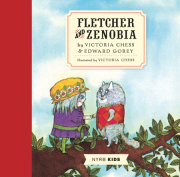
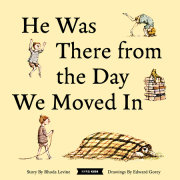
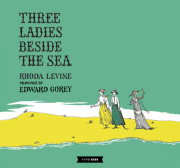
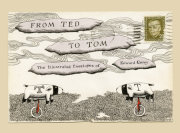
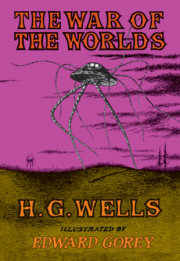
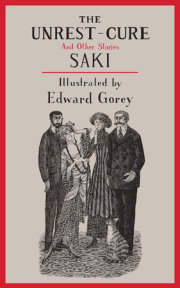
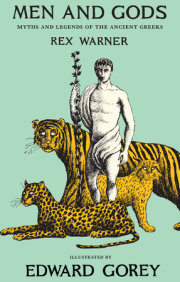
Edward Gorey (1925–2000) is the author and illustrator of The Unstrung Harp, The Curious Sofa, The Haunted Tea-Cosy, and The Epiplectic Bicycle, among many other books. In addition to illustrating his own stories, Gorey provided drawings to hundreds of books for both children and adults.

About

Back in print for the first time in decades, this stylish classic of 1970s queer literature follows a Greenwich Village–based children’s book author who avidly participates in the era’s sexual freedoms while privately nursing a desire for oblivion.

Named one of the “25 Most Influential Works of Postwar Queer Literature” by The New York Times


There may be no one living in Greenwich Village more filled with life than Terry Andrews. He has a thriving career as a children’s book author, he frequents the gym and the opera, he has not one but three regular romantic partners. He can spin a yarn; he’s irresistible. Yet Terry yearns for oblivion; he is on the hunt for death. Then into his life arrives Barney, an altogether unpleasant young boy who is looking for a father figure—and for more stories about Harold, the hero of Terry’s books. Will the grudging friendship that grows between the two be enough to pull Terry back from his flirtation with that ultimate lover—Thanatos?

Terry Andrews, the name of the purported author of The Story of Harold, was in fact the pen name of George Selden, himself the author of the Newbery Honor–winning children’s book A Cricket in Times Square. When Selden died in 1989, he left behind this remarkable novel, one that Edmund White called “the earliest document that renders the feel of Downtown Village gay life in the 1970s . . . The voice of the first gay liberation generation: romantic and sexual, unguilty and explicit, nonjudgemental and appreciative, grittily urban.”

Long out of print, the book nonetheless has enjoyed an underground following, and in 2023, The New York Times included it on its list of the 25 Most Influential Works of Postwar Queer Literature. To read it is to be seduced.

Author

Terry Andrews was the pseudonym of George Selden (1929–1989), best known for his 1961 children’s book The Cricket in Times Square, which won the Newbery Honor and a Lewis Carroll Shelf Award.

Edward Gorey (1925–2000) is the author and illustrator of The Unstrung Harp, The Curious Sofa, The Haunted Tea-Cosy, and The Epiplectic Bicycle, among many other books. In addition to illustrating his own stories, Gorey provided drawings to hundreds of books for both children and adults.

Books for LGBTQIA+ Pride Month

In June we celebrate Lesbian, Gay, Bisexual, Transgender, Queer, Intersex, and Asexual + (LGBTQIA+) Pride Month, which honors the 1969 Stonewall riots in Manhattan. Pride Month is a time to both celebrate the accomplishments of those in the LGBTQ+ community and recognize the ongoing struggles faced by many across the world who wish to live

Read more