Download high-resolution image Look inside
Listen to a clip from the audiobook
audio play button
0:00
0:00

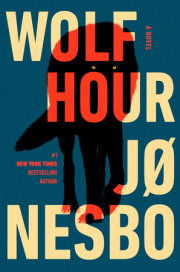
Wolf Hour

A Novel

Author Jo Nesbo
Look inside
Listen to a clip from the audiobook
audio play button
0:00
0:00
From the modern master of Nordic noir comes a shocking new thriller set in contemporary Minneapolis, in which a detective and a crime writer conduct parallel investigations, six years apart, into a series of puzzling murders

"Jo Nesbø is one of today's most interesting thriller writers." —Lee Child


Minneapolis, Minnesota, 2016. When a small-time criminal and gun dealer is shot down in the street, all signs point to Tomas Gomez, a quiet man with a mysterious past—and deep connections to a notorious gang—who has seemingly vanished into thin air. Other murders soon follow, and it appears Gomez is only getting started. Meanwhile, Bob Oz, a down-and-out suspended police officer with a dubious past of his own, becomes fascinated by the case: he is obsessed with the notion of hunting down a serial killer who only he can understand, a killer with a story as tragic as his own.  

Minneapolis, Minnesota, 2022. An enigmatic Norwegian man with ties to Minneapolis – a self-described crime writer – has traveled to the United States to research the Gomez case, in the hopes of writing a book about it. But as his investigation progresses, the writer’s seemingly neutral position reveals itself to be more complicated than the reader is initially led to believe.

Wolf Hour is a twisty and unforgettable thriller in classic Jo Nesbø style, which bears out Vanity Fair’s observation that “Nesbø explores the darkest criminal minds with grim delight and puts his killers where you least expect to find them. . . . His novels are maddeningly addictive.”
1

Arrival, September 2022

“And what is the purpose of your visit, Mr. Holger Rudi?”

The CBP officer looks at me without interest as he scratches his upper arm just below the emblem of the US Customs and Border Protection service. His eyes are tired.

“Research,” I answer.

“And what do you intend to research?”

I’ve just flown from Oslo to Minneapolis via Reykjavik, a seven-­hour time difference, and my body is telling me I should have been in bed long ago, so instead of following my instinct to reply “murder” and end up in an interrogation room I tell him that I’m writing a novel about a policeman with Norwegian heritage.

“So you’re a writer?”

I feel like telling him I’m a taxidermist. I stuff things. That I’m here looking to clothe a character, someone in a story I already have clear in my mind. It’s an image that has haunted me these past few months, a title I like to give myself. But as I say, I’m tired.

“Yes,” I reply.

“Interesting. As it happens I was baptized in the Norwegian Lutheran Memorial Church.”

“Really?”

“We’re all over Minnesota.” The CBP officer chuckles as he hands me my Norwegian passport.

On the taxi ride into the city I can see at once that everything has changed. New roads and buildings that weren’t here the last time I was in Minneapolis eight years ago. The downtown skyline looms up ahead of us as we turn off the freeway. Between the skyscrapers I see the afternoon sunlight reflecting off the angles of a gigantic structure.

“What’s that glass thing?” I ask the driver.

“That? It’s the U.S. Bank Stadium. That’s where the Vikings play.”

“Wow.”

“You interested in football?”

I shrug. “I’ve seen the Vikings play. At the old stadium. Maybe I’ll get myself a ticket.”

“Good luck with that.”

“Good luck?”

The driver, a black man who looks to be in his fifties, glances at me in the rearview mirror through his almond-­shaped glasses. “Very hard to get ahold of. I was offered a ticket yesterday, very ordinary ticket, they wanted $350.”

“Really?”

“Yeah, really. A football game in the old days used to be something you could take your kids to. Now it’s like everything else in this country. For rich folks only.”

I look out the window. When we used to visit my uncle and aunt we rarely went downtown. Anything we wanted we bought at the corner store or else in the Southdale Center. Even so, I’m struck by how quiet it seems, how few people there are about. Eight years ago—­when my cousin took me to a rooftop restaurant on Hennepin Avenue—­the streets were full of bustling life. Especially around the next avenue we cross, Nicollet.

“Where is everybody?” I ask.

“The people, you mean?”

“Yeah.”

“Aw, things haven’t been the same since all that stuff happened.”

All that stuff happened. For me, all that stuff happened means the murders six years ago; but for him and for everybody else in Minneapolis it means the murder of George Floyd two years back. Just on the drive in from the airport we’ve passed three murals depicting the black man who was killed by the Minneapolis police.

“That’s a long time ago,” I say.

“Don’t feel like it,” says the driver. “Some people thought maybe it would bring the people of this city together. Everyone against the racist police, right? But my view is, it tore this town apart. It came right at the same time as the pandemic, so it was what you might call a perfect storm . . .”

We pull up in front of the Hilton, and I pay cash and give him a good tip. Before he leaves I say I need someone to drive me around the city and ask if he’s interested. We agree on an hourly rate, and he gives me his phone number and says I can call him when I’m ready.

There are only a few people in the hotel’s large lobby area and the restaurant. Behind the paper face mask the receptionist probably gives me a smile and I hand her my passport. When she notes that my reservation is for more than a week she informs me that the room will only be cleaned every fifth day. Then she gives me the key card to room 2406, almost at the top of the hotel, as requested.

“Nosebleed floor?” A man in a cowboy hat smiles at me as I press 24. He says it in that kind of cool and jokey but all the same friendly way that I’ve only ever noticed in Americans and people from the far north of Norway. I try to think of an equally cool comeback, but I’m from the south of Norway. So instead I work on trying to even out the pressure in my ears.

The bed is big and soft and I fall asleep at once.

When I wake up I need to go to the bathroom. As I don’t want to wake myself up too much I don’t switch on the light. I can just glimpse the toilet bowl in the dark as I start to sit down and find myself almost falling backward before my rear end lands safely on the ring of the plastic seat. I’d forgotten that toilets in the USA are built lower than in Norway. And at the same instant I recall how, when I was a kid, that made me think of America as a place where they were more fond of children. That, and all those TV channels with cartoons and series for kids, all those endless yards of shelves with sweets in Southdale, the amusement park Valleyfair, where my uncle always had some new attraction to show us when we arrived for our summer vacation. This was a wonderfully childlike country, I thought. In short: I loved America. And even though I gradually came to understand that it wasn’t perfect, I understood too that I would love it for the rest of my life.

It’s still dark outside when I next wake up. I get up, call the taxi driver’s number and ask him to meet me at Nicollet Avenue by South 10th Street, and then leave the hotel. Dawn is already breaking over the twin city of Saint Paul on the other bank of the Mississippi. On the sidewalk I pass a homeless man asleep with his body pressed up against the facade of a skyscraper bearing the logo of one of the USA’s biggest banks, as though he thinks there might be some warmth for him there. A police car is parked on Nicollet, but the windows are tinted and I can’t see whether anyone is sitting inside. After about fifteen minutes my taxi pulls up next to the sidewalk. I climb into the backseat.

“First let’s go to Jordan.”

The driver looks at me in the mirror. “The town?”

“No. The neighborhood.”

I can see he’s reluctant.

“Something wrong?”

“No, sir. But if you wanna score dope then you best get yourself another car.”

“No, that’s not it. I want to see the projects.

“In Jordan? They don’t exist no more, sir.”

“No?”

“Pulled down the last one five or six years ago.”

“Then that’s where we’re going.”

We glide through a city still sleeping. You have to study the details to find out what kind of neighborhood you’re passing through, whether it’s affluent or poor. If the lawns in front of the small houses are cut, if there’s garbage lying around, what makes of cars are parked along the street.

We drive by a 24/7 Winner Gas station. Four black youths watch as we go by.

“Is that where people score their dope now?” I ask.

The driver doesn’t reply. A few blocks later he stops.

“Here,” he says. “This is where they stood. The last high-­rises in Jordan.”

I see a sign—­“NO GUNS PERMITTED BEYOND THIS POINT”—­and behind it a low, newish-­looking building. It’s an elementary school. In the half dark two squirrels dart about in nervous, jerky sprints across the lawns, their big bushy tails following with a strange softness.

And what is the purpose of your visit, Mr. Holger Rudi?

The purpose is to try to get inside the head of a killer. To retrace the steps from that time back in 2016. It’s for a book. I’ve already made a start on it. The working title is The Minneapolis Avenger. I expect the publisher will have an opinion on that, although they might be less sure exactly how to market it. True crime is the hottest genre in the book market right now. People just can’t get enough of stories about bloody and preferably spectacular murders—­there’s the air of mystery, unexpected turns of events, villains and heroes on both sides of the law, and, if possible, an uncertain denouement that leaves plenty of room for wide-­ranging conspiracy theories. My book will have all of these, apart from the last. The answers are all there, there’s no question about where the guilt lies. What remains is the business of trying to understand how and why what happened did happen. And to achieve this I need to get inside not only the killer’s head but the heads of all the players in this story. Use everything I already know plus a bit of my own imagination to see the world, see the sites where it all happened, see it all played out through their eyes. Find the human among all the inhuman. Force the reader—­and myself—­to ask the question: could that have been me?

I’m giving these field studies eight days, so I don’t have all that much time. I need to get going. And that means beginning with the guy who was where I am now, also at dawn, on that morning six years ago.

I close my eyes and can see the towers rising from the ground. Blocking out the sky. There, on the sixth floor, is an open window. I fly up there. Right now I’m him. I look out. I can see in all directions. Height means overview.
© Jarli & Jordan
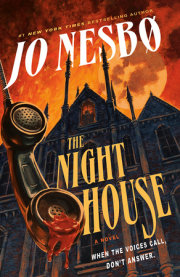
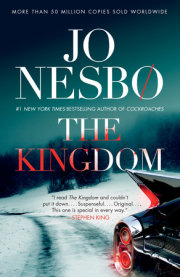
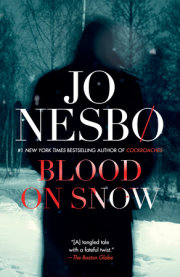
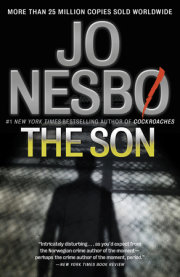
JO NESBØ is a #1 New York Times bestselling author, whose books have sold sixty million copies worldwide and have been translated into fifty-one languages. In addition to the Harry Hole series, his novels include The Night House, Headhunters, The Son, Blood on Snow, Midnight Sun, Macbeth, and The Kingdom. He is a recipient of the Raymond Chandler Award for lifetime achievement. He lives in Oslo. View titles by Jo Nesbo
“Mr. Nesbø encloses Wolf Hour, translated from the Norwegian by Robert Ferguson, in a clever conceptual envelope. . . . The device adds another layer of intrigue to a mesmerizing and often heartbreaking story.”
Wall Street Journal

“A fair-play mystery, with breadcrumbs scattered strategically along the way. . . . The violence and macabre elements that are Nesbø’s trademarks emerge gradually and organically, building to a chilling conclusion. . . . Nesbø is such a fluent and persuasive storyteller.”
AirMail

“Exquisitely plotted, darkly funny. . . . Readers will have no doubt they’re in the hands of a brilliant storyteller. This soars.”
Publishers Weekly (starred review)

“Another standout standalone from the author of the Harry Hole series. . . . The novel is a pleasure to read with its engaging, easy-twisting plot, its cerebral touches, and characters like Liza, a bartender whose teasing scenes with Oz are highlights.”
Kirkus (starred review)

“Nesbø has crafted a powerhouse here, a profoundly human exploration of loneliness and grief driven by a twisting procedural plot and grisly shocks…. Nesbø’s taut narrative and social commentary [are] deeply infused with emotional depth. Highly recommended for newcomers seeking startling perspectives on justice, such as those found in Dennis Lehane’s and Richard Price’s works.”
Booklist

“Be warned: this constantly unsettling and constantly surprising new stand-alone thriller from Jo Nesbø concludes with an increasingly shattering and grisly finale.”
—Anniston Star Tribune

“Twisty, suspenseful.”
—Crime Fiction Review

“There aren't many writers on the planet capable of combining the grit of crime noir with the thrills of following a police investigation that is also anchored in the cultural and historical settings of the territory in which it is grounded. Wolf Hour will surprise and unsettle readers.”
—Bookreporter

About

From the modern master of Nordic noir comes a shocking new thriller set in contemporary Minneapolis, in which a detective and a crime writer conduct parallel investigations, six years apart, into a series of puzzling murders

"Jo Nesbø is one of today's most interesting thriller writers." —Lee Child


Minneapolis, Minnesota, 2016. When a small-time criminal and gun dealer is shot down in the street, all signs point to Tomas Gomez, a quiet man with a mysterious past—and deep connections to a notorious gang—who has seemingly vanished into thin air. Other murders soon follow, and it appears Gomez is only getting started. Meanwhile, Bob Oz, a down-and-out suspended police officer with a dubious past of his own, becomes fascinated by the case: he is obsessed with the notion of hunting down a serial killer who only he can understand, a killer with a story as tragic as his own.  

Minneapolis, Minnesota, 2022. An enigmatic Norwegian man with ties to Minneapolis – a self-described crime writer – has traveled to the United States to research the Gomez case, in the hopes of writing a book about it. But as his investigation progresses, the writer’s seemingly neutral position reveals itself to be more complicated than the reader is initially led to believe.

Wolf Hour is a twisty and unforgettable thriller in classic Jo Nesbø style, which bears out Vanity Fair’s observation that “Nesbø explores the darkest criminal minds with grim delight and puts his killers where you least expect to find them. . . . His novels are maddeningly addictive.”

Excerpt

1

Arrival, September 2022

“And what is the purpose of your visit, Mr. Holger Rudi?”

The CBP officer looks at me without interest as he scratches his upper arm just below the emblem of the US Customs and Border Protection service. His eyes are tired.

“Research,” I answer.

“And what do you intend to research?”

I’ve just flown from Oslo to Minneapolis via Reykjavik, a seven-­hour time difference, and my body is telling me I should have been in bed long ago, so instead of following my instinct to reply “murder” and end up in an interrogation room I tell him that I’m writing a novel about a policeman with Norwegian heritage.

“So you’re a writer?”

I feel like telling him I’m a taxidermist. I stuff things. That I’m here looking to clothe a character, someone in a story I already have clear in my mind. It’s an image that has haunted me these past few months, a title I like to give myself. But as I say, I’m tired.

“Yes,” I reply.

“Interesting. As it happens I was baptized in the Norwegian Lutheran Memorial Church.”

“Really?”

“We’re all over Minnesota.” The CBP officer chuckles as he hands me my Norwegian passport.

On the taxi ride into the city I can see at once that everything has changed. New roads and buildings that weren’t here the last time I was in Minneapolis eight years ago. The downtown skyline looms up ahead of us as we turn off the freeway. Between the skyscrapers I see the afternoon sunlight reflecting off the angles of a gigantic structure.

“What’s that glass thing?” I ask the driver.

“That? It’s the U.S. Bank Stadium. That’s where the Vikings play.”

“Wow.”

“You interested in football?”

I shrug. “I’ve seen the Vikings play. At the old stadium. Maybe I’ll get myself a ticket.”

“Good luck with that.”

“Good luck?”

The driver, a black man who looks to be in his fifties, glances at me in the rearview mirror through his almond-­shaped glasses. “Very hard to get ahold of. I was offered a ticket yesterday, very ordinary ticket, they wanted $350.”

“Really?”

“Yeah, really. A football game in the old days used to be something you could take your kids to. Now it’s like everything else in this country. For rich folks only.”

I look out the window. When we used to visit my uncle and aunt we rarely went downtown. Anything we wanted we bought at the corner store or else in the Southdale Center. Even so, I’m struck by how quiet it seems, how few people there are about. Eight years ago—­when my cousin took me to a rooftop restaurant on Hennepin Avenue—­the streets were full of bustling life. Especially around the next avenue we cross, Nicollet.

“Where is everybody?” I ask.

“The people, you mean?”

“Yeah.”

“Aw, things haven’t been the same since all that stuff happened.”

All that stuff happened. For me, all that stuff happened means the murders six years ago; but for him and for everybody else in Minneapolis it means the murder of George Floyd two years back. Just on the drive in from the airport we’ve passed three murals depicting the black man who was killed by the Minneapolis police.

“That’s a long time ago,” I say.

“Don’t feel like it,” says the driver. “Some people thought maybe it would bring the people of this city together. Everyone against the racist police, right? But my view is, it tore this town apart. It came right at the same time as the pandemic, so it was what you might call a perfect storm . . .”

We pull up in front of the Hilton, and I pay cash and give him a good tip. Before he leaves I say I need someone to drive me around the city and ask if he’s interested. We agree on an hourly rate, and he gives me his phone number and says I can call him when I’m ready.

There are only a few people in the hotel’s large lobby area and the restaurant. Behind the paper face mask the receptionist probably gives me a smile and I hand her my passport. When she notes that my reservation is for more than a week she informs me that the room will only be cleaned every fifth day. Then she gives me the key card to room 2406, almost at the top of the hotel, as requested.

“Nosebleed floor?” A man in a cowboy hat smiles at me as I press 24. He says it in that kind of cool and jokey but all the same friendly way that I’ve only ever noticed in Americans and people from the far north of Norway. I try to think of an equally cool comeback, but I’m from the south of Norway. So instead I work on trying to even out the pressure in my ears.

The bed is big and soft and I fall asleep at once.

When I wake up I need to go to the bathroom. As I don’t want to wake myself up too much I don’t switch on the light. I can just glimpse the toilet bowl in the dark as I start to sit down and find myself almost falling backward before my rear end lands safely on the ring of the plastic seat. I’d forgotten that toilets in the USA are built lower than in Norway. And at the same instant I recall how, when I was a kid, that made me think of America as a place where they were more fond of children. That, and all those TV channels with cartoons and series for kids, all those endless yards of shelves with sweets in Southdale, the amusement park Valleyfair, where my uncle always had some new attraction to show us when we arrived for our summer vacation. This was a wonderfully childlike country, I thought. In short: I loved America. And even though I gradually came to understand that it wasn’t perfect, I understood too that I would love it for the rest of my life.

It’s still dark outside when I next wake up. I get up, call the taxi driver’s number and ask him to meet me at Nicollet Avenue by South 10th Street, and then leave the hotel. Dawn is already breaking over the twin city of Saint Paul on the other bank of the Mississippi. On the sidewalk I pass a homeless man asleep with his body pressed up against the facade of a skyscraper bearing the logo of one of the USA’s biggest banks, as though he thinks there might be some warmth for him there. A police car is parked on Nicollet, but the windows are tinted and I can’t see whether anyone is sitting inside. After about fifteen minutes my taxi pulls up next to the sidewalk. I climb into the backseat.

“First let’s go to Jordan.”

The driver looks at me in the mirror. “The town?”

“No. The neighborhood.”

I can see he’s reluctant.

“Something wrong?”

“No, sir. But if you wanna score dope then you best get yourself another car.”

“No, that’s not it. I want to see the projects.

“In Jordan? They don’t exist no more, sir.”

“No?”

“Pulled down the last one five or six years ago.”

“Then that’s where we’re going.”

We glide through a city still sleeping. You have to study the details to find out what kind of neighborhood you’re passing through, whether it’s affluent or poor. If the lawns in front of the small houses are cut, if there’s garbage lying around, what makes of cars are parked along the street.

We drive by a 24/7 Winner Gas station. Four black youths watch as we go by.

“Is that where people score their dope now?” I ask.

The driver doesn’t reply. A few blocks later he stops.

“Here,” he says. “This is where they stood. The last high-­rises in Jordan.”

I see a sign—­“NO GUNS PERMITTED BEYOND THIS POINT”—­and behind it a low, newish-­looking building. It’s an elementary school. In the half dark two squirrels dart about in nervous, jerky sprints across the lawns, their big bushy tails following with a strange softness.

And what is the purpose of your visit, Mr. Holger Rudi?

The purpose is to try to get inside the head of a killer. To retrace the steps from that time back in 2016. It’s for a book. I’ve already made a start on it. The working title is The Minneapolis Avenger. I expect the publisher will have an opinion on that, although they might be less sure exactly how to market it. True crime is the hottest genre in the book market right now. People just can’t get enough of stories about bloody and preferably spectacular murders—­there’s the air of mystery, unexpected turns of events, villains and heroes on both sides of the law, and, if possible, an uncertain denouement that leaves plenty of room for wide-­ranging conspiracy theories. My book will have all of these, apart from the last. The answers are all there, there’s no question about where the guilt lies. What remains is the business of trying to understand how and why what happened did happen. And to achieve this I need to get inside not only the killer’s head but the heads of all the players in this story. Use everything I already know plus a bit of my own imagination to see the world, see the sites where it all happened, see it all played out through their eyes. Find the human among all the inhuman. Force the reader—­and myself—­to ask the question: could that have been me?

I’m giving these field studies eight days, so I don’t have all that much time. I need to get going. And that means beginning with the guy who was where I am now, also at dawn, on that morning six years ago.

I close my eyes and can see the towers rising from the ground. Blocking out the sky. There, on the sixth floor, is an open window. I fly up there. Right now I’m him. I look out. I can see in all directions. Height means overview.

Author

© Jarli & Jordan
JO NESBØ is a #1 New York Times bestselling author, whose books have sold sixty million copies worldwide and have been translated into fifty-one languages. In addition to the Harry Hole series, his novels include The Night House, Headhunters, The Son, Blood on Snow, Midnight Sun, Macbeth, and The Kingdom. He is a recipient of the Raymond Chandler Award for lifetime achievement. He lives in Oslo. View titles by Jo Nesbo

Praise

“Mr. Nesbø encloses Wolf Hour, translated from the Norwegian by Robert Ferguson, in a clever conceptual envelope. . . . The device adds another layer of intrigue to a mesmerizing and often heartbreaking story.”
Wall Street Journal

“A fair-play mystery, with breadcrumbs scattered strategically along the way. . . . The violence and macabre elements that are Nesbø’s trademarks emerge gradually and organically, building to a chilling conclusion. . . . Nesbø is such a fluent and persuasive storyteller.”
AirMail

“Exquisitely plotted, darkly funny. . . . Readers will have no doubt they’re in the hands of a brilliant storyteller. This soars.”
Publishers Weekly (starred review)

“Another standout standalone from the author of the Harry Hole series. . . . The novel is a pleasure to read with its engaging, easy-twisting plot, its cerebral touches, and characters like Liza, a bartender whose teasing scenes with Oz are highlights.”
Kirkus (starred review)

“Nesbø has crafted a powerhouse here, a profoundly human exploration of loneliness and grief driven by a twisting procedural plot and grisly shocks…. Nesbø’s taut narrative and social commentary [are] deeply infused with emotional depth. Highly recommended for newcomers seeking startling perspectives on justice, such as those found in Dennis Lehane’s and Richard Price’s works.”
Booklist

“Be warned: this constantly unsettling and constantly surprising new stand-alone thriller from Jo Nesbø concludes with an increasingly shattering and grisly finale.”
—Anniston Star Tribune

“Twisty, suspenseful.”
—Crime Fiction Review

“There aren't many writers on the planet capable of combining the grit of crime noir with the thrills of following a police investigation that is also anchored in the cultural and historical settings of the territory in which it is grounded. Wolf Hour will surprise and unsettle readers.”
—Bookreporter

Books for Women’s History Month

In honor of Women’s History Month in March, we are sharing books by women who have shaped history and have fought for their communities. Our list includes books about women who fought for racial justice, abortion rights, equality in the workplace, and ranges in topics from women in politics and prominent women in history to

Read more