A Taste of Somewhere Else

Hardcover
$19.99 US
On sale Sep 08, 2026 | 256 Pages | 9798217140718

See Additional Formats
For fans of Darius the Great Is Not Okay comes an escapist and emotional YA coming-of-age novel following a father-son road trip across Spain, with a dash of mystery.

Junior year was supposed to be Miles’s escape plan—survive one year in Cleveland with Jake, the dad he barely knows, then get back to his real life in New York. 

But that was before he got suspended. Before his mom died and left a hole nothing can fill. Before Jake’s art house theater started facing closure—and before Jake dragged him on a half-baked quest across Spain to track down a film director who may or may not want to be found. 

Between wrong turns and cryptic clues through Madrid, Toledo, and Seville, they find themselves at wobbly tables in tapas bars, sharing plates of jamon and squid, talking in ways they never have before. Something unexpected happens over bocadillos and café con leche: Miles stops seeing Jake as the dad who left, and starts seeing him as the person who stayed. 

James Beard Award–winning author Michael Ruhlman delivers a story about grief, second chances, and discovering that home might not be a place you left behind—but a person you’re just getting to know, one meal at a time.
CLEVELAND

The thing about fate is that when you wake up on the fateful day, you have absolutely no clue that in less than ­twenty-​­four hours you’re going to find yourself naked in the school pool with police flashlights in your face. That ­mid-October Friday began crisp, warm, and clear, and seemed like just another in a long string of rotten days.

It had been exactly that kind of normal day till the end of school. Boring classes, another cardboard ­lunch—​­at least I didn’t have to eat alone anymore, because I’d made two sort‑­of friends, finally, James and ­Scott—​­more boring classes, the final bell.

But this being the beginning of the weekend, and with home being the last place I wanted to be, I decided to act: It was time to talk with Zina outside art class. I knew most Fridays, she studied in the same library carrel after school. Peeking around the stacks, I spied her carrel but couldn’t see her and waited till her arms rose up to stretch her shoulders and back and then disappeared again.

Zina was terrible at art and she knew it. But it didn’t really matter, because she was so beautiful and smart and one of the nicest kids I’d met in the six weeks I’d been at this school. This class is also where I’d become friends with James and Scott. Art was the only class I was good at and the only one I loved. Once, when we were doing still life, I showed Zina how ­cross-​­hatching could give the effect of shadow, and the smell of her hair literally made me dizzy. In other words, I was terrified of her.

She had long dark hair that hung in loose curls over her shoulders, caramel eyes, and a light brown ­complexion—​­we’re talking about as perfect as a girl gets, as far as I’m concerned. I couldn’t imagine any guy not having a crush on her. She was the first and only person who came right out and asked me about Mom. I told her I didn’t want to talk about it (standard response), and she didn’t ask for more. But it made me feel less ­weird—​­that she was forward enough to ask outright.

I left the cover of the stacks and walked to her carrel, where she hovered over a spiral notebook surrounded by several open history books. She used a ­cotton-candy-blue pen, and her writing was large and loopy. I felt paralyzed, so it wasn’t until she sensed someone leaning on the edge of her carrel that she looked up, smiled, and said, “Hi, Miles.”

“Whatcha working on?” I asked.

“Paper on the Battle of Stalingrad. Due Monday.”

“Hey, um, do you maybe, um, like, want to go to McDonald’s or something?”

“Now?”

“I mean, school’s out, and, I don’t know. It doesn’t have to be now.”

“Can’t,” she said, and rolled her eyes. “I have stupid piano lessons every Friday.”

I was debating whether to ask her if I could drive her when she looked at her watch and said, “My mom picks me up at four.”

I wondered if she really had piano lessons. “Okay, see you Monday, I guess.” Now I couldn’t get away fast enough. But she stood and called my name.

“Maybe another time?”

I hope I didn’t sprint back to the carrel, but it felt like I did.

“That would be great!” I said. “Are you around tomorrow?”

She frowned. “My aunt’s in town, so we’re doing stuff.”

“Ah, okay.”

“She leaves Sunday. I could do something Sunday afternoon?”

“Really?” Act casual, I scolded myself.

“Maybe go to a movie?” she said.

“A movie. Yes. Great!”

“Doesn’t your dad run The Avalon?”

“Yeah, but that only shows movies that are either old, weird, subtitled, or all three.”

“I love old movies,” she said. “It must be cool to have a dad who runs a movie theater. You can go free and probably get all the popcorn and Twizzlers you want.”

“Yeah, I suppose.”

“So, it’s a date,” she said, actually smiling. She tore a scrap of paper from the back of her notebook and wrote down her phone number. “Call me Sunday and we’ll figure out what to see.”

“Okay!” I said. “Call you then!”

* * *

I all but floated down the stairs to my locker to get my books. I had a date with the most beautiful girl in our class. I was so dizzy, for a minute I couldn’t remember the combination to my locker.

“Hey, Miles.” It was James, book bag slung over his shoulder. “Are you going home? Could you maybe give me a lift?”

He knew I drove Jake’s old Volvo. James didn’t have a car and he lived in Cleveland Heights, too.

“Sure!” I said, with too much enthusiasm. “But don’t you have soccer?”

“It’s Friday. I’m gonna tell Coach Pojo I’ve got a doctor’s appointment. Can we tell him you’re driving me?”

“Sure,” I said, relieved not to be going home alone. Maybe we could do something at his house. This was turning out to be a good day.

Just then Scott ­appeared—​­or rather he came at us, bouncing like a pogo stick and playing air guitar. And I thought I was weird.

“Hey, man,” he said.

“Hey,” we both said, and James told Scott the plan.

I stuffed my bag with textbooks I wouldn’t open this weekend, slammed my locker shut, and followed James and Scott to the athletic office. The athletic wing had a gym, weight room, and huge ­competition-​­size pool with its own diving well.

The athletic ­office—​­off the locker room filled with kids changing for football, cross-country, and soccer—​­was empty. It had three desks, one for each of the coaches. And they were in the gym or locker room or finishing school work. Coach Pojo, my chemistry teacher, was also the athletic director and soccer coach.

“Just write him a note,” I said.

“Good ­idea—​­then I don’t even have to talk to him.” There was a pad of Post-it notes on the desk. James opened a desk drawer for a pen. While he was writing, Scott pointed to a set of keys in the drawer. “James, take the keys.”

“I ain’t taking those keys.”

“Chicken.”

“Miles, do it.”

I took the keys and stuffed them in my pocket. Didn’t even think.

James and Scott looked at me ­wide-​­eyed. James said, “Dude!” But then we heard people approaching. Mr. Johnson, the football coach, had a booming voice and shouted as he and a scrum of football players in pads, cleats clicking, trailed him into the office.

Scott had already bolted. James and I squeezed out. I went right, through the showers and around to the other side of the lockers. James went left into the athletic wing hallway. I exited the locker room as casually as possible. I assumed James and Scott would be waiting for me in the hallway. Nope.

I went to our school lockers, but they were nowhere.

I left through the front doors of the school where kids waited to get picked up by parents or get on one of the school buses. James and Scott were gone. I threw my book duffel over my shoulder and headed to the student parking lot. Here I was, alone again.

* * *

I’m the guy whose mom ­died—​­that’s what they whisper in the hallways. I can’t hear the actual words, but I sense it in their sideways glances, or the way those glances go to the floor when my eyes catch theirs. Bad enough being a new kid starting junior year. In a new city. In a new house. With a new dad. Or at least a dad I hardly knew.

I guess you could say that was why I took the keys. To be less weird. That’s what I’d tell Dr. Thomas, my shrink, at our next appointment.

But it wasn’t just the fact that I was the kid whose mom had died, or the kid who’d moved to Cleveland from New York City. That was unusual, I suppose, but not weird. Weird is like a smell. You see it in kids’ faces. When you tell them you listen to Broadway musicals, not Metallica or the Smiths. Or when you say your team is the Giants, not the Browns. In New York, Doc Martens were cool. Here everyone wore ­Top-​­Siders and Wallabees (sneakers weren’t allowed, according to the school dress ­code—​­yes, my new school had a dress “code”).

The house was empty as expected. Jake would be at The Avalon. Jake’s girlfriend didn’t stay here anymore. She moved out shortly after I moved in last June. Her name was Linda, long, straight brown hair and a hippie like Jake. Vegetarian. She used to walk around the house in a big loose T‑­shirt, and I’m sorry, but her big boobs just bounced around a lot. So when I ventured that she might consider wearing a bra for once, she exploded.

“Last straw!” she shouted as a bewildered Jake entered the room, and she exited both the room and the house.

Jake leaned against the doorway, covered his face with his palms, and said, “Miles.” He didn’t sound angry. He sounded defeated.

“Sorry,” I said. But I wasn’t.

Growing up, I hardly ever saw Jake, so for me, a distant dad was normal. I have spotty memories of life before the divorce. I was six, we lived at Riverside and Seventy-Ninth Street in Manhattan, and Mom was a cardiologist at ­NewYork-Presbyterian. After the divorce, Jake returned to live in his hometown, Cleveland, Ohio.

I keep wanting to say I live in New York, but I don’t. So I have to use past tense. I lived in New York. My mother was a cardiologist at ­­NewYork-Presbyterian.

A while back I saw on the news that some house in Kentucky exploded. A gas leak. The whole house was just one of many on a suburban street, and then kapow. It exploded. Like a bomb hit it. Out of nowhere. Fate. The whole thing went from quiet suburban house on a quiet suburban street to smithereens in an instant, all the debris fluttering down to flattened ground. Everything gone.

That’s what it was like for me, Mom’s dying. Undiagnosed pancreatic aneurysm. She was forty.

And that’s why I’m living with Jake in Cleveland Heights, the burbs, present tense. And I attend a “country day school,” which sounds like a place where you learn math, English, and horseback riding. Horseback is not an activity at my school, but it could be. The school is way out in the hinterlands, rolling hills and trees. This, too, was new to me.

You can’t walk anywhere here, not like you can in New York. The buses are lousy and there are, like, four train routes in and out of downtown, none of them near Jake’s house. There’s nothing really to do downtown anyway. This place is one vast spread of houses and sidewalks and trees.

New York City wasn’t perfect, but it was a place with the best delis, pizza, Chinese food, a million movies you could walk ­to—​­contemporary ­movies—​­two big parks on either side of our building. And, of course, musicals on Broadway, which Mom took me to. She loved musicals as well. They were the best. I must have thirty cassettes of cast recordings. I grew up listening to Fiddler on the Roof and Camelot, and I knew every word of every song in Jesus Christ Superstar and, my favorite, West Side Story, which Mom took me to when I was nine. I still have the Playbill of the last show Mom and I saw, Les Miz.

New York is where my actual friends are. It was my home, as I said. Still is, as far as I’m concerned.

When Mom died suddenly last February, my grandparents moved into our apartment to look after me so that I could finish my sophomore year at Stuyvesant. Jake came to the city once a month after that to be with me. He didn’t stay with us. He didn’t get along with Poppa and Obo even when he and Mom were married. And now was not the time to fix that. They came together in grief, though.

By the end of May, during Jake’s last visit, it was decided. I would move to Cleveland with him.

I fought hard not to leave. My best friend, Danny Young, his parents said I could live with them while I finished high school in New York. Danny lived in a huge apartment on Central Park West. He got driven to school in a black town car. His sisters were both in college, and his parents said they had plenty of room and I was welcome. But Jake insisted I had to live with him. I fought. Eventually we made a deal. After a year at my new school, if I still wanted to live in New York, I could return and do my senior year at Stuyvesant. And that’s exactly what I intended to do. After our difficult summer together, I think Jake wanted that as much as I did.

* * *

Jake’s bungalow on Wilton Street was small by suburban standards, but it still felt enormous compared with New York. Three bedrooms and a single bathroom at the top of the stairs that we both shared. My room, which had been the guest room, was huge and looked out through the trees to the street. The other room on the second floor, Jake used as an office. Downstairs there was a big living room with a bay window that looked out past the porch to the street. He had a den with the TV, a stereo, and all his jazz albums. The dining room was off that and led to the kitchen. I entered through the back door with a feeling of dread. A gorgeous fall afternoon and a whole weekend spread out before me with nothing to do until my date with Zina in two days.

After two hours of TV, stuffing myself with pretzels and Pepsi, there was nothing but news on. I was going crazy from boredom. I used to like to ­cook—​­I would come home from school and make ramen with an egg and a slice of cheese in it, because Mom often got home late. But food didn’t really taste like anything anymore. I liked Pepsi for the bubbles on my tongue and the pretzels for the salt.

I could hardly even draw, which is about the only thing I seem to be able to do besides listen to music. You can really lose yourself when you’re drawing. I use pencil for sketches. I played around with crow quill pens but prefer fine black Pilot felt tips for more finished drawings. I like ­faces—​­noses and eyes and the fascinating whorls of ears. I wasn’t good at hair but I was learning. You kind of have to draw the suggestion of hair, the shape, rather than every strand and curl. I found a book in the art section of the library all about da Vinci’s drawings. A revelation. I copied them obsessively.

What is this feeling? This jangly, floating sensation? Untethered. Unattached to anything at all. And not in a good way. I miss my mom.

I sat on our front stoop looking out at the empty neighborhood. Not a soul seemed to be out.

I don’t have consecutive memories of the morning I found her, just images. On the carpet by her bed. Rolling her over and seeing the vomit down the front of her flannel pajamas. I remember being shocked by how cold her skin was. Cold that zipped right down my spine and told me she was dead. I’d never seen skin so gray. It was like looking at a ­black-​­and-​­white image against the plush, vivid green background of the carpet. I’m sure I was screaming but there aren’t sounds in my memory.

I didn’t call 911, I was told later. I called Howard, our doorman. He’s the one who found me and called for help.
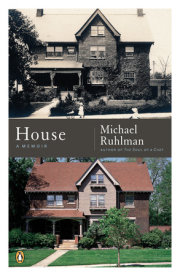
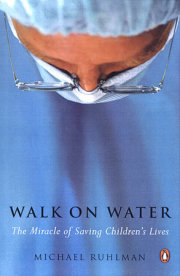
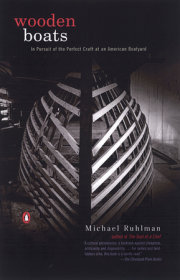
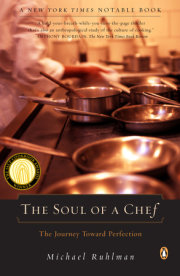
MICHAEL RUHLMAN is the author of twelve nonfiction books, including The Soul of a Chef, and has coauthored many cookbooks, such as The French Laundry Cookbook with Thomas Keller. View titles by Michael Ruhlman
"An engaging novel that explores grief, family relationships, and friendship. Highly
recommended for library collections looking for realistic travel fiction."—School Library Journal, starred review

About

For fans of Darius the Great Is Not Okay comes an escapist and emotional YA coming-of-age novel following a father-son road trip across Spain, with a dash of mystery.

Junior year was supposed to be Miles’s escape plan—survive one year in Cleveland with Jake, the dad he barely knows, then get back to his real life in New York. 

But that was before he got suspended. Before his mom died and left a hole nothing can fill. Before Jake’s art house theater started facing closure—and before Jake dragged him on a half-baked quest across Spain to track down a film director who may or may not want to be found. 

Between wrong turns and cryptic clues through Madrid, Toledo, and Seville, they find themselves at wobbly tables in tapas bars, sharing plates of jamon and squid, talking in ways they never have before. Something unexpected happens over bocadillos and café con leche: Miles stops seeing Jake as the dad who left, and starts seeing him as the person who stayed. 

James Beard Award–winning author Michael Ruhlman delivers a story about grief, second chances, and discovering that home might not be a place you left behind—but a person you’re just getting to know, one meal at a time.

Excerpt

CLEVELAND

The thing about fate is that when you wake up on the fateful day, you have absolutely no clue that in less than ­twenty-​­four hours you’re going to find yourself naked in the school pool with police flashlights in your face. That ­mid-October Friday began crisp, warm, and clear, and seemed like just another in a long string of rotten days.

It had been exactly that kind of normal day till the end of school. Boring classes, another cardboard ­lunch—​­at least I didn’t have to eat alone anymore, because I’d made two sort‑­of friends, finally, James and ­Scott—​­more boring classes, the final bell.

But this being the beginning of the weekend, and with home being the last place I wanted to be, I decided to act: It was time to talk with Zina outside art class. I knew most Fridays, she studied in the same library carrel after school. Peeking around the stacks, I spied her carrel but couldn’t see her and waited till her arms rose up to stretch her shoulders and back and then disappeared again.

Zina was terrible at art and she knew it. But it didn’t really matter, because she was so beautiful and smart and one of the nicest kids I’d met in the six weeks I’d been at this school. This class is also where I’d become friends with James and Scott. Art was the only class I was good at and the only one I loved. Once, when we were doing still life, I showed Zina how ­cross-​­hatching could give the effect of shadow, and the smell of her hair literally made me dizzy. In other words, I was terrified of her.

She had long dark hair that hung in loose curls over her shoulders, caramel eyes, and a light brown ­complexion—​­we’re talking about as perfect as a girl gets, as far as I’m concerned. I couldn’t imagine any guy not having a crush on her. She was the first and only person who came right out and asked me about Mom. I told her I didn’t want to talk about it (standard response), and she didn’t ask for more. But it made me feel less ­weird—​­that she was forward enough to ask outright.

I left the cover of the stacks and walked to her carrel, where she hovered over a spiral notebook surrounded by several open history books. She used a ­cotton-candy-blue pen, and her writing was large and loopy. I felt paralyzed, so it wasn’t until she sensed someone leaning on the edge of her carrel that she looked up, smiled, and said, “Hi, Miles.”

“Whatcha working on?” I asked.

“Paper on the Battle of Stalingrad. Due Monday.”

“Hey, um, do you maybe, um, like, want to go to McDonald’s or something?”

“Now?”

“I mean, school’s out, and, I don’t know. It doesn’t have to be now.”

“Can’t,” she said, and rolled her eyes. “I have stupid piano lessons every Friday.”

I was debating whether to ask her if I could drive her when she looked at her watch and said, “My mom picks me up at four.”

I wondered if she really had piano lessons. “Okay, see you Monday, I guess.” Now I couldn’t get away fast enough. But she stood and called my name.

“Maybe another time?”

I hope I didn’t sprint back to the carrel, but it felt like I did.

“That would be great!” I said. “Are you around tomorrow?”

She frowned. “My aunt’s in town, so we’re doing stuff.”

“Ah, okay.”

“She leaves Sunday. I could do something Sunday afternoon?”

“Really?” Act casual, I scolded myself.

“Maybe go to a movie?” she said.

“A movie. Yes. Great!”

“Doesn’t your dad run The Avalon?”

“Yeah, but that only shows movies that are either old, weird, subtitled, or all three.”

“I love old movies,” she said. “It must be cool to have a dad who runs a movie theater. You can go free and probably get all the popcorn and Twizzlers you want.”

“Yeah, I suppose.”

“So, it’s a date,” she said, actually smiling. She tore a scrap of paper from the back of her notebook and wrote down her phone number. “Call me Sunday and we’ll figure out what to see.”

“Okay!” I said. “Call you then!”

* * *

I all but floated down the stairs to my locker to get my books. I had a date with the most beautiful girl in our class. I was so dizzy, for a minute I couldn’t remember the combination to my locker.

“Hey, Miles.” It was James, book bag slung over his shoulder. “Are you going home? Could you maybe give me a lift?”

He knew I drove Jake’s old Volvo. James didn’t have a car and he lived in Cleveland Heights, too.

“Sure!” I said, with too much enthusiasm. “But don’t you have soccer?”

“It’s Friday. I’m gonna tell Coach Pojo I’ve got a doctor’s appointment. Can we tell him you’re driving me?”

“Sure,” I said, relieved not to be going home alone. Maybe we could do something at his house. This was turning out to be a good day.

Just then Scott ­appeared—​­or rather he came at us, bouncing like a pogo stick and playing air guitar. And I thought I was weird.

“Hey, man,” he said.

“Hey,” we both said, and James told Scott the plan.

I stuffed my bag with textbooks I wouldn’t open this weekend, slammed my locker shut, and followed James and Scott to the athletic office. The athletic wing had a gym, weight room, and huge ­competition-​­size pool with its own diving well.

The athletic ­office—​­off the locker room filled with kids changing for football, cross-country, and soccer—​­was empty. It had three desks, one for each of the coaches. And they were in the gym or locker room or finishing school work. Coach Pojo, my chemistry teacher, was also the athletic director and soccer coach.

“Just write him a note,” I said.

“Good ­idea—​­then I don’t even have to talk to him.” There was a pad of Post-it notes on the desk. James opened a desk drawer for a pen. While he was writing, Scott pointed to a set of keys in the drawer. “James, take the keys.”

“I ain’t taking those keys.”

“Chicken.”

“Miles, do it.”

I took the keys and stuffed them in my pocket. Didn’t even think.

James and Scott looked at me ­wide-​­eyed. James said, “Dude!” But then we heard people approaching. Mr. Johnson, the football coach, had a booming voice and shouted as he and a scrum of football players in pads, cleats clicking, trailed him into the office.

Scott had already bolted. James and I squeezed out. I went right, through the showers and around to the other side of the lockers. James went left into the athletic wing hallway. I exited the locker room as casually as possible. I assumed James and Scott would be waiting for me in the hallway. Nope.

I went to our school lockers, but they were nowhere.

I left through the front doors of the school where kids waited to get picked up by parents or get on one of the school buses. James and Scott were gone. I threw my book duffel over my shoulder and headed to the student parking lot. Here I was, alone again.

* * *

I’m the guy whose mom ­died—​­that’s what they whisper in the hallways. I can’t hear the actual words, but I sense it in their sideways glances, or the way those glances go to the floor when my eyes catch theirs. Bad enough being a new kid starting junior year. In a new city. In a new house. With a new dad. Or at least a dad I hardly knew.

I guess you could say that was why I took the keys. To be less weird. That’s what I’d tell Dr. Thomas, my shrink, at our next appointment.

But it wasn’t just the fact that I was the kid whose mom had died, or the kid who’d moved to Cleveland from New York City. That was unusual, I suppose, but not weird. Weird is like a smell. You see it in kids’ faces. When you tell them you listen to Broadway musicals, not Metallica or the Smiths. Or when you say your team is the Giants, not the Browns. In New York, Doc Martens were cool. Here everyone wore ­Top-​­Siders and Wallabees (sneakers weren’t allowed, according to the school dress ­code—​­yes, my new school had a dress “code”).

The house was empty as expected. Jake would be at The Avalon. Jake’s girlfriend didn’t stay here anymore. She moved out shortly after I moved in last June. Her name was Linda, long, straight brown hair and a hippie like Jake. Vegetarian. She used to walk around the house in a big loose T‑­shirt, and I’m sorry, but her big boobs just bounced around a lot. So when I ventured that she might consider wearing a bra for once, she exploded.

“Last straw!” she shouted as a bewildered Jake entered the room, and she exited both the room and the house.

Jake leaned against the doorway, covered his face with his palms, and said, “Miles.” He didn’t sound angry. He sounded defeated.

“Sorry,” I said. But I wasn’t.

Growing up, I hardly ever saw Jake, so for me, a distant dad was normal. I have spotty memories of life before the divorce. I was six, we lived at Riverside and Seventy-Ninth Street in Manhattan, and Mom was a cardiologist at ­NewYork-Presbyterian. After the divorce, Jake returned to live in his hometown, Cleveland, Ohio.

I keep wanting to say I live in New York, but I don’t. So I have to use past tense. I lived in New York. My mother was a cardiologist at ­­NewYork-Presbyterian.

A while back I saw on the news that some house in Kentucky exploded. A gas leak. The whole house was just one of many on a suburban street, and then kapow. It exploded. Like a bomb hit it. Out of nowhere. Fate. The whole thing went from quiet suburban house on a quiet suburban street to smithereens in an instant, all the debris fluttering down to flattened ground. Everything gone.

That’s what it was like for me, Mom’s dying. Undiagnosed pancreatic aneurysm. She was forty.

And that’s why I’m living with Jake in Cleveland Heights, the burbs, present tense. And I attend a “country day school,” which sounds like a place where you learn math, English, and horseback riding. Horseback is not an activity at my school, but it could be. The school is way out in the hinterlands, rolling hills and trees. This, too, was new to me.

You can’t walk anywhere here, not like you can in New York. The buses are lousy and there are, like, four train routes in and out of downtown, none of them near Jake’s house. There’s nothing really to do downtown anyway. This place is one vast spread of houses and sidewalks and trees.

New York City wasn’t perfect, but it was a place with the best delis, pizza, Chinese food, a million movies you could walk ­to—​­contemporary ­movies—​­two big parks on either side of our building. And, of course, musicals on Broadway, which Mom took me to. She loved musicals as well. They were the best. I must have thirty cassettes of cast recordings. I grew up listening to Fiddler on the Roof and Camelot, and I knew every word of every song in Jesus Christ Superstar and, my favorite, West Side Story, which Mom took me to when I was nine. I still have the Playbill of the last show Mom and I saw, Les Miz.

New York is where my actual friends are. It was my home, as I said. Still is, as far as I’m concerned.

When Mom died suddenly last February, my grandparents moved into our apartment to look after me so that I could finish my sophomore year at Stuyvesant. Jake came to the city once a month after that to be with me. He didn’t stay with us. He didn’t get along with Poppa and Obo even when he and Mom were married. And now was not the time to fix that. They came together in grief, though.

By the end of May, during Jake’s last visit, it was decided. I would move to Cleveland with him.

I fought hard not to leave. My best friend, Danny Young, his parents said I could live with them while I finished high school in New York. Danny lived in a huge apartment on Central Park West. He got driven to school in a black town car. His sisters were both in college, and his parents said they had plenty of room and I was welcome. But Jake insisted I had to live with him. I fought. Eventually we made a deal. After a year at my new school, if I still wanted to live in New York, I could return and do my senior year at Stuyvesant. And that’s exactly what I intended to do. After our difficult summer together, I think Jake wanted that as much as I did.

* * *

Jake’s bungalow on Wilton Street was small by suburban standards, but it still felt enormous compared with New York. Three bedrooms and a single bathroom at the top of the stairs that we both shared. My room, which had been the guest room, was huge and looked out through the trees to the street. The other room on the second floor, Jake used as an office. Downstairs there was a big living room with a bay window that looked out past the porch to the street. He had a den with the TV, a stereo, and all his jazz albums. The dining room was off that and led to the kitchen. I entered through the back door with a feeling of dread. A gorgeous fall afternoon and a whole weekend spread out before me with nothing to do until my date with Zina in two days.

After two hours of TV, stuffing myself with pretzels and Pepsi, there was nothing but news on. I was going crazy from boredom. I used to like to ­cook—​­I would come home from school and make ramen with an egg and a slice of cheese in it, because Mom often got home late. But food didn’t really taste like anything anymore. I liked Pepsi for the bubbles on my tongue and the pretzels for the salt.

I could hardly even draw, which is about the only thing I seem to be able to do besides listen to music. You can really lose yourself when you’re drawing. I use pencil for sketches. I played around with crow quill pens but prefer fine black Pilot felt tips for more finished drawings. I like ­faces—​­noses and eyes and the fascinating whorls of ears. I wasn’t good at hair but I was learning. You kind of have to draw the suggestion of hair, the shape, rather than every strand and curl. I found a book in the art section of the library all about da Vinci’s drawings. A revelation. I copied them obsessively.

What is this feeling? This jangly, floating sensation? Untethered. Unattached to anything at all. And not in a good way. I miss my mom.

I sat on our front stoop looking out at the empty neighborhood. Not a soul seemed to be out.

I don’t have consecutive memories of the morning I found her, just images. On the carpet by her bed. Rolling her over and seeing the vomit down the front of her flannel pajamas. I remember being shocked by how cold her skin was. Cold that zipped right down my spine and told me she was dead. I’d never seen skin so gray. It was like looking at a ­black-​­and-​­white image against the plush, vivid green background of the carpet. I’m sure I was screaming but there aren’t sounds in my memory.

I didn’t call 911, I was told later. I called Howard, our doorman. He’s the one who found me and called for help.

Author

MICHAEL RUHLMAN is the author of twelve nonfiction books, including The Soul of a Chef, and has coauthored many cookbooks, such as The French Laundry Cookbook with Thomas Keller. View titles by Michael Ruhlman

Praise

"An engaging novel that explores grief, family relationships, and friendship. Highly
recommended for library collections looking for realistic travel fiction."—School Library Journal, starred review

Books for LGBTQIA+ Pride Month

In June we celebrate Lesbian, Gay, Bisexual, Transgender, Queer, Intersex, and Asexual + (LGBTQIA+) Pride Month, which honors the 1969 Stonewall riots in Manhattan. Pride Month is a time to both celebrate the accomplishments of those in the LGBTQ+ community and recognize the ongoing struggles faced by many across the world who wish to live

Read more