

Download high-resolution image
Listen to a clip from the audiobook
audio play button
0:00
0:00

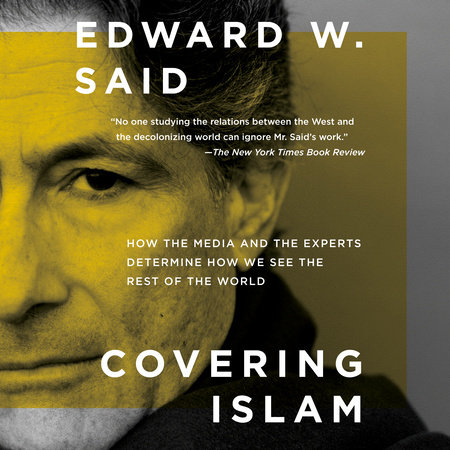
Covering Islam

How the Media and the Experts Determine How We See the Rest of the World

Read by Peter Ganim
Foreword by Laleh Khalili
Listen to a clip from the audiobook
audio play button
0:00
0:00
Audiobook Download
On sale Mar 04, 2025 | 10 Hours and 53 Minutes | 9798217069934

See Additional Formats
An unusually sharp look at the way in which the U.S. press and experts have dealt with the crisis in the Middle East and Iran.
© Mariam C. Said
Edward W. Said was born in 1935 in Jerusalem, raised in Jerusalem and Cairo, and educated in the United States, where he attended Princeton (B.A. 1957) and Harvard (M.A. 1960; Ph.D. 1964). In 1963, he began teaching at Columbia University, where he was University Professor of English and Comparative Literature. He died in 2003 in New York City.

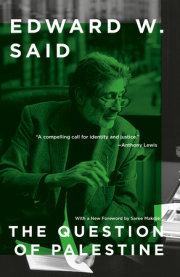
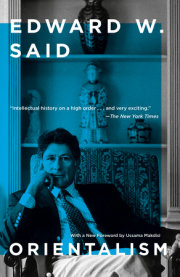
He is the author of twenty-two books which have been translated into 35 languages, including Orientalism (1978); The Question of Palestine (1979); Covering Islam (1980); The World, the Text, and the Critic (1983); Culture and Imperialism (1993); Peace and Its Discontents: Essays on Palestine and the Middle East Peace Process (1996); and Out of Place: A Memoir (1999). Besides his academic work, he wrote a twice-monthly column for Al-Hayat and Al-Ahram; was a regular contributor to newspapers in Europe, Asia, and the Middle East; and was the music critic for The Nation. View titles by Edward W. Said
"No one stuyding the relations between the West and the decolonizing world can ignore Mr. Said's work." --The New York Times Book Review

"Edward Said is a brilliant and unique amalgam of scholar, aesthete, and political activist. . . . He challenges and stimulates our thinking in every area." --Washington Post Book World

About

An unusually sharp look at the way in which the U.S. press and experts have dealt with the crisis in the Middle East and Iran.

Author

© Mariam C. Said
Edward W. Said was born in 1935 in Jerusalem, raised in Jerusalem and Cairo, and educated in the United States, where he attended Princeton (B.A. 1957) and Harvard (M.A. 1960; Ph.D. 1964). In 1963, he began teaching at Columbia University, where he was University Professor of English and Comparative Literature. He died in 2003 in New York City.

He is the author of twenty-two books which have been translated into 35 languages, including Orientalism (1978); The Question of Palestine (1979); Covering Islam (1980); The World, the Text, and the Critic (1983); Culture and Imperialism (1993); Peace and Its Discontents: Essays on Palestine and the Middle East Peace Process (1996); and Out of Place: A Memoir (1999). Besides his academic work, he wrote a twice-monthly column for Al-Hayat and Al-Ahram; was a regular contributor to newspapers in Europe, Asia, and the Middle East; and was the music critic for The Nation. View titles by Edward W. Said

Praise

"No one stuyding the relations between the West and the decolonizing world can ignore Mr. Said's work." --The New York Times Book Review

"Edward Said is a brilliant and unique amalgam of scholar, aesthete, and political activist. . . . He challenges and stimulates our thinking in every area." --Washington Post Book World

Books for Women’s History Month

In honor of Women’s History Month in March, we are sharing books by women who have shaped history and have fought for their communities. Our list includes books about women who fought for racial justice, abortion rights, equality in the workplace, and ranges in topics from women in politics and prominent women in history to

Read more