Download high-resolution image
Listen to a clip from the audiobook
audio play button
0:00
0:00

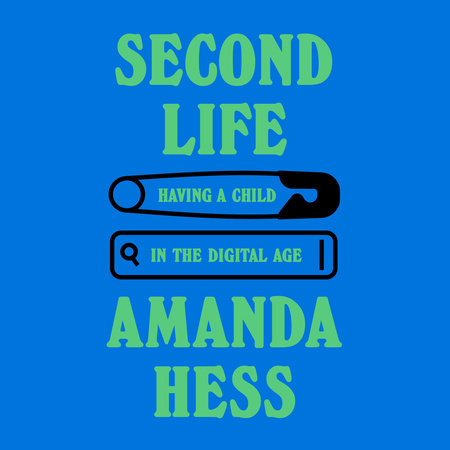
Second Life

Having a Child in the Digital Age

Read by Amanda Hess
Listen to a clip from the audiobook
audio play button
0:00
0:00
Second Life is not only a book for parents; it's for anyone intrigued (and concerned) by the ways in which our digital footprints impact the circle of life itself.”
—Elle

“Engrossing….With a reporter’s gimlet eye, Hess lenses out from her personal experience…[She] has a (hilariously reluctant) native’s ear for the (awful) millennial marketing sound.” 
The New York Times

“[Hess probes] both the effect of the internet on maternal guilt and anxiety (a nearly universal condition) and the more specific challenges of her own motherhood journey….Smart, funny, and filled with love.”
The Boston Globe


As an internet culture critic for The New York Times, Amanda Hess had built a reputation among readers as a sharp observer of the seductions and manipulations of online life. But when Hess discovered she was pregnant with her first child, she found herself unexpectedly rattled by a digital identity crisis of her own.

In the summer of 2020, a routine ultrasound detected a mysterious abnormality in Hess’s baby. Without hesitation, she reached for her phone, looking for answers. But rather than allaying her anxieties, her search sucked her into the destabilizing morass of the internet, and she was vulnerable—more than ever—to conspiracy, myth, judgment, commerce, and obsession.

As Hess documents her escalating relationship with the digital world, she identifies how technologies act as portals to troubling ideologies, ethical conflicts, and existential questions, and she illuminates how the American traditions of eugenics, surveillance, and hyper-individualism are recycled through these shiny products for a new generation of parents and their children.

At once funny, heartbreaking, and surreal, Second Life is a journey that spans a network of fertility apps, prenatal genetic tests, gender reveal videos, rare disease Facebook groups, “freebirth” influencers, and hospital reality shows. Hess confronts technology’s distortions as they follow her through pregnancy and into her son’s early life. The result is a critical record of our digital age that reveals the unspoken ways our lives are being fractured and reconstituted by technology.
Preface

Alma

On the website FactsBuddy.com, you can find a short biography of me, the American journalist Amanda Hess. Facts Buddy describes itself as an optimistic website that targets to build a large audience for information, which means that it scans the internet for personal data and drops it into the template of a life.

According to the internet, Amanda Hess is a woman of average stature. She was born to her caring and supportive parents in the United States of America. She writes about the internet, for which she receives satisfying pay. She is happily married to her handsome husband Marc, and the duo resides in Brooklyn along with their son Alma born in October 2020. It’s all true—my height, my job, my spouse. Except for the bit about my son.

In fact, I have two sons. The first was born in 2020, but not in the month of October. And his name is not Alma. When I first found my biography on Facts Buddy, it felt like I had accessed an alternate universe. Early in that pregnancy, I walked with Marc along the edge of a pond, our secret news crackling between us, and I told him that if the baby was a girl, I might want to name her Alma. Then a prenatal test found a Y-chromosome in fetal cells circulating in my blood, and my imagination scampered to another list of names. I mentioned Alma to no one else.

I have tried to figure out why Facts Buddy would think that I called my son that, and this is my best guess. In October of 2020, I posted his baby picture to Instagram. He is pink and small, and rests easily between the crook of Marc’s elbow and the palm of his hand. He wears a sky-blue bib that Marc commissioned from Etsy as an inside joke. Across the chest it says: For the hungry boy.

That’s a quote from Phantom Thread, Paul Thomas Anderson’s 2017 film, for which I harbor a near-deranged affection. Phantom Thread is about a meticulous and obsessive dressmaker named Reynolds Woodcock, and upon its release, it quickly became one of our relationship source texts. Marc and I each often mimicked Reynolds’s bleating voice—I cannot begin my day with a confrontation, please—to slyly ask the other to leave them alone. In the movie, Reynolds is charmed by a waitress named Alma when she serves him an obscenely large breakfast, along with a note that says: For the hungry boy. My name is Alma. I posted a screenshot of Alma’s note alongside the picture of the bib. Facts Buddy likely skimmed the data from those twin images and conflated them.

For all that the internet thinks it knows about me—and I have volunteered a great deal—there are certain things that it can never know. It thinks, for example, that a meme is my son. When Facts Buddy calls him Alma, it makes me feel like I have, in some small way, evaded the internet’s unblinking eye. And that is how my son makes me feel all the time. Like I’ve gotten away with something.

Introduction

Confrontation

I did not know that anything was unusual until I was seven months pregnant. This week your baby can cry, my pregnancy app said. Yes, in the uterus! I waited in the lobby of the prenatal imaging center, stroking my phone until I depleted its stock of inane facts. My baby cried inside my body for the same reasons that it would cry outside of my body, like if they hear a loud noise or are bothered by something, the app said. Just as you might be starting to prepare for their arrival, they’re constantly preparing for life in the outside world. The app handed me a drawing of a frowning baby, a teardrop slipping down its cheek.

Inside the exam room the technician wore a stumpy ponytail and an annoyed expression. I wore a sheet of paper with armholes. She dimmed the lights and stood astride her mysterious station. I could see plastic scepters and orbs, a basket of serums, a keyboard with hieroglyphic markings. The technician unsheathed her wand. She slathered cold gel on my skin and worked her probe into the hard rind of my stomach. I assumed various poses at the technician’s command, bobbing and craning my neck to keep one eye focused on my young. On the screen, static rained on little ribs and fists. As the technician worked, she offered selections from her trove of professional small talk: do you know the sex, have you picked a name.

I wanted to slice the technician out of the scene, to watch my baby with silent focus, but I also wanted to seem normal and good. I told her the baby was a boy without a name. Then she said, “He’s sticking his tongue out,” so I said, “Awwww.”

The technician fussed with the machine. She twisted its dials and clacked at its keys and then left the room. The gel grew thick on my skin. I missed my phone. I wondered if there were any new work emails in there. When the technician returned, she ordered more poses, captured more shots. I had reported to the doctor’s office for a routine scan, but as in a dream, the routine kept repeating. We passed the plausible length of a standard procedure, then lapped it. Again, the technician left the room and returned. “The doctor is busy with another patient,” she said. “That’s why it’s taking so long. I might as well get more photos while we wait.”

On her livestream of my body, she conjured a craggy amber landscape, a cave of mineral spires. I asked her what it was.

“An ear,” she said.

“Weird!” I said.

My bright tone hung awkwardly in the darkened air. The technician’s store of conversation was picked clean. She now communicated in the perfunctory style of a deposition, answering only when strictly necessary. I searched her glassy eyes for clues. Were they always fixed so intensely on the screen? Dread pooled in my brain and danced in liquid shapes. Stupid, stupid. The doctor was not with another patient and the technician was not taking more pictures for fun. I watched her map my baby’s ear for secret reasons. When she directed me to lie on my side, I gratefully accepted. I turned my back to her and the monitor. I turned my back on my baby.

Later I would read a report of the ultrasound and learn that this phase of the examination had lasted for one hour. For an hour I lay on the table, playing dead. I imagined that if I could stay completely still, the skeletal hand of complication might pass me by. It would crack the door to the next ultrasound room and tap on some other pregnant body. The moment would slink away like so many of the anxious thoughts that had visited me during my pregnancy. I was always anticipating the worst, imagining the plane dropping from the sky, the shooter breaching the office door. Soon the doctor would arrive smiling, apologizing for the delay. The technician would hand me a roll of keepsake photos. I would escape past the reception desk and rise through the elevator into the sun.

Why did I say that: WEIRD! I said it out loud and welcomed the complication into the room. I upset the tacit rules of the procedure—the technician takes the photographs, the doctor interprets them, I smile through my mask. Alone with the technician, I could imagine my baby as a nymph exploring the womb. Only when the doctor arrived did he become a specimen pinned behind the window of my skin. If I had said nothing, I still would have known that my pregnancy had been recategorized as a special medical case. But I could have pretended for a few more minutes that it had not.

The errors I made during my pregnancy knocked at the door of my mind. I drank a glass and a half of wine on Marc’s birthday, before I knew I was pregnant. I swallowed a tablet of Ativan, for acute anxiety, after I knew. I took a long hot bath that crinkled my fingertips. I got sick with a fever and fell asleep without thinking about it. I waited until I was almost thirty-five years old to get pregnant. I wanted to solve the question of myself before bringing another person into the world, but the answer had not come. Now my pregnancy was, in the language of obstetrics, geriatric.

For seven months we’d all acted like a baby was going to come out of my body like a rabbit yanked from a hat. The same body that ordered mozzarella sticks from the late-night menu and stared into a computer like it had a soul. The body that had, just a few years prior, snorted a key of cocaine supplied by the party bus driver hired to transport it to Medieval Times. This body was now working very seriously to generate a new human. I had posed the body for Instagram, clutching my bump with two hands as if it might bounce away. I had bought a noise machine with a womb setting and thrown away the box. Now I lay on the table as the doctor stood in his chamber, rewinding the tape of my life.

My phone sat on an empty chair, six feet away. Smothered beneath my smug maternity dress, it blinked silently with text messages from Marc. If I had the phone, I could hold it close to the exam table and google my way out. I could pour my fears into its portal and process them into answers. I could consult the pregnant women who came before me, dust off their old message board posts and read of long-ago ultrasounds that found weird ears and stuck-out tongues. They had dropped their babies’ fates into the internet like coins into a fountain and I would scrounge through them all, looking for the lucky penny. For the woman who returned to say, It turned out to be nothing. Trick of light.

It was ludicrous, but in my panic, it felt incontrovertible: if I searched it smart and fast enough, the internet would save us. I had constructed my life through its screens, mapped the world along its circuits. Now I would make a second life there, too. As I write this, four years later, I see my hour on the table as the moment that my relationship with technology turned, its shadows shifting around me. I reached for a sense of control and gripped tightly to my phone. It would not give me the answers I was looking for, but it would feed me wrong answers from its endless supply. It would serve me facts and conspiracies, gadgets and idols, judgments and tips.

The baby tapped at my stomach. I rubbed my hand against it, returning the signal. The technician handed me a spray of paper towels and left me alone in the room. I heaved myself up and faced the exit. My stomach hung over the table’s edge, waiting for the door to open.

Chapter 1

Cycle

Every month it came as a surprise. A fine morning lurched into a shaky afternoon. My boyfriend would irritate me in a way I could not articulate, and in response, I would reach back in my memory for some previous incident to twist into a complaint. In the evening, I might cry inexplicably while watching a British murder show, get a stomachache, and flop unhappily in bed until a sticky feeling bubbled between my legs. Still, the reality of the situation would not become clear to me until I saw the blood spattered in the toilet.

Right: my period. I could never keep track of when it had left and when it was due to return. Most of the time I tried not to think about having a body at all. It was too easy to remember that my insides were made of creepy interlocking ligaments and bones, like a skinned cadaver from Bodies: The Exhibition. Sometimes I would scroll past an inspirational quote on Instagram, like The body expresses what the mind suppresses, posted by a user calling herself @medicine_mami, and I would think, Shit. Should I do something about that? No! The suppression was working fine. I lay in bed at night, my rigid arms suspending the screen inches from my face, and disassociated into my phone. I reread the Wikipedia page for the missing Malaysian airplane. I watched a pore strip pull the blackheads from a Reddit user’s nose. Finally, I retreated to a meditation app, where a woman’s voice hissed commands at my muscles until I forgot that I existed.

And yet my period kept arriving unannounced, whining for my attention. Then one day I heard about an app that would track my cycle for me. Maybe I wouldn’t have to cultivate bodily awareness after all: I could just outsource it to my phone. The app was called Flo. She beckoned me from the App Store to download her and—as she put it—become an expert on you.

Flo was named after an old euphemism for menstruation and styled like my childhood diary. She was medicine-pink and stocked with digital stickers for illustrating the symptoms of my reproductive life. I could conjure a frowning rain cloud when I was angry and make tiny squiggles radiate from tiny underpants when my stomach hurt. She asked me to report my vaginal discharge and its consistency; she wanted to know when I had sex and how. I logged my cramps and feelings in her as if she could convert my PMS into a cool stream of data.

As Flo learned more about me, she began to not only predict my period dates but foretell the emotional contours of my days based on my expected hormone mix. Increased understanding of negative emotions is linked to the luteal phase, she told me on day twenty-one of my cycle, so this could be a good day to tackle thorny conversations with colleagues or managers.

I did not believe in Flo’s woo-woo prognostications, at least not enough to factor my luteal phase into my relationship with my boss. But I scanned her dispatches occasionally, whenever I felt like pulling the handle on her animatronic fortune-teller machine and receiving a weird menstruation-themed prophecy. When I read an article in The Wall Street Journal accusing Flo of sharing private user data with Facebook, I didn’t delete the app. Online advertisers already profited off the assumption that I hated myself, I reasoned. Would it really make a difference if they found out exactly when I hated myself the most? I kept Flo in my pocket, checking in with her every couple of weeks. I even consulted her as I selected the date that I would marry my boyfriend Marc, making sure it fell during a week of emotional stability and minimal bloating.
© Loreto Caceres
AMANDA HESS is a critic at large for The New York Times. She writes about Internet and pop culture for the Arts section and contributes regularly to The New York Times Magazine. Hess has worked as an Internet columnist for Slate magazine, an editor at Good magazine, and an arts and nightlife columnist at the Washington City Paper. She has also written for such publications as ESPN The Magazine, Wired, and Pacific Standard, where her feature on the online harassment of women won a National Magazine Award for Public Interest. View titles by Amanda Hess
One of the Washington Post's 50 Notable Works of Nonfiction in 2025 One of The New Republic's Best Books of 2025

A Most Anticipated Book of 2025: Vulture • Lit Hub • The Los Angeles Times • TIME


“Engrossing…With a reporter’s gimlet eye, Hess lenses out from her personal experience…[She] has a (hilariously reluctant) native’s ear for the (awful) millennial marketing sound.” The New York Times

Second Life is not mainly a medical odyssey but, rather, a mordant contemplation of the many screens…that reflected and mediated Hess’s experience of pregnancy and early motherhood….[It] is foremost a mash note to Hess’s firstborn son…the book’s charisma is rooted in its mood of droll astonishment….Despite the oracular hubris of the genetic-screening vanguard, the story a parent wants has only one primary source, one reliable narrator. You have to wait for him.” —Jessica Winter, The New Yorker

“Hess trains her critic’s eye on her own life, probing both the effect of the internet on maternal guilt and anxiety (a nearly universal condition) and the more specific challenges of her own motherhood journey.…Smart, funny, and filled with love.”
The Boston Globe

“With wit, discernment and candor…[Hess] captures the anxiety and weirdness of reproduction in our modern screen-based, app-oriented culture.…Insightful…very funny.” —The Wall Street Journal

“Exceptional. . . .Impeccably blends tech skepticism, cultural criticism and memoir. . . .Hess is a savvy, charmingly acerbic analyst. . . .[She] writes with a calm, uncloying sympathy for anyone eager to allay their concerns by discovering more about their offspring. . . .[A] book about knowing, [with] striking, beautiful moments.” —The Washington Post

“Spot-on and brutally funny….Hess smartly paints herself as just another willing victim of the internet, a contradiction that speaks to how so many people view their online habits.” The Atlantic

“A smart, well-observed memoir. . . .Clear-eyed. . . .It could have been easy to dunk on the dystopia of it all, but Hess avoids that easy path, staying in the muddled middle where most of us live.” —The New Republic

“With an investigative eye and a sense of humor (tempered by an appropriate amount of alarm), Hess. . . probe[s] the larger phenomena influencing the act (and industry) of reproduction. . . .Second Life is not only a book for parents; it's for anyone intrigued (and concerned) by the ways in which our digital footprints impact the circle of life itself.” —Elle

“Hess’s debut memoir bursts with humor and intelligence as it weaves the story of her own pregnancy....This unexpected page-turner is as vulnerable as it is sharp.
—Vulture

“[Hess] connects her experiences to excellent research.” The Los Angeles Times

“Second Life isn’t the new What to Expect When You’re Expecting. Hess isn’t offering parenting tips to tech-savvy caretakers. Instead, she takes readers on an eye-opening adventure down the parenting internet rabbit hole.” TIME

“A truly amazing book.” Liana Finck, illustrator and author of Passing for Human

Second Life is…a powerful firsthand account of how digital cultures are distorting and radicalizing parental decision making.” Science Magazine

“Second Life
is the best account of the perinatal period since Anne Lamott's Operating Instructions (1993), sounding out the tender and weird ways in which we create our own user's manual for parenthood.” The Observer

“Hess brings to her subject humility, curiosity, and a sly, self-aware wit. . . Sweeping and incisive. . . Fresh and complicated. . . A captivating, charged, and crucially provocative consideration of motherhood in modern America.”
Kirkus Reviews (starred review)

“[A] fierce and funny debut memoir. . . .An astute document of pregnancy and parenting in the internet era. . . .Incisive and refreshing.” Publishers Weekly (starred review)

“The story of a crisis-born odyssey, Second Life charts a new mother’s descent into and re-emergence from the internet’s ‘pregnant underworld’ with clarity, rigor, and tremendous wit. That such a deft a vivisector of our digital age should find herself lost in its churn of data-brokerage, commerce, and myth is a reminder of what we’re all up against, and an engine of Amanda Hess’s bracing and eloquent memoir.”
—Michelle Orange, author of Pure Flame

“Amanda Hess is that rare thing, the real deal. Second Life is unexpected, intellectually rigorous, funny, beautiful; and the wisdom is hard-won. A major debut from a profoundly talented writer.”
—Claire Dederer, bestselling author of Monsters: A Fan’s Dilemma

“Second Life is a treat….Hess takes us on fascinating detours into the history of fetal imaging…feminism’s flirtation with eugenics, and the origins of what we now think of as ‘natural childbirth’….A tender and often very funny memoir….Hess is a generous thinker, even when she’s up against ideologies that repel her.” The Cut

“There is no better chaperone than Amanda Hess through the strange world of surveillance, monetization, bureaucracy, and alternative medicine to which pregnant people and mothers are subjected.”
—Max Read, editor of Read Max and former editor-in-chief of Gawker

“Only Amanda Hess could step through the blue light looking glass of our phones and explore her specific—and our collective—anxiety, dissociation, data points, targeted ads, and apps; she emerges a more sensate, embodied, and sharper critic. The honesty of Second Life took my breath away.”
—Angela Garbes, author of Essential Labor and Like a Mother

Second Life is an incredibly urgent and moving investigation into the business of pregnancy and motherhood in our divided, digital age…Occasionally harrowing, frequently hilarious, and deeply original.”
—Thomas Page McBee, Lambda award-winning author of Amateur and Man Alive

“Finally, a book about parenthood that acknowledges that the internet is the first place we go to navigate pregnancy. Hess doesn't demonize or valorize it but rather serves as a smart—and very amusing—guide to the good, the bad, and the truly weird of how we give birth today.”
—Marisa Meltzer, author of the New York Times bestselling Glossy

About

Second Life is not only a book for parents; it's for anyone intrigued (and concerned) by the ways in which our digital footprints impact the circle of life itself.”
—Elle

“Engrossing….With a reporter’s gimlet eye, Hess lenses out from her personal experience…[She] has a (hilariously reluctant) native’s ear for the (awful) millennial marketing sound.” 
The New York Times

“[Hess probes] both the effect of the internet on maternal guilt and anxiety (a nearly universal condition) and the more specific challenges of her own motherhood journey….Smart, funny, and filled with love.”
The Boston Globe


As an internet culture critic for The New York Times, Amanda Hess had built a reputation among readers as a sharp observer of the seductions and manipulations of online life. But when Hess discovered she was pregnant with her first child, she found herself unexpectedly rattled by a digital identity crisis of her own.

In the summer of 2020, a routine ultrasound detected a mysterious abnormality in Hess’s baby. Without hesitation, she reached for her phone, looking for answers. But rather than allaying her anxieties, her search sucked her into the destabilizing morass of the internet, and she was vulnerable—more than ever—to conspiracy, myth, judgment, commerce, and obsession.

As Hess documents her escalating relationship with the digital world, she identifies how technologies act as portals to troubling ideologies, ethical conflicts, and existential questions, and she illuminates how the American traditions of eugenics, surveillance, and hyper-individualism are recycled through these shiny products for a new generation of parents and their children.

At once funny, heartbreaking, and surreal, Second Life is a journey that spans a network of fertility apps, prenatal genetic tests, gender reveal videos, rare disease Facebook groups, “freebirth” influencers, and hospital reality shows. Hess confronts technology’s distortions as they follow her through pregnancy and into her son’s early life. The result is a critical record of our digital age that reveals the unspoken ways our lives are being fractured and reconstituted by technology.

Excerpt

Preface

Alma

On the website FactsBuddy.com, you can find a short biography of me, the American journalist Amanda Hess. Facts Buddy describes itself as an optimistic website that targets to build a large audience for information, which means that it scans the internet for personal data and drops it into the template of a life.

According to the internet, Amanda Hess is a woman of average stature. She was born to her caring and supportive parents in the United States of America. She writes about the internet, for which she receives satisfying pay. She is happily married to her handsome husband Marc, and the duo resides in Brooklyn along with their son Alma born in October 2020. It’s all true—my height, my job, my spouse. Except for the bit about my son.

In fact, I have two sons. The first was born in 2020, but not in the month of October. And his name is not Alma. When I first found my biography on Facts Buddy, it felt like I had accessed an alternate universe. Early in that pregnancy, I walked with Marc along the edge of a pond, our secret news crackling between us, and I told him that if the baby was a girl, I might want to name her Alma. Then a prenatal test found a Y-chromosome in fetal cells circulating in my blood, and my imagination scampered to another list of names. I mentioned Alma to no one else.

I have tried to figure out why Facts Buddy would think that I called my son that, and this is my best guess. In October of 2020, I posted his baby picture to Instagram. He is pink and small, and rests easily between the crook of Marc’s elbow and the palm of his hand. He wears a sky-blue bib that Marc commissioned from Etsy as an inside joke. Across the chest it says: For the hungry boy.

That’s a quote from Phantom Thread, Paul Thomas Anderson’s 2017 film, for which I harbor a near-deranged affection. Phantom Thread is about a meticulous and obsessive dressmaker named Reynolds Woodcock, and upon its release, it quickly became one of our relationship source texts. Marc and I each often mimicked Reynolds’s bleating voice—I cannot begin my day with a confrontation, please—to slyly ask the other to leave them alone. In the movie, Reynolds is charmed by a waitress named Alma when she serves him an obscenely large breakfast, along with a note that says: For the hungry boy. My name is Alma. I posted a screenshot of Alma’s note alongside the picture of the bib. Facts Buddy likely skimmed the data from those twin images and conflated them.

For all that the internet thinks it knows about me—and I have volunteered a great deal—there are certain things that it can never know. It thinks, for example, that a meme is my son. When Facts Buddy calls him Alma, it makes me feel like I have, in some small way, evaded the internet’s unblinking eye. And that is how my son makes me feel all the time. Like I’ve gotten away with something.

Introduction

Confrontation

I did not know that anything was unusual until I was seven months pregnant. This week your baby can cry, my pregnancy app said. Yes, in the uterus! I waited in the lobby of the prenatal imaging center, stroking my phone until I depleted its stock of inane facts. My baby cried inside my body for the same reasons that it would cry outside of my body, like if they hear a loud noise or are bothered by something, the app said. Just as you might be starting to prepare for their arrival, they’re constantly preparing for life in the outside world. The app handed me a drawing of a frowning baby, a teardrop slipping down its cheek.

Inside the exam room the technician wore a stumpy ponytail and an annoyed expression. I wore a sheet of paper with armholes. She dimmed the lights and stood astride her mysterious station. I could see plastic scepters and orbs, a basket of serums, a keyboard with hieroglyphic markings. The technician unsheathed her wand. She slathered cold gel on my skin and worked her probe into the hard rind of my stomach. I assumed various poses at the technician’s command, bobbing and craning my neck to keep one eye focused on my young. On the screen, static rained on little ribs and fists. As the technician worked, she offered selections from her trove of professional small talk: do you know the sex, have you picked a name.

I wanted to slice the technician out of the scene, to watch my baby with silent focus, but I also wanted to seem normal and good. I told her the baby was a boy without a name. Then she said, “He’s sticking his tongue out,” so I said, “Awwww.”

The technician fussed with the machine. She twisted its dials and clacked at its keys and then left the room. The gel grew thick on my skin. I missed my phone. I wondered if there were any new work emails in there. When the technician returned, she ordered more poses, captured more shots. I had reported to the doctor’s office for a routine scan, but as in a dream, the routine kept repeating. We passed the plausible length of a standard procedure, then lapped it. Again, the technician left the room and returned. “The doctor is busy with another patient,” she said. “That’s why it’s taking so long. I might as well get more photos while we wait.”

On her livestream of my body, she conjured a craggy amber landscape, a cave of mineral spires. I asked her what it was.

“An ear,” she said.

“Weird!” I said.

My bright tone hung awkwardly in the darkened air. The technician’s store of conversation was picked clean. She now communicated in the perfunctory style of a deposition, answering only when strictly necessary. I searched her glassy eyes for clues. Were they always fixed so intensely on the screen? Dread pooled in my brain and danced in liquid shapes. Stupid, stupid. The doctor was not with another patient and the technician was not taking more pictures for fun. I watched her map my baby’s ear for secret reasons. When she directed me to lie on my side, I gratefully accepted. I turned my back to her and the monitor. I turned my back on my baby.

Later I would read a report of the ultrasound and learn that this phase of the examination had lasted for one hour. For an hour I lay on the table, playing dead. I imagined that if I could stay completely still, the skeletal hand of complication might pass me by. It would crack the door to the next ultrasound room and tap on some other pregnant body. The moment would slink away like so many of the anxious thoughts that had visited me during my pregnancy. I was always anticipating the worst, imagining the plane dropping from the sky, the shooter breaching the office door. Soon the doctor would arrive smiling, apologizing for the delay. The technician would hand me a roll of keepsake photos. I would escape past the reception desk and rise through the elevator into the sun.

Why did I say that: WEIRD! I said it out loud and welcomed the complication into the room. I upset the tacit rules of the procedure—the technician takes the photographs, the doctor interprets them, I smile through my mask. Alone with the technician, I could imagine my baby as a nymph exploring the womb. Only when the doctor arrived did he become a specimen pinned behind the window of my skin. If I had said nothing, I still would have known that my pregnancy had been recategorized as a special medical case. But I could have pretended for a few more minutes that it had not.

The errors I made during my pregnancy knocked at the door of my mind. I drank a glass and a half of wine on Marc’s birthday, before I knew I was pregnant. I swallowed a tablet of Ativan, for acute anxiety, after I knew. I took a long hot bath that crinkled my fingertips. I got sick with a fever and fell asleep without thinking about it. I waited until I was almost thirty-five years old to get pregnant. I wanted to solve the question of myself before bringing another person into the world, but the answer had not come. Now my pregnancy was, in the language of obstetrics, geriatric.

For seven months we’d all acted like a baby was going to come out of my body like a rabbit yanked from a hat. The same body that ordered mozzarella sticks from the late-night menu and stared into a computer like it had a soul. The body that had, just a few years prior, snorted a key of cocaine supplied by the party bus driver hired to transport it to Medieval Times. This body was now working very seriously to generate a new human. I had posed the body for Instagram, clutching my bump with two hands as if it might bounce away. I had bought a noise machine with a womb setting and thrown away the box. Now I lay on the table as the doctor stood in his chamber, rewinding the tape of my life.

My phone sat on an empty chair, six feet away. Smothered beneath my smug maternity dress, it blinked silently with text messages from Marc. If I had the phone, I could hold it close to the exam table and google my way out. I could pour my fears into its portal and process them into answers. I could consult the pregnant women who came before me, dust off their old message board posts and read of long-ago ultrasounds that found weird ears and stuck-out tongues. They had dropped their babies’ fates into the internet like coins into a fountain and I would scrounge through them all, looking for the lucky penny. For the woman who returned to say, It turned out to be nothing. Trick of light.

It was ludicrous, but in my panic, it felt incontrovertible: if I searched it smart and fast enough, the internet would save us. I had constructed my life through its screens, mapped the world along its circuits. Now I would make a second life there, too. As I write this, four years later, I see my hour on the table as the moment that my relationship with technology turned, its shadows shifting around me. I reached for a sense of control and gripped tightly to my phone. It would not give me the answers I was looking for, but it would feed me wrong answers from its endless supply. It would serve me facts and conspiracies, gadgets and idols, judgments and tips.

The baby tapped at my stomach. I rubbed my hand against it, returning the signal. The technician handed me a spray of paper towels and left me alone in the room. I heaved myself up and faced the exit. My stomach hung over the table’s edge, waiting for the door to open.

Chapter 1

Cycle

Every month it came as a surprise. A fine morning lurched into a shaky afternoon. My boyfriend would irritate me in a way I could not articulate, and in response, I would reach back in my memory for some previous incident to twist into a complaint. In the evening, I might cry inexplicably while watching a British murder show, get a stomachache, and flop unhappily in bed until a sticky feeling bubbled between my legs. Still, the reality of the situation would not become clear to me until I saw the blood spattered in the toilet.

Right: my period. I could never keep track of when it had left and when it was due to return. Most of the time I tried not to think about having a body at all. It was too easy to remember that my insides were made of creepy interlocking ligaments and bones, like a skinned cadaver from Bodies: The Exhibition. Sometimes I would scroll past an inspirational quote on Instagram, like The body expresses what the mind suppresses, posted by a user calling herself @medicine_mami, and I would think, Shit. Should I do something about that? No! The suppression was working fine. I lay in bed at night, my rigid arms suspending the screen inches from my face, and disassociated into my phone. I reread the Wikipedia page for the missing Malaysian airplane. I watched a pore strip pull the blackheads from a Reddit user’s nose. Finally, I retreated to a meditation app, where a woman’s voice hissed commands at my muscles until I forgot that I existed.

And yet my period kept arriving unannounced, whining for my attention. Then one day I heard about an app that would track my cycle for me. Maybe I wouldn’t have to cultivate bodily awareness after all: I could just outsource it to my phone. The app was called Flo. She beckoned me from the App Store to download her and—as she put it—become an expert on you.

Flo was named after an old euphemism for menstruation and styled like my childhood diary. She was medicine-pink and stocked with digital stickers for illustrating the symptoms of my reproductive life. I could conjure a frowning rain cloud when I was angry and make tiny squiggles radiate from tiny underpants when my stomach hurt. She asked me to report my vaginal discharge and its consistency; she wanted to know when I had sex and how. I logged my cramps and feelings in her as if she could convert my PMS into a cool stream of data.

As Flo learned more about me, she began to not only predict my period dates but foretell the emotional contours of my days based on my expected hormone mix. Increased understanding of negative emotions is linked to the luteal phase, she told me on day twenty-one of my cycle, so this could be a good day to tackle thorny conversations with colleagues or managers.

I did not believe in Flo’s woo-woo prognostications, at least not enough to factor my luteal phase into my relationship with my boss. But I scanned her dispatches occasionally, whenever I felt like pulling the handle on her animatronic fortune-teller machine and receiving a weird menstruation-themed prophecy. When I read an article in The Wall Street Journal accusing Flo of sharing private user data with Facebook, I didn’t delete the app. Online advertisers already profited off the assumption that I hated myself, I reasoned. Would it really make a difference if they found out exactly when I hated myself the most? I kept Flo in my pocket, checking in with her every couple of weeks. I even consulted her as I selected the date that I would marry my boyfriend Marc, making sure it fell during a week of emotional stability and minimal bloating.

Author

© Loreto Caceres
AMANDA HESS is a critic at large for The New York Times. She writes about Internet and pop culture for the Arts section and contributes regularly to The New York Times Magazine. Hess has worked as an Internet columnist for Slate magazine, an editor at Good magazine, and an arts and nightlife columnist at the Washington City Paper. She has also written for such publications as ESPN The Magazine, Wired, and Pacific Standard, where her feature on the online harassment of women won a National Magazine Award for Public Interest. View titles by Amanda Hess

Praise

One of the Washington Post's 50 Notable Works of Nonfiction in 2025 One of The New Republic's Best Books of 2025

A Most Anticipated Book of 2025: Vulture • Lit Hub • The Los Angeles Times • TIME


“Engrossing…With a reporter’s gimlet eye, Hess lenses out from her personal experience…[She] has a (hilariously reluctant) native’s ear for the (awful) millennial marketing sound.” The New York Times

Second Life is not mainly a medical odyssey but, rather, a mordant contemplation of the many screens…that reflected and mediated Hess’s experience of pregnancy and early motherhood….[It] is foremost a mash note to Hess’s firstborn son…the book’s charisma is rooted in its mood of droll astonishment….Despite the oracular hubris of the genetic-screening vanguard, the story a parent wants has only one primary source, one reliable narrator. You have to wait for him.” —Jessica Winter, The New Yorker

“Hess trains her critic’s eye on her own life, probing both the effect of the internet on maternal guilt and anxiety (a nearly universal condition) and the more specific challenges of her own motherhood journey.…Smart, funny, and filled with love.”
The Boston Globe

“With wit, discernment and candor…[Hess] captures the anxiety and weirdness of reproduction in our modern screen-based, app-oriented culture.…Insightful…very funny.” —The Wall Street Journal

“Exceptional. . . .Impeccably blends tech skepticism, cultural criticism and memoir. . . .Hess is a savvy, charmingly acerbic analyst. . . .[She] writes with a calm, uncloying sympathy for anyone eager to allay their concerns by discovering more about their offspring. . . .[A] book about knowing, [with] striking, beautiful moments.” —The Washington Post

“Spot-on and brutally funny….Hess smartly paints herself as just another willing victim of the internet, a contradiction that speaks to how so many people view their online habits.” The Atlantic

“A smart, well-observed memoir. . . .Clear-eyed. . . .It could have been easy to dunk on the dystopia of it all, but Hess avoids that easy path, staying in the muddled middle where most of us live.” —The New Republic

“With an investigative eye and a sense of humor (tempered by an appropriate amount of alarm), Hess. . . probe[s] the larger phenomena influencing the act (and industry) of reproduction. . . .Second Life is not only a book for parents; it's for anyone intrigued (and concerned) by the ways in which our digital footprints impact the circle of life itself.” —Elle

“Hess’s debut memoir bursts with humor and intelligence as it weaves the story of her own pregnancy....This unexpected page-turner is as vulnerable as it is sharp.
—Vulture

“[Hess] connects her experiences to excellent research.” The Los Angeles Times

“Second Life isn’t the new What to Expect When You’re Expecting. Hess isn’t offering parenting tips to tech-savvy caretakers. Instead, she takes readers on an eye-opening adventure down the parenting internet rabbit hole.” TIME

“A truly amazing book.” Liana Finck, illustrator and author of Passing for Human

Second Life is…a powerful firsthand account of how digital cultures are distorting and radicalizing parental decision making.” Science Magazine

“Second Life
is the best account of the perinatal period since Anne Lamott's Operating Instructions (1993), sounding out the tender and weird ways in which we create our own user's manual for parenthood.” The Observer

“Hess brings to her subject humility, curiosity, and a sly, self-aware wit. . . Sweeping and incisive. . . Fresh and complicated. . . A captivating, charged, and crucially provocative consideration of motherhood in modern America.”
Kirkus Reviews (starred review)

“[A] fierce and funny debut memoir. . . .An astute document of pregnancy and parenting in the internet era. . . .Incisive and refreshing.” Publishers Weekly (starred review)

“The story of a crisis-born odyssey, Second Life charts a new mother’s descent into and re-emergence from the internet’s ‘pregnant underworld’ with clarity, rigor, and tremendous wit. That such a deft a vivisector of our digital age should find herself lost in its churn of data-brokerage, commerce, and myth is a reminder of what we’re all up against, and an engine of Amanda Hess’s bracing and eloquent memoir.”
—Michelle Orange, author of Pure Flame

“Amanda Hess is that rare thing, the real deal. Second Life is unexpected, intellectually rigorous, funny, beautiful; and the wisdom is hard-won. A major debut from a profoundly talented writer.”
—Claire Dederer, bestselling author of Monsters: A Fan’s Dilemma

“Second Life is a treat….Hess takes us on fascinating detours into the history of fetal imaging…feminism’s flirtation with eugenics, and the origins of what we now think of as ‘natural childbirth’….A tender and often very funny memoir….Hess is a generous thinker, even when she’s up against ideologies that repel her.” The Cut

“There is no better chaperone than Amanda Hess through the strange world of surveillance, monetization, bureaucracy, and alternative medicine to which pregnant people and mothers are subjected.”
—Max Read, editor of Read Max and former editor-in-chief of Gawker

“Only Amanda Hess could step through the blue light looking glass of our phones and explore her specific—and our collective—anxiety, dissociation, data points, targeted ads, and apps; she emerges a more sensate, embodied, and sharper critic. The honesty of Second Life took my breath away.”
—Angela Garbes, author of Essential Labor and Like a Mother

Second Life is an incredibly urgent and moving investigation into the business of pregnancy and motherhood in our divided, digital age…Occasionally harrowing, frequently hilarious, and deeply original.”
—Thomas Page McBee, Lambda award-winning author of Amateur and Man Alive

“Finally, a book about parenthood that acknowledges that the internet is the first place we go to navigate pregnancy. Hess doesn't demonize or valorize it but rather serves as a smart—and very amusing—guide to the good, the bad, and the truly weird of how we give birth today.”
—Marisa Meltzer, author of the New York Times bestselling Glossy