

Books for Arab American Heritage Month
In honor of Arab American Heritage Month in April, we are sharing books by Arab and Arab American authors that share their culture, history, and personal lives.
As the financial crisis reached its climax in September 2008, the most important figure on the planet was Federal Reserve chairman Ben Bernanke. The whole financial system was collapsing, with little to stop it. When a senator asked Bernanke what would happen if the central bank did not carry out its rescue package, he replied, “If we don’t do this, we may not have an economy on Monday.”
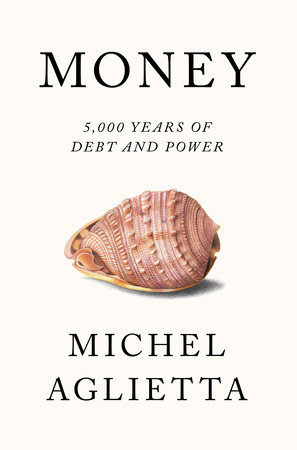
What saved finance, and the Western economy, was fiscal and monetary stimulus – an influx of money, created ad hoc. It was a strategy that raised questions about the unexamined nature of money itself, an object suddenly revealed as something other than a neutral signifier of value. Through its grip on finance and the debt system, money confers sovereign power on the economy. If confidence in money is not maintained, crises follow. Looking over the last 5,000 years, Michel Aglietta explores the development of money and its close connection to sovereign power. This book employs the tools of anthropology, history and political economy in order to analyse how political structures and monetary systems have transformed one another. We can thus grasp the different eras of monetary regulation and the crises capitalism has endured throughout its history.
As the financial crisis reached its climax in September 2008, the most important figure on the planet was Federal Reserve chairman Ben Bernanke. The whole financial system was collapsing, with little to stop it. When a senator asked Bernanke what would happen if the central bank did not carry out its rescue package, he replied, “If we don’t do this, we may not have an economy on Monday.”
What saved finance, and the Western economy, was fiscal and monetary stimulus – an influx of money, created ad hoc. It was a strategy that raised questions about the unexamined nature of money itself, an object suddenly revealed as something other than a neutral signifier of value. Through its grip on finance and the debt system, money confers sovereign power on the economy. If confidence in money is not maintained, crises follow. Looking over the last 5,000 years, Michel Aglietta explores the development of money and its close connection to sovereign power. This book employs the tools of anthropology, history and political economy in order to analyse how political structures and monetary systems have transformed one another. We can thus grasp the different eras of monetary regulation and the crises capitalism has endured throughout its history.
In honor of Arab American Heritage Month in April, we are sharing books by Arab and Arab American authors that share their culture, history, and personal lives.
For National Poetry Month in April, we are sharing poetry collections and books about poetry by authors who have their own stories to tell. These poets delve into history, reimagine the present, examine poetry itself—from traditional poems many know and love to poems and voices that are new and original.