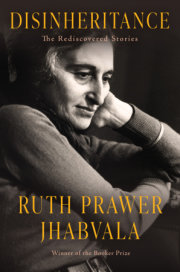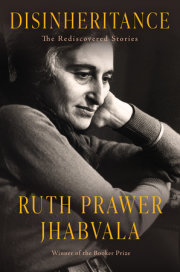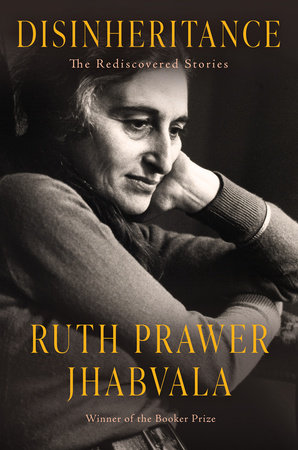

Disinheritance

The Rediscovered Stories

Look inside
Hardcover
$30.00 US
On sale Nov 25, 2025 | 352 Pages | 9781640097360

See Additional Formats
A collection of fiction by the Booker Prize–winning author and “one of the 20th century’s great female writers" (The Washington Post), drawn from her ample body of work that has been out of the public eye for decades

Ruth Prawer Jhabvala began publishing fiction in 1956 and continued to do so until her death in 2013. Disinheritance showcases some of the finest of these efforts, all demonstrating Jhabvala’s powers of keen observation as she examines the westernization of India’s middle class, the interplay of social and romantic ambition, and the social mores that plague her characters, regardless of their geographical background. Salman Rushdie has described her as a “rootless intellectual,” and John Updike called her an “initiated outsider.” All these qualities shine in this very special collection, with stories undiscovered for decades.

Including an introduction from the author’s 1979 lecture when awarded the Neil Gunn Prize in Scotland, Disinheritance balances a host of cultural influences to showcase Jhabvala’s signature voice and her buoyant, satiric fiction.
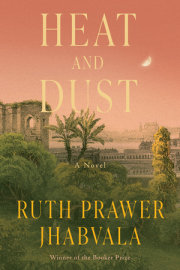
RUTH PRAWER JHABVALA, born in 1927, wrote several novels and short stories, and, in collaboration with James Ivory and Ismail Merchant, won two Oscars for Best Adapted Screenplay (for Howards End and A Room with a View). She won the Booker Prize in 1975 for Heat and Dust. Her other numerous accolades include a Guggenheim Fellowship, a MacArthur Fellowship, and an O. Henry Prize. She died in 2013.
Named a Best Book of the Year by The New Yorker, Vox, & SALT Magazine

"The short stories in this posthumous collection offer a useful reminder of the Merchant Ivory scriptwriter's talent for slipping into the perspectives of others." —Colin Dwyer, NPR

"To my eyes, however, the human follies [Jhabvala] evokes are all too realistic. To spy on a private world is to observe the truths people most want to keep hidden. Jhabvala disclosed those truths with candor, sensitivity and wit." —Sam Sacks, The Wall Street Journal

"Reading [Jhabvala's] collected short stories in the new volume Disinheritance feels like communing with the ghost of a strange and shimmering past . . . These stories are strange and beautiful to read. The sentences are affectless and curiously polite, as though to mask the irony and the fury running below them . . . What a strange book to read. I'm so glad that I did." —Constance Grady, Vox

"Remarkable . . . The acuity of Jhabvala’s observations and the clarity of her prose make this collection exhilarating . . . Brilliant, unsparing examinations of the human condition in all its variety." —Kirkus Reviews (starred review)

"This posthumous story collection by Merchant Ivory scriptwriter Jhabvala (1927–2013), who won the Booker Prize for her novel Heat and Dust, demonstrates the author’s acerbic brilliance and her proclivity to write from the perspectives of other cultures . . . Throughout, she offers canny insights into the clash between modernity and tradition. Readers will find plenty to admire." —Publishers Weekly

About

A collection of fiction by the Booker Prize–winning author and “one of the 20th century’s great female writers" (The Washington Post), drawn from her ample body of work that has been out of the public eye for decades

Ruth Prawer Jhabvala began publishing fiction in 1956 and continued to do so until her death in 2013. Disinheritance showcases some of the finest of these efforts, all demonstrating Jhabvala’s powers of keen observation as she examines the westernization of India’s middle class, the interplay of social and romantic ambition, and the social mores that plague her characters, regardless of their geographical background. Salman Rushdie has described her as a “rootless intellectual,” and John Updike called her an “initiated outsider.” All these qualities shine in this very special collection, with stories undiscovered for decades.

Including an introduction from the author’s 1979 lecture when awarded the Neil Gunn Prize in Scotland, Disinheritance balances a host of cultural influences to showcase Jhabvala’s signature voice and her buoyant, satiric fiction.

Author

RUTH PRAWER JHABVALA, born in 1927, wrote several novels and short stories, and, in collaboration with James Ivory and Ismail Merchant, won two Oscars for Best Adapted Screenplay (for Howards End and A Room with a View). She won the Booker Prize in 1975 for Heat and Dust. Her other numerous accolades include a Guggenheim Fellowship, a MacArthur Fellowship, and an O. Henry Prize. She died in 2013.

Praise

Named a Best Book of the Year by The New Yorker, Vox, & SALT Magazine

"The short stories in this posthumous collection offer a useful reminder of the Merchant Ivory scriptwriter's talent for slipping into the perspectives of others." —Colin Dwyer, NPR

"To my eyes, however, the human follies [Jhabvala] evokes are all too realistic. To spy on a private world is to observe the truths people most want to keep hidden. Jhabvala disclosed those truths with candor, sensitivity and wit." —Sam Sacks, The Wall Street Journal

"Reading [Jhabvala's] collected short stories in the new volume Disinheritance feels like communing with the ghost of a strange and shimmering past . . . These stories are strange and beautiful to read. The sentences are affectless and curiously polite, as though to mask the irony and the fury running below them . . . What a strange book to read. I'm so glad that I did." —Constance Grady, Vox

"Remarkable . . . The acuity of Jhabvala’s observations and the clarity of her prose make this collection exhilarating . . . Brilliant, unsparing examinations of the human condition in all its variety." —Kirkus Reviews (starred review)

"This posthumous story collection by Merchant Ivory scriptwriter Jhabvala (1927–2013), who won the Booker Prize for her novel Heat and Dust, demonstrates the author’s acerbic brilliance and her proclivity to write from the perspectives of other cultures . . . Throughout, she offers canny insights into the clash between modernity and tradition. Readers will find plenty to admire." —Publishers Weekly