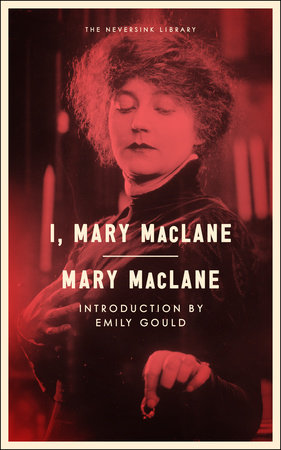

I, Mary MacLane

Part of Neversink

Afterword by Emily Gould
Ebook
On sale Mar 19, 2013 | 272 Pages | 9781612192871

I, Mary MacLane—the follow-up to I Await the Devil’s Coming—available now from Melville House, with a foreword by Emily Gould

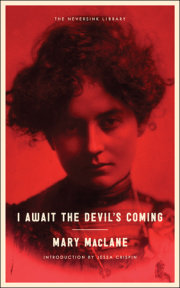
Fifteen years separate I Await the Devil’s Coming and Mary MacLane’s follow-up memoir, I, Mary MacLane (1917). They were years filled with men and affairs, drink and debauchery, war, friendship, and independence in New York and Boston. That independence was cut short by an illness that brought MacLane home to the loathed, provincial Butte, Montana, where once again she took up her pen.

In I, Mary MacLane, the national sensation told all, revealing many of the salacious details of her taste of freedom. As we now know, though, the battle for freedom had only just begun: if I Await the Devil’s Coming was a rallying cry for young girls, I, Mary MacLane was a dispatch from the front lines of early feminism. Every page speaks of the bravery of MacLane and her peers.

Just over a decade after I, Mary MacLane was published, its author died under mysterious circumstances in Chicago, having sunk from sensation to obscurity. The book remains one of the last documents we have of her life.
© Adobe Stock Images
MARY MACLANE was born on May 1st 1881 in Winnipeg, Manitoba, Canada. Her family moved to Minnesota while she was young, then again to Montana after the death of her father and remarriage of her mother. She began writing for her school paper in 1898 and published her first book, I Await the Devil's Coming, under the title The Story of Mary MacLane, in 1902 at the age of nineteen. She published two further books, including the memoir I, Mary MacLane in 1917; also in 1917 she wrote and starred in an autobiographical silent film, Men Who Have Made Love to Me. She died in mysterious circumstances in Chicago in 1929, at the age of 48, and her works fell almost immediately into obscurity. View titles by Mary MacLane
“MacLane deserves canonization alongside Virginia Woolf and Emily Dickinson and Gertrude Stein.” —Emily Gould, author of And The Heart Says Whatever and Friendship

"One of the most fascinatingly self-involved personalities of the 20th century."  The Age (2011)

"Mary MacLane comes off the page quivering with life. Moving."  The London Times

"The first of the self-expressionists, and also the first of the Flappers."  The Chicagoan

"Her first book was the first of the confessional diaries ever written in this country, and it was a sensation."  The New York Times

“I know of no other writer who can play upon words so magically. Mary MacLane is one of the few who actually knows how to write English. She senses the infinite resilience, the drunken exuber- ance, the magnificent power & delicacy of the language.” —H.L. Mencken 

“A girl wonder.” —Harper’s Magazine 

“A pioneering newswoman and later a silent-screen star, consid- ered the veritable spirit of the iconoclastic Twenties.” —Boston Globe 

“She was an extraordinarily gifted girl. . . She had a natural gift for crisp and concise expression, a keen, undisciplined intelligence and the emotional sensibility of a true artist.” —New York Tribune 

“A pioneering feminist. . . A sensation.” —Feminist Bookstore News

About

I, Mary MacLane—the follow-up to I Await the Devil’s Coming—available now from Melville House, with a foreword by Emily Gould

Fifteen years separate I Await the Devil’s Coming and Mary MacLane’s follow-up memoir, I, Mary MacLane (1917). They were years filled with men and affairs, drink and debauchery, war, friendship, and independence in New York and Boston. That independence was cut short by an illness that brought MacLane home to the loathed, provincial Butte, Montana, where once again she took up her pen.

In I, Mary MacLane, the national sensation told all, revealing many of the salacious details of her taste of freedom. As we now know, though, the battle for freedom had only just begun: if I Await the Devil’s Coming was a rallying cry for young girls, I, Mary MacLane was a dispatch from the front lines of early feminism. Every page speaks of the bravery of MacLane and her peers.

Just over a decade after I, Mary MacLane was published, its author died under mysterious circumstances in Chicago, having sunk from sensation to obscurity. The book remains one of the last documents we have of her life.

Author

© Adobe Stock Images
MARY MACLANE was born on May 1st 1881 in Winnipeg, Manitoba, Canada. Her family moved to Minnesota while she was young, then again to Montana after the death of her father and remarriage of her mother. She began writing for her school paper in 1898 and published her first book, I Await the Devil's Coming, under the title The Story of Mary MacLane, in 1902 at the age of nineteen. She published two further books, including the memoir I, Mary MacLane in 1917; also in 1917 she wrote and starred in an autobiographical silent film, Men Who Have Made Love to Me. She died in mysterious circumstances in Chicago in 1929, at the age of 48, and her works fell almost immediately into obscurity. View titles by Mary MacLane

Praise

“MacLane deserves canonization alongside Virginia Woolf and Emily Dickinson and Gertrude Stein.” —Emily Gould, author of And The Heart Says Whatever and Friendship

"One of the most fascinatingly self-involved personalities of the 20th century."  The Age (2011)

"Mary MacLane comes off the page quivering with life. Moving."  The London Times

"The first of the self-expressionists, and also the first of the Flappers."  The Chicagoan

"Her first book was the first of the confessional diaries ever written in this country, and it was a sensation."  The New York Times

“I know of no other writer who can play upon words so magically. Mary MacLane is one of the few who actually knows how to write English. She senses the infinite resilience, the drunken exuber- ance, the magnificent power & delicacy of the language.” —H.L. Mencken 

“A girl wonder.” —Harper’s Magazine 

“A pioneering newswoman and later a silent-screen star, consid- ered the veritable spirit of the iconoclastic Twenties.” —Boston Globe 

“She was an extraordinarily gifted girl. . . She had a natural gift for crisp and concise expression, a keen, undisciplined intelligence and the emotional sensibility of a true artist.” —New York Tribune 

“A pioneering feminist. . . A sensation.” —Feminist Bookstore News