Books for Arab American Heritage Month
In honor of Arab American Heritage Month in April, we are sharing books by Arab and Arab American authors that share their culture, history, and personal lives.
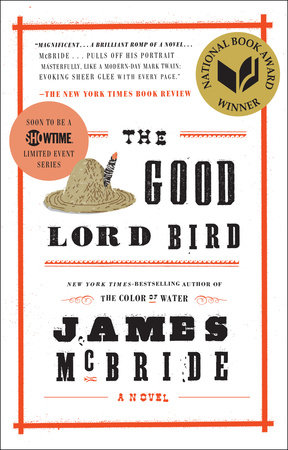
Winner of the National Book Award for Fiction
Winner of the Morning News Tournament of Books
"A brilliant romp of a novel…McBride…pulls off his portrait masterfully, like a modern-day Mark Twain." —The New York Times Book Review
"You may know the story of John Brown's unsuccessful raid on Harpers Ferry, but author James McBride's retelling of the events leading up to it is so imaginative, you'll race to the finish."—NPR
"A boisterous, highly entertaining, altogether original novel ...There is something deeply humane in this [story], something akin to the work of Homer or Mark Twain.” —The Washington Post
“Wildly entertaining… a rollicking saga about one of America’s earliest abolitionists.” —People
"McBride delivers another tour de force...A fascinating mix of history and mystery."—Essence
"A story that's difficult to put down."—Ebony
“Outrageously entertaining… rockets toward its inevitable and, yes, knee-slapping conclusion. Never has mayhem been this much of a humdinger.” —USA Today
“An impressively deep comedy.”—Salon “Both breezy and sharp, a rare combination outside of Twain. You should absolutely read it.” —New York Magazine
"Superbly written....McBride...transcends history and makes it come alive."—The Chicago Tribune
"Absorbing and darkly funny."—San Francisco Chronicle
"An irrepressibly fun read."—The Seattle Times
"The Good Lord Bird is just so brilliant. It had everything I want in a novel and left me feeling both transported and transformed."—John Green
"[McBride's] effervescent young narrator is pitch-perfect and wholly original."—Geraldine Brooks
Winner of the National Book Award for Fiction
Winner of the Morning News Tournament of Books
"A brilliant romp of a novel…McBride…pulls off his portrait masterfully, like a modern-day Mark Twain." —The New York Times Book Review
"You may know the story of John Brown's unsuccessful raid on Harpers Ferry, but author James McBride's retelling of the events leading up to it is so imaginative, you'll race to the finish."—NPR
"A boisterous, highly entertaining, altogether original novel ...There is something deeply humane in this [story], something akin to the work of Homer or Mark Twain.” —The Washington Post
“Wildly entertaining… a rollicking saga about one of America’s earliest abolitionists.” —People
"McBride delivers another tour de force...A fascinating mix of history and mystery."—Essence
"A story that's difficult to put down."—Ebony
“Outrageously entertaining… rockets toward its inevitable and, yes, knee-slapping conclusion. Never has mayhem been this much of a humdinger.” —USA Today
“An impressively deep comedy.”—Salon “Both breezy and sharp, a rare combination outside of Twain. You should absolutely read it.” —New York Magazine
"Superbly written....McBride...transcends history and makes it come alive."—The Chicago Tribune
"Absorbing and darkly funny."—San Francisco Chronicle
"An irrepressibly fun read."—The Seattle Times
"The Good Lord Bird is just so brilliant. It had everything I want in a novel and left me feeling both transported and transformed."—John Green
"[McBride's] effervescent young narrator is pitch-perfect and wholly original."—Geraldine Brooks
In honor of Arab American Heritage Month in April, we are sharing books by Arab and Arab American authors that share their culture, history, and personal lives.
For National Poetry Month in April, we are sharing poetry collections and books about poetry by authors who have their own stories to tell. These poets delve into history, reimagine the present, examine poetry itself—from traditional poems many know and love to poems and voices that are new and original.
Starring Ethan Hawke as John Brown, this adaptation is based on the novel by James McBride. Winner of the 2013 National Book Award for Fiction Henry Shackleford is a young slave living in the Kansas Territory in 1857, when the region is a battleground between anti- and pro-slavery forces. When John Brown, the legendary abolitionist,