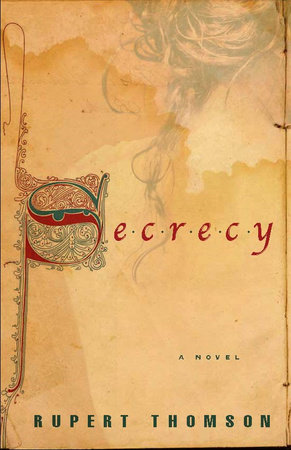

Secrecy

A Novel

Ebook
On sale Apr 22, 2014 | 400 Pages | 9781590516867

See Additional Formats
A sorcerer in wax. A fugitive. Haunted by a past he cannot escape. Threatened by a future he cannot imagine.
 
Zummo, a Sicilian sculptor, is summoned by Cosimo III to join the Medici court. Late seventeenth-century Florence is a hotbed of repression and hypocrisy. All forms of pleasure are brutally punished, and the Grand Duke himself, a man for whom marriage has been an exquisite torture, hides his pain beneath a show of excessive piety.

The Grand Duke asks Zummo to produce a life-size woman out of wax, an antidote to the French wife who made him suffer so. As Zummo wrestles with this unique commission, he falls under the spell of a woman whose elusiveness mirrors his own, but whose secrets are far more explosive. Lurking in the wings is the poisonous Dominican priest, Stufa, who has it within his power to destroy Zummo’s livelihood, if not his life.
 
In this highly charged novel, Thomson brings Florence to life in all its vibrant sensuality, while remaining entirely contemporary in his exploration of the tensions between love and solitude, beauty and decay. When reality becomes threatening, not to say unfathomable, survival strategies are tested to the limit. Redemption is a possibility, but only if the agonies of death and separation can be transcended.
I had left my hometown of Siracusa in 1675, the rumors snapping at my heels like a pack of dogs. I was only nineteen, but I knew there would be no turning back. I passed through Catania and on along the coast, Etna looming in the western sky, Etna with its fertile slopes, its luscious fruits and flowers, its promise of destruction. From Messina I sailed westward. It was late July, and the night was stifling. A dull red moon, clouds edged in rust and copper. Though the air was motion-less, the sea heaved and strained, as if struggling to free itself, and there were moments when I thought the boat was going down. That would have been the death of me, and there were those who would have rejoiced to hear the news.
 
I was in Palermo for a year or two, then I boarded a ship again and traveled northeast, to Naples. I hadn’t done what they said I’d done, but there’s a kind of truth in a well-told lie, and that truth can cling to you like the taste of raw garlic or the smell of smoke. People are always ready to believe the worst. Sometimes, in the viscous, fumbling hours before dawn, as I was forced once again to leave my lodgings for fear of being discovered or denounced, such a bitterness would seize me that if I happened to pass a mirror I would scarcely recognize myself. Other times I would laugh in the face of what pursued me. Let them twist the facts. Assassinate my character. Let them rake their muck. I would carve a path for myself, something elaborate and glorious, beyond their wildest imaginings. I would count on no one. Have no one count on me. I was in many places, but I had my work and I believed that it would save me. All the same, I lived close to the surface of my skin, as men do in a war, and I carried a knife on me at all times, even though, in most towns, it was forbidden, and every now and then I would go back over the past, touching cautious fingers to the damage. It was in this frame of mind, always watchful, often sleepless, that I made my way, finally, to Florence.
© Robin Farquhar-Thomson
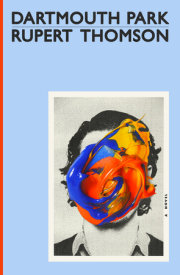
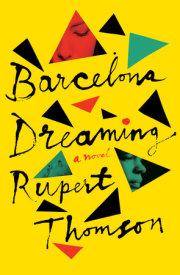
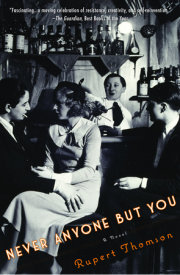
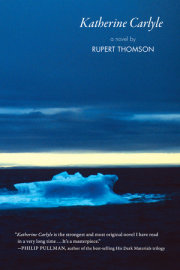
Rupert Thomson is the author of more than a dozen acclaimed novels, including Katherine Carlyle; Secrecy; The Insult, which was short-listed for the Guardian Fiction Prize and selected by David Bowie as one of his 100 Must-Read Books of All Time; The Book of Revelation, which was made into a feature film by Ana Kokkinos; and Death of a Murderer, which was short-listed for the Costa Novel of the Year Award. His memoir, This Party’s Got to Stop, was named Writers’ Guild Non-Fiction Book of the Year. He lives in London. View titles by Rupert Thomson

"Thomson paints a suspenseful picture of the moody, factional world of Florentine politics and draws parallels with the inner life of an artist whose work imitates darkness and decay." —The New Yorker

"Thomson succeeds on a number of levels here, for the novel works as a mystery, as a love story, as a historical novel and, more abstractly, as an exploration of aesthetic theory." —Kirkus 

“Thomson brings Renaissance-era Florence to life with rich descriptions and scenic locales. Readers who have toured Florence will enjoy revisiting the sites in the mind’s eye, and historical fiction fans in general will relish the virtual trip brimming with mystery and intrigue.” —Booklist

“Beautifully evocative prose…makes this unusual historical novel truly memorable.” —Publishers Weekly

“Thomson’s thorough research and exceptional skill for the sort of detailed storytelling often missing in historical novels make Secrecy an absorbing and thrilling mystery, full of dark alleys, gray skies and cobblestone.” —BookPage

"A page-turning historical thriller by one of Britain's finest writers; Thomson's lyrical and economical style draws comparisons to George Eliot's Romola." —Library Journal 
“A novel rich as the past it conjures up, weaving a story as playful and disturbing as the strange wax sculptures that its hero gives life to.” —Sarah Dunant, author of the best-selling The Birth of Venus

"Reads like a fairy tale for adults." —Leah Hager Cohen, author of No Book but the World

"Under the surface of Thomson’s startlingly inventive prose, the stories within the stories bring to light the many faces of secrecy—those imposed against one’s will, those sought out and relied on, and those which people carry unknowingly, like the hour of their death—which mark and shape all human lives." —Historical Novel Society

“Secrecy is also a stunning literary piece. The author uses language with as much skill as his hero Zummo uses wax, and the luminous city of Florence reveals a shocking core of corruption and darkness. If you are a fan of Umberto Eco, don’t miss Secrecy. Highly recommended.” —Historical Novels Review 

 “Chillingly brilliant and sinister…masterly.” —Financial Times

“Bewitching…Intensely atmospheric…Superb.” —Daily Mail

“Scene after scene trembles with breath-stopping tension on the edge of bliss or dread. No one else writes quite like this in Britain today.” —The Observer (UK)
About

A sorcerer in wax. A fugitive. Haunted by a past he cannot escape. Threatened by a future he cannot imagine.
 
Zummo, a Sicilian sculptor, is summoned by Cosimo III to join the Medici court. Late seventeenth-century Florence is a hotbed of repression and hypocrisy. All forms of pleasure are brutally punished, and the Grand Duke himself, a man for whom marriage has been an exquisite torture, hides his pain beneath a show of excessive piety.

The Grand Duke asks Zummo to produce a life-size woman out of wax, an antidote to the French wife who made him suffer so. As Zummo wrestles with this unique commission, he falls under the spell of a woman whose elusiveness mirrors his own, but whose secrets are far more explosive. Lurking in the wings is the poisonous Dominican priest, Stufa, who has it within his power to destroy Zummo’s livelihood, if not his life.
 
In this highly charged novel, Thomson brings Florence to life in all its vibrant sensuality, while remaining entirely contemporary in his exploration of the tensions between love and solitude, beauty and decay. When reality becomes threatening, not to say unfathomable, survival strategies are tested to the limit. Redemption is a possibility, but only if the agonies of death and separation can be transcended.

Excerpt

I had left my hometown of Siracusa in 1675, the rumors snapping at my heels like a pack of dogs. I was only nineteen, but I knew there would be no turning back. I passed through Catania and on along the coast, Etna looming in the western sky, Etna with its fertile slopes, its luscious fruits and flowers, its promise of destruction. From Messina I sailed westward. It was late July, and the night was stifling. A dull red moon, clouds edged in rust and copper. Though the air was motion-less, the sea heaved and strained, as if struggling to free itself, and there were moments when I thought the boat was going down. That would have been the death of me, and there were those who would have rejoiced to hear the news.
 
I was in Palermo for a year or two, then I boarded a ship again and traveled northeast, to Naples. I hadn’t done what they said I’d done, but there’s a kind of truth in a well-told lie, and that truth can cling to you like the taste of raw garlic or the smell of smoke. People are always ready to believe the worst. Sometimes, in the viscous, fumbling hours before dawn, as I was forced once again to leave my lodgings for fear of being discovered or denounced, such a bitterness would seize me that if I happened to pass a mirror I would scarcely recognize myself. Other times I would laugh in the face of what pursued me. Let them twist the facts. Assassinate my character. Let them rake their muck. I would carve a path for myself, something elaborate and glorious, beyond their wildest imaginings. I would count on no one. Have no one count on me. I was in many places, but I had my work and I believed that it would save me. All the same, I lived close to the surface of my skin, as men do in a war, and I carried a knife on me at all times, even though, in most towns, it was forbidden, and every now and then I would go back over the past, touching cautious fingers to the damage. It was in this frame of mind, always watchful, often sleepless, that I made my way, finally, to Florence.

Author

© Robin Farquhar-Thomson
Rupert Thomson is the author of more than a dozen acclaimed novels, including Katherine Carlyle; Secrecy; The Insult, which was short-listed for the Guardian Fiction Prize and selected by David Bowie as one of his 100 Must-Read Books of All Time; The Book of Revelation, which was made into a feature film by Ana Kokkinos; and Death of a Murderer, which was short-listed for the Costa Novel of the Year Award. His memoir, This Party’s Got to Stop, was named Writers’ Guild Non-Fiction Book of the Year. He lives in London. View titles by Rupert Thomson

Praise

"Thomson paints a suspenseful picture of the moody, factional world of Florentine politics and draws parallels with the inner life of an artist whose work imitates darkness and decay." —The New Yorker

"Thomson succeeds on a number of levels here, for the novel works as a mystery, as a love story, as a historical novel and, more abstractly, as an exploration of aesthetic theory." —Kirkus 

“Thomson brings Renaissance-era Florence to life with rich descriptions and scenic locales. Readers who have toured Florence will enjoy revisiting the sites in the mind’s eye, and historical fiction fans in general will relish the virtual trip brimming with mystery and intrigue.” —Booklist

“Beautifully evocative prose…makes this unusual historical novel truly memorable.” —Publishers Weekly

“Thomson’s thorough research and exceptional skill for the sort of detailed storytelling often missing in historical novels make Secrecy an absorbing and thrilling mystery, full of dark alleys, gray skies and cobblestone.” —BookPage

"A page-turning historical thriller by one of Britain's finest writers; Thomson's lyrical and economical style draws comparisons to George Eliot's Romola." —Library Journal 
“A novel rich as the past it conjures up, weaving a story as playful and disturbing as the strange wax sculptures that its hero gives life to.” —Sarah Dunant, author of the best-selling The Birth of Venus

"Reads like a fairy tale for adults." —Leah Hager Cohen, author of No Book but the World

"Under the surface of Thomson’s startlingly inventive prose, the stories within the stories bring to light the many faces of secrecy—those imposed against one’s will, those sought out and relied on, and those which people carry unknowingly, like the hour of their death—which mark and shape all human lives." —Historical Novel Society

“Secrecy is also a stunning literary piece. The author uses language with as much skill as his hero Zummo uses wax, and the luminous city of Florence reveals a shocking core of corruption and darkness. If you are a fan of Umberto Eco, don’t miss Secrecy. Highly recommended.” —Historical Novels Review 

 “Chillingly brilliant and sinister…masterly.” —Financial Times

“Bewitching…Intensely atmospheric…Superb.” —Daily Mail

“Scene after scene trembles with breath-stopping tension on the edge of bliss or dread. No one else writes quite like this in Britain today.” —The Observer (UK)