
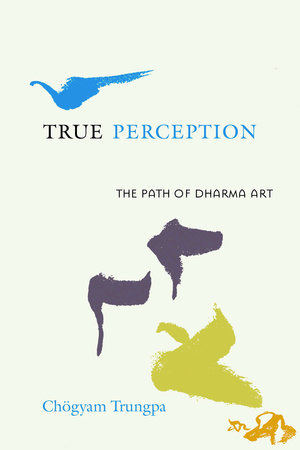

True Perception

The Path of Dharma Art

Edited by Judith L. Lief
Paperback
$21.95 US
On sale Nov 11, 2008 | 224 Pages | 9781590305881

See Additional Formats
Genuine art has the power to awaken and liberate. The renowned meditation master and artist Chögyam Trungpa called this type of art “dharma art”—any creative work that springs from an awakened state of mind, characterized by directness, unselfconsciousness, and nonaggression. Dharma art provides a vehicle to appreciate the nature of things as they are and express it without any struggle or desire to achieve. A work of dharma art brings out the goodness and dignity of the situation it reflects—dignity that comes from the artist’s interest in the details of life and sense of appreciation for experience. Trungpa shows how the principles of dharma art extend to everyday life: any activity can provide an opportunity to relax and open our senses to the phenomenal world.

An expanded edition of Trungpa's Dharma Art (1996), this book includes a new introduction and essay.
Chögyam Trungpa (1940–1987)—meditation master, teacher, and artist—founded Naropa University in Boulder, Colorado, the first Buddhist-inspired university in North America; the Shambhala Training program; and an international association of meditation centers known as Shambhala International. He is the author of numerous books, including Shambhala: The Sacred Path of the Warrior, Cutting Through Spiritual Materialism, and The Myth of Freedom. View titles by Chogyam Trungpa
“Trungpa’s notion of dharma art is an approach to art as meditation, an attitude of directness and unselfconsciousness in creative work. Lief’s inspired selection and careful editing make this an essential book for those committed to view that the artist should be a spiritual teacher.”—Publishers Weekly

About

Genuine art has the power to awaken and liberate. The renowned meditation master and artist Chögyam Trungpa called this type of art “dharma art”—any creative work that springs from an awakened state of mind, characterized by directness, unselfconsciousness, and nonaggression. Dharma art provides a vehicle to appreciate the nature of things as they are and express it without any struggle or desire to achieve. A work of dharma art brings out the goodness and dignity of the situation it reflects—dignity that comes from the artist’s interest in the details of life and sense of appreciation for experience. Trungpa shows how the principles of dharma art extend to everyday life: any activity can provide an opportunity to relax and open our senses to the phenomenal world.

An expanded edition of Trungpa's Dharma Art (1996), this book includes a new introduction and essay.

Author

Chögyam Trungpa (1940–1987)—meditation master, teacher, and artist—founded Naropa University in Boulder, Colorado, the first Buddhist-inspired university in North America; the Shambhala Training program; and an international association of meditation centers known as Shambhala International. He is the author of numerous books, including Shambhala: The Sacred Path of the Warrior, Cutting Through Spiritual Materialism, and The Myth of Freedom. View titles by Chogyam Trungpa

Praise

“Trungpa’s notion of dharma art is an approach to art as meditation, an attitude of directness and unselfconsciousness in creative work. Lief’s inspired selection and careful editing make this an essential book for those committed to view that the artist should be a spiritual teacher.”—Publishers Weekly

Books for Women’s History Month

In honor of Women’s History Month in March, we are sharing books by women who have shaped history and have fought for their communities. Our list includes books about women who fought for racial justice, abortion rights, equality in the workplace, and ranges in topics from women in politics and prominent women in history to

Read more