
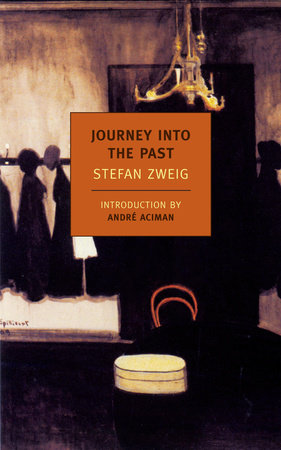

Journey Into the Past

Introduction by André Aciman
Translated by Anthea Bell
Look inside
Paperback
$16.95 US
On sale Nov 23, 2010 | 136 Pages | 9781590173671

See Additional Formats
“A focused new translation of the late Zweig’s (1881—1942) gorgeous and sad novella spotlights the hopeless passion between a young man and his employer’s wife. Ludwig, an ambitious young man from an impoverished background, finds employment with a famous industrialist in Frankfurt-am-Main and is eventually pressed into service as the industrialist’s private secretary, living in his house, where he befriends his boss’s radiant, sympathetic wife and finds in her an artistic kinship. A passion develops, cut short by the exigencies of the metals business, then by the eruption of WWI, and the two, despite the intervening years and Ludwig’s own marriage, eventually embark on an overnight trip together. Moving back and forth through time, Zweig pursues the couple to their destination, where they are confronted by a military demonstration that bludgeons their fragile memories with the cold, crass present. Bell’s faultless translation easily conveys the smoldering engine of Zweig’s writhing inner consciousness.” — Publisher’s Weekly

Stefan Zweig (1881–1942), novelist, biographer, poet, and translator, was born in Vienna into a wealthy Austrian Jewish family. During the 1930s, he was one of the best-selling writers in Europe, and was among the most translated German-language writers before the Second World War. With the rise of Nazism, he moved from Salzburg to London (taking British citizenship), to New York, and finally to Brazil, where he committed suicide with his wife. New York Review Books has published Zweig’s novels The Post-Office Girl and Beware of Pity as well as the novella Chess Story.

Anthea Bell is the recipient of the 2009 Schlegel-Tieck Prize for her translation of Stefan Zweig’s Burning Secret. In 2002 she won the Independent Foreign Fiction Prize and the Helen and Kurt Wolff Prize for her translation of W. G. Sebald’s Austerlitz.

André Aciman is the author of the novels Eight White Nights and Call Me by Your Name, the nonfiction works Out of Egypt and False Papers, and is the editor of The Proust Project. He teaches comparative literature at the Graduate Center of the City University of New York.

"A brilliant Austrian writer whose work brings to mind that of his compatriot Joseph Roth…a treat of prewar European literature" —Sylvia Brownrigg, The New York Times

“The latest novella available to English-speaking readers, Journey Into the Past—found among Zweig’s papers after his death and now published by New York Review Books Classics in a masterly translation by Anthea Bell and with an introduction by André Aciman…” —Words Without Borders 

"Journey into the Past is vintage Stefan Zweig—lucid, tender, powerful and compelling.” —Chris Schuler, The Independent

“The art is in the telling…a powerful love story…Excellent Foreword by writer Paul Bailey” —David Herman, The Jewish Chronicle

"One hardly knows where to begin in praising Zweig’s work. One gets the impression that he actively preferred to write about women, and about the great moral crises that send shivers down the spines of polite society" —Nicholas Lezard, The Guardian

"My advice is that you should go out at once and buy his books" —Anthony Daniels, The Sunday Telegraph

“a brilliant writer." —The New York Times

"Admired by readers as diverse as Freud, Einstein, Toscanini, Thomas Mann and Herman Goering." —The New York Times

"A remarkable tour de force…this is a masterclass in the language of beautiful storytelling." —Paul Blezard, The Lady

"Zweig belongs with three very different masters who each perfected the challenging art of the short story and the novella: Maupassant, Turgenev and Chekhov" —Paul Bailey

About

“A focused new translation of the late Zweig’s (1881—1942) gorgeous and sad novella spotlights the hopeless passion between a young man and his employer’s wife. Ludwig, an ambitious young man from an impoverished background, finds employment with a famous industrialist in Frankfurt-am-Main and is eventually pressed into service as the industrialist’s private secretary, living in his house, where he befriends his boss’s radiant, sympathetic wife and finds in her an artistic kinship. A passion develops, cut short by the exigencies of the metals business, then by the eruption of WWI, and the two, despite the intervening years and Ludwig’s own marriage, eventually embark on an overnight trip together. Moving back and forth through time, Zweig pursues the couple to their destination, where they are confronted by a military demonstration that bludgeons their fragile memories with the cold, crass present. Bell’s faultless translation easily conveys the smoldering engine of Zweig’s writhing inner consciousness.” — Publisher’s Weekly

Author

Stefan Zweig (1881–1942), novelist, biographer, poet, and translator, was born in Vienna into a wealthy Austrian Jewish family. During the 1930s, he was one of the best-selling writers in Europe, and was among the most translated German-language writers before the Second World War. With the rise of Nazism, he moved from Salzburg to London (taking British citizenship), to New York, and finally to Brazil, where he committed suicide with his wife. New York Review Books has published Zweig’s novels The Post-Office Girl and Beware of Pity as well as the novella Chess Story.

Anthea Bell is the recipient of the 2009 Schlegel-Tieck Prize for her translation of Stefan Zweig’s Burning Secret. In 2002 she won the Independent Foreign Fiction Prize and the Helen and Kurt Wolff Prize for her translation of W. G. Sebald’s Austerlitz.

André Aciman is the author of the novels Eight White Nights and Call Me by Your Name, the nonfiction works Out of Egypt and False Papers, and is the editor of The Proust Project. He teaches comparative literature at the Graduate Center of the City University of New York.

Praise

"A brilliant Austrian writer whose work brings to mind that of his compatriot Joseph Roth…a treat of prewar European literature" —Sylvia Brownrigg, The New York Times

“The latest novella available to English-speaking readers, Journey Into the Past—found among Zweig’s papers after his death and now published by New York Review Books Classics in a masterly translation by Anthea Bell and with an introduction by André Aciman…” —Words Without Borders 

"Journey into the Past is vintage Stefan Zweig—lucid, tender, powerful and compelling.” —Chris Schuler, The Independent

“The art is in the telling…a powerful love story…Excellent Foreword by writer Paul Bailey” —David Herman, The Jewish Chronicle

"One hardly knows where to begin in praising Zweig’s work. One gets the impression that he actively preferred to write about women, and about the great moral crises that send shivers down the spines of polite society" —Nicholas Lezard, The Guardian

"My advice is that you should go out at once and buy his books" —Anthony Daniels, The Sunday Telegraph

“a brilliant writer." —The New York Times

"Admired by readers as diverse as Freud, Einstein, Toscanini, Thomas Mann and Herman Goering." —The New York Times

"A remarkable tour de force…this is a masterclass in the language of beautiful storytelling." —Paul Blezard, The Lady

"Zweig belongs with three very different masters who each perfected the challenging art of the short story and the novella: Maupassant, Turgenev and Chekhov" —Paul Bailey