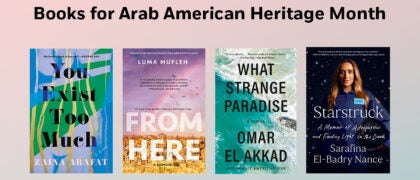
Books for Arab American Heritage Month
In honor of Arab American Heritage Month in April, we are sharing books by Arab and Arab American authors that share their culture, history, and personal lives.


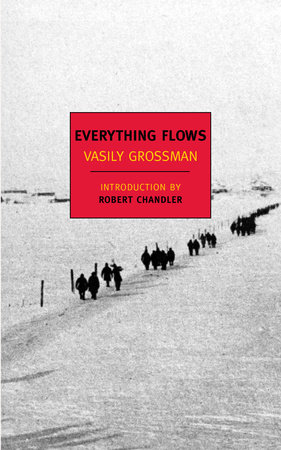
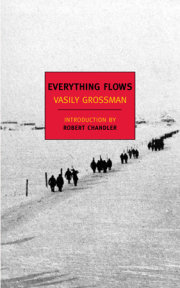
"Interspersed with meditations on Russian history, the revolution, and the nature of violence and freedom, Everything Flows is Grossman's great moral reckoning with the crimes of Stalinism." —Daniel Beer, The Wall Street Journal
“A half century after his death, Vasily Grossman's fiction still provides harrowing insight into the legacy of Stalinism, and the historical trauma that continues to fuel ethnic tensions within Ukraine.” —NPR Books
"Vasily Grossman is the Tolstoy of the USSR" --Martin Amis
"After he submitted his masterful World War II novel Life and Fate to a publisher in 1960, the KGB confiscated the manuscript, his notes and even his typewriter (the book was later smuggled out of the country and printed in 1974). But this didn’t quiet Grossman, whose indictments of Stalinist Russia were at least as damning as those of George Orwell and Aleksandr Solzhenitsyn. Understandably bitter over the suppression of his work, the author worked on Everything Flows—a shorter, but even more eviscerating, meditation on the monstrous results of the Soviet experiment—until his death from cancer in 1964. This new translation brings his searing vision to light... Fortunately, the KGB couldn’t keep Grossman’s books under wraps forever. His testament stands as a fitting tribute to the millions of voices that were prematurely silenced."—Drew Toal, Time Out New York
"...a richly-woven narrative of historical events and individual destinies — a masterpiece of pain, moral outrage and gallows humour. Grossman has become recognised not only as one of the great war novelists of all time but also as one of the first and most important of witnesses to the defence of Stalingrad, the fall of Berlin, the consequences of the Holocaust" —Business StandardA "brilliant and courageous novel...readers will find hope in the narrator's uncommon capacity to forgive and accept."–Library Journal
"Few novels confront human suffering on as massive a scale as this one....Grossman's individual by individual portrayal of anguish gives readers a heartrending glimpse of the incomprehensible. " --Publishers Weekly
"Remarkable...it trembles with the vision of freedom." --Irving Howe, The New York Times
"[I]t is as eloquent a memorial to the anonymous little man in the Stalinist state as Dr. Zhivago is to the artistic spirit in post-Czarist Russia and The First Circle to the scientific intelligentsia." --Thomas Lask, The New York Times
"Grossman traces the blame for the terror of the Stalin years back through Lenin, to the roots of the Russian character, to the mystical national soul that Russians have always considered their greatest strength...Grossman put his finger on the crux of the issue as today's Russians see it: What responsibility do they bear for the horrors perpetrated in the course of Russian and Soviet history?" --Los Angeles Times
"Interspersed with meditations on Russian history, the revolution, and the nature of violence and freedom, Everything Flows is Grossman's great moral reckoning with the crimes of Stalinism." —Daniel Beer, The Wall Street Journal
“A half century after his death, Vasily Grossman's fiction still provides harrowing insight into the legacy of Stalinism, and the historical trauma that continues to fuel ethnic tensions within Ukraine.” —NPR Books
"Vasily Grossman is the Tolstoy of the USSR" --Martin Amis
"After he submitted his masterful World War II novel Life and Fate to a publisher in 1960, the KGB confiscated the manuscript, his notes and even his typewriter (the book was later smuggled out of the country and printed in 1974). But this didn’t quiet Grossman, whose indictments of Stalinist Russia were at least as damning as those of George Orwell and Aleksandr Solzhenitsyn. Understandably bitter over the suppression of his work, the author worked on Everything Flows—a shorter, but even more eviscerating, meditation on the monstrous results of the Soviet experiment—until his death from cancer in 1964. This new translation brings his searing vision to light... Fortunately, the KGB couldn’t keep Grossman’s books under wraps forever. His testament stands as a fitting tribute to the millions of voices that were prematurely silenced."—Drew Toal, Time Out New York
"...a richly-woven narrative of historical events and individual destinies — a masterpiece of pain, moral outrage and gallows humour. Grossman has become recognised not only as one of the great war novelists of all time but also as one of the first and most important of witnesses to the defence of Stalingrad, the fall of Berlin, the consequences of the Holocaust" —Business StandardA "brilliant and courageous novel...readers will find hope in the narrator's uncommon capacity to forgive and accept."–Library Journal
"Few novels confront human suffering on as massive a scale as this one....Grossman's individual by individual portrayal of anguish gives readers a heartrending glimpse of the incomprehensible. " --Publishers Weekly
"Remarkable...it trembles with the vision of freedom." --Irving Howe, The New York Times
"[I]t is as eloquent a memorial to the anonymous little man in the Stalinist state as Dr. Zhivago is to the artistic spirit in post-Czarist Russia and The First Circle to the scientific intelligentsia." --Thomas Lask, The New York Times
"Grossman traces the blame for the terror of the Stalin years back through Lenin, to the roots of the Russian character, to the mystical national soul that Russians have always considered their greatest strength...Grossman put his finger on the crux of the issue as today's Russians see it: What responsibility do they bear for the horrors perpetrated in the course of Russian and Soviet history?" --Los Angeles Times

In honor of Arab American Heritage Month in April, we are sharing books by Arab and Arab American authors that share their culture, history, and personal lives.
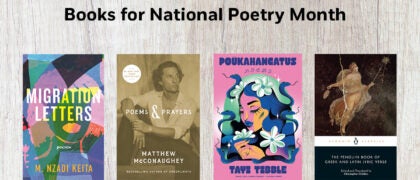
For National Poetry Month in April, we are sharing poetry collections and books about poetry by authors who have their own stories to tell. These poets delve into history, reimagine the present, examine poetry itself—from traditional poems many know and love to poems and voices that are new and original.
/