
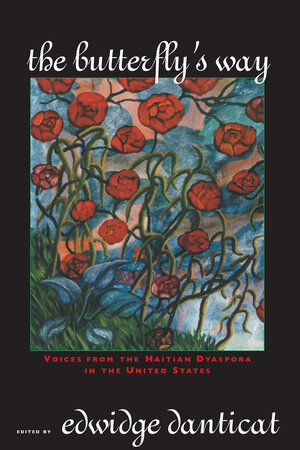
The Butterfly's Way

Voices from the Haitian Dyaspora in the United States

In four sections–Childhood, Migration, First Generation, and Return–the contributors to this anthology write powerfully, often hauntingly, of their lives in Haiti and the United States. Jean-Robert Cadet’s description of his Haitian childhood as a restavec–a child slave–in Port-au-Prince contrasts with Dany Laferriere’s account of a ten-year-old boy and his beloved grandmother in Petit-Gove. We read of Marie Helene Laforest’s realization that while she was white in Haiti, in the United States she is black. Patricia Benoit tells us of a Haitian woman refugee in a detention center who has a simple need for a red dress–dignity. The reaction of a man who has married the woman he loves is the theme of Gary Pierre-Pierre’s “The White Wife”; the feeling of alienation is explored in “Made Outside” by Francie Latour. The frustration of trying to help those who have remained in Haiti and of the do-gooders who do more for themselves than the Haitians is described in Babette Wainwright’s “Do Something for Your Soul, Go to Haiti.” The variations and permutations of the divided self of the Haitian emigrant are poignantly conveyed in this unique anthology.

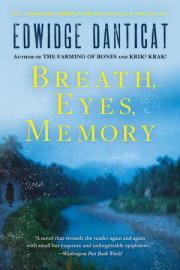
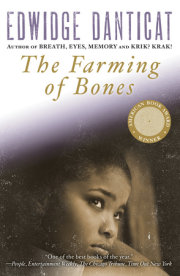
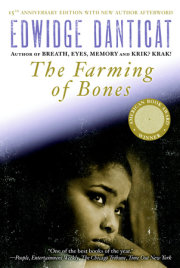
Edwidge Danticat is the author of numerous books, including Brother, I’m Dying, which won the National Book Critics Circle Award and was a National Book Award finalist; Breath, Eyes, Memory, an Oprah Book Club selection; Krik? Krak!, a National Book Award finalist; The Dew Breaker, winner of the inaugural Story Prize; and The Farming of Bones, which won an American Book Award for fiction in 1999. The recipient of a MacArthur Fellowship, she has been published in The New Yorker, The New York Times, and elsewhere.

Praise for The Butterfly’s Way

“A volume that movingly describes the various facets of the Haitian migration experience . . . The Butterfly’s Way is the story of a people in transition, struggling to find a comfort zone between their land of origin and their land(s) of resettlement. It provides powerful images of the inner souls of displaced persons, living between two worlds and carrying a heavy baggage of things past.”
Afro-Hispanic Review

“An assembly of writings by writers of Haitian descent—the first of its kind . . . An astonishing, stirring addition not only to the heretofore thin canon of Haitian-American literature, but to American literature. Period.”
Research in African Literatures

“Varied, colorful, and interesting . . . Whether [the writers] are discussing childhood memories, interracial relationships, or returning home, their comments are always illuminating.”
Library Journal

“A potent and piercing collection of essays and poems that articulate the frustrations and sorrows of Haitians who are now outsiders both in Haiti and in their places of refuge.” Booklist

About

In four sections–Childhood, Migration, First Generation, and Return–the contributors to this anthology write powerfully, often hauntingly, of their lives in Haiti and the United States. Jean-Robert Cadet’s description of his Haitian childhood as a restavec–a child slave–in Port-au-Prince contrasts with Dany Laferriere’s account of a ten-year-old boy and his beloved grandmother in Petit-Gove. We read of Marie Helene Laforest’s realization that while she was white in Haiti, in the United States she is black. Patricia Benoit tells us of a Haitian woman refugee in a detention center who has a simple need for a red dress–dignity. The reaction of a man who has married the woman he loves is the theme of Gary Pierre-Pierre’s “The White Wife”; the feeling of alienation is explored in “Made Outside” by Francie Latour. The frustration of trying to help those who have remained in Haiti and of the do-gooders who do more for themselves than the Haitians is described in Babette Wainwright’s “Do Something for Your Soul, Go to Haiti.” The variations and permutations of the divided self of the Haitian emigrant are poignantly conveyed in this unique anthology.

Author

Edwidge Danticat is the author of numerous books, including Brother, I’m Dying, which won the National Book Critics Circle Award and was a National Book Award finalist; Breath, Eyes, Memory, an Oprah Book Club selection; Krik? Krak!, a National Book Award finalist; The Dew Breaker, winner of the inaugural Story Prize; and The Farming of Bones, which won an American Book Award for fiction in 1999. The recipient of a MacArthur Fellowship, she has been published in The New Yorker, The New York Times, and elsewhere.

Praise

Praise for The Butterfly’s Way

“A volume that movingly describes the various facets of the Haitian migration experience . . . The Butterfly’s Way is the story of a people in transition, struggling to find a comfort zone between their land of origin and their land(s) of resettlement. It provides powerful images of the inner souls of displaced persons, living between two worlds and carrying a heavy baggage of things past.”
Afro-Hispanic Review

“An assembly of writings by writers of Haitian descent—the first of its kind . . . An astonishing, stirring addition not only to the heretofore thin canon of Haitian-American literature, but to American literature. Period.”
Research in African Literatures

“Varied, colorful, and interesting . . . Whether [the writers] are discussing childhood memories, interracial relationships, or returning home, their comments are always illuminating.”
Library Journal

“A potent and piercing collection of essays and poems that articulate the frustrations and sorrows of Haitians who are now outsiders both in Haiti and in their places of refuge.” Booklist