
Books for Jewish American Heritage Month
In celebration of Jewish American Heritage Month in May, we are sharing books by authors who share their individual stories, experiences, and lives. Find our full collection of books here.


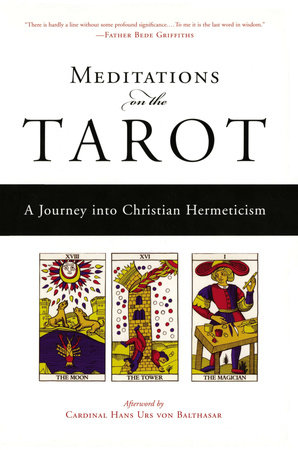
Now in a fully corrected edition, one of the true spiritual classics of the twentieth century.
Published for the first time with an index and Cardinal Hans Urs von Balthasar’s afterword, this new English publication of Meditations on the Tarot is the landmark edition of one of the most important works of esoteric Christianity.
Written anonymously and published posthumously, as was the author’s wish, the intention of this work is for the reader to find a relationship with the author in the spiritual dimensions of existence. The author wanted not to be thought of as a personality who lived from 1900 to 1973, but as a friend who is communicating with us from beyond the boundaries of ordinary life.
Using the 22 major arcana of the tarot deck as a means to explore some of humanity’s most penetrating spiritual questions, Meditations on the Tarot has attracted an unprecedented range of praise from across the spiritual spectrum.
"This book, in my view, is the greatest contribution to date toward the rediscovery and renewal of the Christian contemplative tradition of the Fathers of the Church and the High Middle Ages." (Trappist Abbot Thomas Keating, OCSO)
"Meditations on the Tarot has become instrumental in my thinking and in my understanding of health and disease. The writer-who calls himself 'Unknown Friend'-seems to be speaking to me directly with endless wisdom and inspiration." (Gerald Epstein, M.D., author of Healing Visualizations)
"The most beautiful and instructive book of the twentieth century concerning Western esotericism." (Antoine Faivre, professor of Germanic Studies at the University of Haute-Normany)
"The book begs not only to be studied cover to cover, but also to be savored, meditated upon and assimilated into one's life." (Richard W. Kropf, National Catholic Reporter)
Now in a fully corrected edition, one of the true spiritual classics of the twentieth century.
Published for the first time with an index and Cardinal Hans Urs von Balthasar’s afterword, this new English publication of Meditations on the Tarot is the landmark edition of one of the most important works of esoteric Christianity.
Written anonymously and published posthumously, as was the author’s wish, the intention of this work is for the reader to find a relationship with the author in the spiritual dimensions of existence. The author wanted not to be thought of as a personality who lived from 1900 to 1973, but as a friend who is communicating with us from beyond the boundaries of ordinary life.
Using the 22 major arcana of the tarot deck as a means to explore some of humanity’s most penetrating spiritual questions, Meditations on the Tarot has attracted an unprecedented range of praise from across the spiritual spectrum.
"This book, in my view, is the greatest contribution to date toward the rediscovery and renewal of the Christian contemplative tradition of the Fathers of the Church and the High Middle Ages." (Trappist Abbot Thomas Keating, OCSO)
"Meditations on the Tarot has become instrumental in my thinking and in my understanding of health and disease. The writer-who calls himself 'Unknown Friend'-seems to be speaking to me directly with endless wisdom and inspiration." (Gerald Epstein, M.D., author of Healing Visualizations)
"The most beautiful and instructive book of the twentieth century concerning Western esotericism." (Antoine Faivre, professor of Germanic Studies at the University of Haute-Normany)
"The book begs not only to be studied cover to cover, but also to be savored, meditated upon and assimilated into one's life." (Richard W. Kropf, National Catholic Reporter)


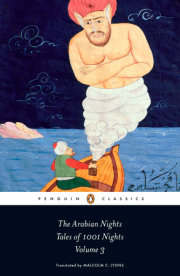


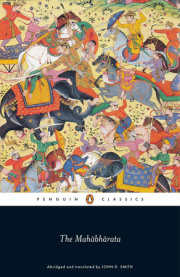

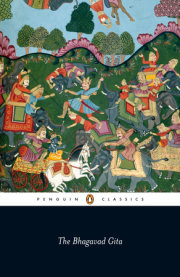
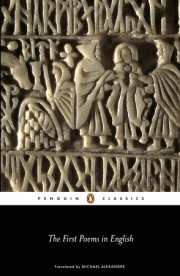
















In celebration of Jewish American Heritage Month in May, we are sharing books by authors who share their individual stories, experiences, and lives. Find our full collection of books here.
For Mental Health Awareness Month in May, we are sharing books to educate and raise awareness about mental health and the various factors that may affect it, and to provide tools and resources for student wellness. Find our full collection of titles here.
Each May, we honor the stories, histories, and cultures of Asian Americans, Native Hawaiians, and Pacific Islanders. Below is a selection of acclaimed fiction and nonfiction books by AANHPI creators to share with your students this month and throughout the year. Find our full collection of titles for Higher Education here.