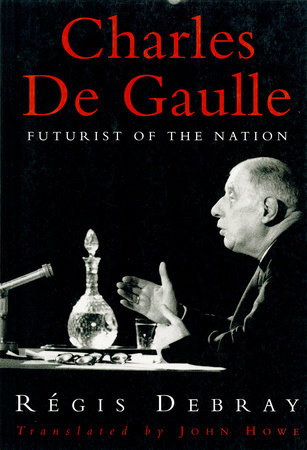

Charles De Gaulle

Futurist of the Nation

Translated by John Howe
Look inside
Paperback
$19.95 US
On sale May 17, 1994 | 122 Pages | 9780860914525

In this elegant and original book, Regis Debray argues that for two hundred years the defeats of the left have stemmed from its failure to understand what it likes to call the ‘national question’, while equally its successes have grown from an unacknowledged liaison with the ‘unreal reality’ of the nation.

According to Debray, Charles DE Gaulle was no narrow nationalist. By grounding his actions in a generous philosophy of the nation he was able to wed boldness to insight: on 14 June 1940 he appointed himself leader of the free French, disregarding the overwhelming parliamentary and legal mandate according to Petain. This intuitive action was to be resoundingly vindicated in the resistance and liberation of France.

This study of De Gaulle is offered as an indictment of the shallowness of contemporary politics in the West. For Debray, De Gaulle is not only the last statesman in the classic mould, he is also the first to anticipate the politics of the twenty-first century. De Gaulle’s aloofness from the media and disdain for the base arts of electioneering have an exemplary quality, Debray believes, reaffirming the vocation of political leadership as something other than adapting to popular preferences or allowing professional communicators and opinion pollsters to set every agenda.
Régis Debray teaches philosophy at the Université de Lyon-III and is director of the European Institute of the History and Science of Religion. He is the author of many books, including Media Manifestos, Critique of Political Reason and God: An Itinerary, also available from Verso.
“De Gaulle the communicator and icon is worth a moment of reflection. This De Gaulle dominates [Debray’s] provocative and insightful new commentary on le general.”—International Herald Tribune

About

In this elegant and original book, Regis Debray argues that for two hundred years the defeats of the left have stemmed from its failure to understand what it likes to call the ‘national question’, while equally its successes have grown from an unacknowledged liaison with the ‘unreal reality’ of the nation.

According to Debray, Charles DE Gaulle was no narrow nationalist. By grounding his actions in a generous philosophy of the nation he was able to wed boldness to insight: on 14 June 1940 he appointed himself leader of the free French, disregarding the overwhelming parliamentary and legal mandate according to Petain. This intuitive action was to be resoundingly vindicated in the resistance and liberation of France.

This study of De Gaulle is offered as an indictment of the shallowness of contemporary politics in the West. For Debray, De Gaulle is not only the last statesman in the classic mould, he is also the first to anticipate the politics of the twenty-first century. De Gaulle’s aloofness from the media and disdain for the base arts of electioneering have an exemplary quality, Debray believes, reaffirming the vocation of political leadership as something other than adapting to popular preferences or allowing professional communicators and opinion pollsters to set every agenda.

Author

Régis Debray teaches philosophy at the Université de Lyon-III and is director of the European Institute of the History and Science of Religion. He is the author of many books, including Media Manifestos, Critique of Political Reason and God: An Itinerary, also available from Verso.

Praise

“De Gaulle the communicator and icon is worth a moment of reflection. This De Gaulle dominates [Debray’s] provocative and insightful new commentary on le general.”—International Herald Tribune