
Books for Arab American Heritage Month
In honor of Arab American Heritage Month in April, we are sharing books by Arab and Arab American authors that share their culture, history, and personal lives.


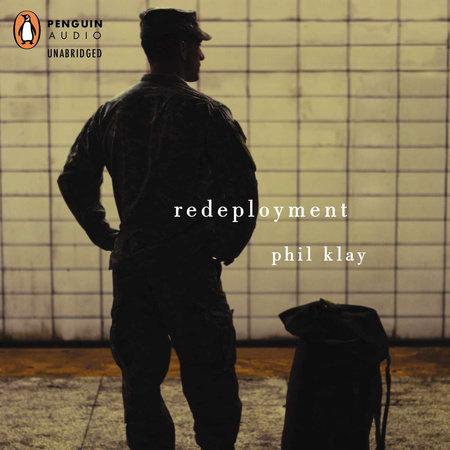
First time was instinct. I hear O’Leary go, “Jesus,” and there’s a skinny brown dog lapping up blood the same way he’d lap up water from a bowl. It wasn’t American blood, but still, there’s that dog, lapping it up. And that’s the last straw, I guess, and then it’s open season on dogs.
At the time you don’t think about it. You’re thinking about who’s in that house, what’s he armed with, how’s he gonna kill you, your buddies. You’re going block by block, fighting with rifles good to 550 meters and you’re killing people at five in a concrete box.
The thinking comes later, when they give you the time. See, it’s not a straight shot back, from war to the Jacksonville mall. When our deployment was up, they put us on TQ, this logistics base out in the desert, let us decompress a bit. I’m not sure what they meant by that. Decompress. We took it to mean jerk off a lot in the showers. Smoke a lot of cigarettes and play a lot of cards. And then they took us to Kuwait and put us on a commercial airliner to go home.
So there you are. You’ve been in a no-shit war zone and then you’re sitting in a plush chair looking up at a little nozzle shooting air conditioning, thinking, what the fuck? You’ve got a rifle between your knees, and so does everyone else. Some Marines got M9 pistols, but they take away your bayonets because you aren’t allowed to have knives on an airplane. Even though you’ve showered, you all look grimy and lean. Everybody’s hollow eyed and their cammies are beat to shit. And you sit there, and close your eyes, and think.
The problem is, your thoughts don’t come out in any kind of straight order. You don’t think, oh, I did A, then B, then C, then D. You try to think about home, then you’re in the torture house. You see the body parts in the locker and the retarded guy in the cage. He squawked like a chicken. His head was shrunk down to a coconut. It takes you awhile to remember Doc saying they’d shot mercury into his skull, and then it still doesn’t make any sense.
Provides questions, discussion topics, suggested reading lists, introductions and/or author Q&As, which are intended to enhance reading groups’ experiences.
(Please note: the guide displayed here is the most recently uploaded version; while unlikely, any page citation discrepancies between the guide and book is likely due to pagination differences between a book’s different formats.)
Roxana Robinson, author of Sparta:
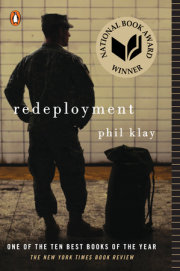
“These are gorgeous stories—fierce, intelligent and heartbreaking. Phil Klay, a former Marine, brings us both the news from Iraq and the news from back home. His writing is bold and sure, and full of all sorts of authority—literary, military and just plain human. This is news we need to hear, from a new writer we need to know about.”
First time was instinct. I hear O’Leary go, “Jesus,” and there’s a skinny brown dog lapping up blood the same way he’d lap up water from a bowl. It wasn’t American blood, but still, there’s that dog, lapping it up. And that’s the last straw, I guess, and then it’s open season on dogs.
At the time you don’t think about it. You’re thinking about who’s in that house, what’s he armed with, how’s he gonna kill you, your buddies. You’re going block by block, fighting with rifles good to 550 meters and you’re killing people at five in a concrete box.
The thinking comes later, when they give you the time. See, it’s not a straight shot back, from war to the Jacksonville mall. When our deployment was up, they put us on TQ, this logistics base out in the desert, let us decompress a bit. I’m not sure what they meant by that. Decompress. We took it to mean jerk off a lot in the showers. Smoke a lot of cigarettes and play a lot of cards. And then they took us to Kuwait and put us on a commercial airliner to go home.
So there you are. You’ve been in a no-shit war zone and then you’re sitting in a plush chair looking up at a little nozzle shooting air conditioning, thinking, what the fuck? You’ve got a rifle between your knees, and so does everyone else. Some Marines got M9 pistols, but they take away your bayonets because you aren’t allowed to have knives on an airplane. Even though you’ve showered, you all look grimy and lean. Everybody’s hollow eyed and their cammies are beat to shit. And you sit there, and close your eyes, and think.
The problem is, your thoughts don’t come out in any kind of straight order. You don’t think, oh, I did A, then B, then C, then D. You try to think about home, then you’re in the torture house. You see the body parts in the locker and the retarded guy in the cage. He squawked like a chicken. His head was shrunk down to a coconut. It takes you awhile to remember Doc saying they’d shot mercury into his skull, and then it still doesn’t make any sense.
Provides questions, discussion topics, suggested reading lists, introductions and/or author Q&As, which are intended to enhance reading groups’ experiences.
(Please note: the guide displayed here is the most recently uploaded version; while unlikely, any page citation discrepancies between the guide and book is likely due to pagination differences between a book’s different formats.)
Roxana Robinson, author of Sparta:
“These are gorgeous stories—fierce, intelligent and heartbreaking. Phil Klay, a former Marine, brings us both the news from Iraq and the news from back home. His writing is bold and sure, and full of all sorts of authority—literary, military and just plain human. This is news we need to hear, from a new writer we need to know about.”
In honor of Arab American Heritage Month in April, we are sharing books by Arab and Arab American authors that share their culture, history, and personal lives.
For National Poetry Month in April, we are sharing poetry collections and books about poetry by authors who have their own stories to tell. These poets delve into history, reimagine the present, examine poetry itself—from traditional poems many know and love to poems and voices that are new and original.