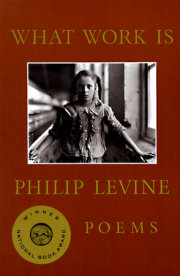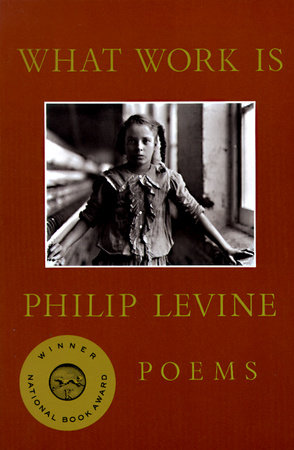

What Work Is

Poems (National Book Award Winner)

Winner of the National Book Award  

"It didn't seem possible that Levine could improve on his first working-class portraits, yet I feel these new poems are an improvement: an extra dimension of dignity has been conferred on his characters." —Alfred Corn,The  Washington Post Book World

"What Work Is makes some of its severest poetry out of wounds inflicted on workers and the environment of manufacturing." —Richard Tillinghast, The New York Times Book Review

"What Work Is gives a hymn-like quality to its eulogies and elegies. Levine's voice frequently blurs the line between poetic utterance and prayer...His lyrical compassion, anger and hopefulness make him one of the most authentically moving poets of our age." —Phoebe Pettingell, The New Leader
  • WINNER | 1991
    National Book Awards
© Frances Levine
PHILIP LEVINE was born in 1928 in Detroit and attended Wayne State University. After a succession of industrial jobs, he left the city for good and lived in various parts of the country before settling in Fresno, California, where he taught at the state university until his retirement. He was the author of nineteen previous collections of poetry and was the recipient of two National Book Awards and the Pulitzer Prize, among many other honors. He was poet laureate from 2011 until 2012, and served twelve autumns as poet-in-residence at New York University. He died in February 2015. View titles by Philip Levine
What Work Is gives a hymn-like quality to its eulogies and elegies. Levine’s voice frequently blurs the line between poetic utterance and prayer . . . His lyrical compassion, anger, and hopefulness make him one of the most authentically moving poets of our age.”
—Phoebe Pettingell, The New Leader
 
“It didn’t seem possible that Levine could improve on his first working-class portraits, yet I feel these new poems are an improvement: an extra dimension of dignity has been conferred on his characters . . . the poems ‘Fear and Fame,’ ‘Coming Close,’ ‘Every Blessed Day,’ and the title poem are perhaps the most moving that Levine has written—tender without being sentimental, calm but not lacking in passion, written in a diction as clear and lucid as spring water.”
—Alfred Corn, The Washington Post Book World
 
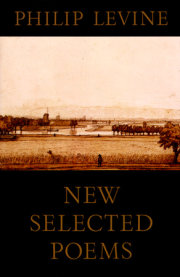
“Since the early 1960s Philip Levine has articulated in poetry the lives of the men and women who run machines, punch the time clocks, and work the assembly lines . . . What Work Is makes some of its severest poetry out of wounds inflicted on workers and the environments by manufacturing . . . New Selected Poems published simultaneously reminds us that he has been our preeminent poet of working life for several decades.”
—Richard Tillinghast, The New York Times Book Review

About

Winner of the National Book Award  

"It didn't seem possible that Levine could improve on his first working-class portraits, yet I feel these new poems are an improvement: an extra dimension of dignity has been conferred on his characters." —Alfred Corn,The  Washington Post Book World

"What Work Is makes some of its severest poetry out of wounds inflicted on workers and the environment of manufacturing." —Richard Tillinghast, The New York Times Book Review

"What Work Is gives a hymn-like quality to its eulogies and elegies. Levine's voice frequently blurs the line between poetic utterance and prayer...His lyrical compassion, anger and hopefulness make him one of the most authentically moving poets of our age." —Phoebe Pettingell, The New Leader

Awards

  • WINNER | 1991
    National Book Awards

Author

© Frances Levine
PHILIP LEVINE was born in 1928 in Detroit and attended Wayne State University. After a succession of industrial jobs, he left the city for good and lived in various parts of the country before settling in Fresno, California, where he taught at the state university until his retirement. He was the author of nineteen previous collections of poetry and was the recipient of two National Book Awards and the Pulitzer Prize, among many other honors. He was poet laureate from 2011 until 2012, and served twelve autumns as poet-in-residence at New York University. He died in February 2015. View titles by Philip Levine

Praise

What Work Is gives a hymn-like quality to its eulogies and elegies. Levine’s voice frequently blurs the line between poetic utterance and prayer . . . His lyrical compassion, anger, and hopefulness make him one of the most authentically moving poets of our age.”
—Phoebe Pettingell, The New Leader
 
“It didn’t seem possible that Levine could improve on his first working-class portraits, yet I feel these new poems are an improvement: an extra dimension of dignity has been conferred on his characters . . . the poems ‘Fear and Fame,’ ‘Coming Close,’ ‘Every Blessed Day,’ and the title poem are perhaps the most moving that Levine has written—tender without being sentimental, calm but not lacking in passion, written in a diction as clear and lucid as spring water.”
—Alfred Corn, The Washington Post Book World
 
“Since the early 1960s Philip Levine has articulated in poetry the lives of the men and women who run machines, punch the time clocks, and work the assembly lines . . . What Work Is makes some of its severest poetry out of wounds inflicted on workers and the environments by manufacturing . . . New Selected Poems published simultaneously reminds us that he has been our preeminent poet of working life for several decades.”
—Richard Tillinghast, The New York Times Book Review