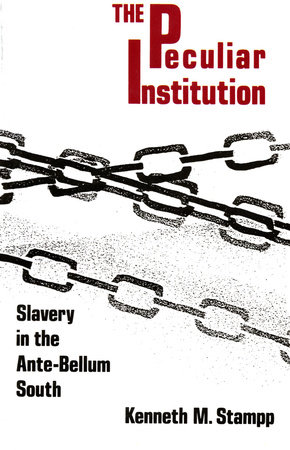

Peculiar Institution

Slavery in the Ante-Bellum South

Look inside
Paperback
$18.00 US
On sale Dec 17, 1989 | 464 Pages | 9780679723073

Winner of the Lincoln Prize

Stampp’s classic study of American slavery as a deliberately chosen, practical system of controlling and exploiting labor is one of the most important and influential works of American history written in our time.

“A thoughtful and deeply moving book. . . . Mr. Stampp wants to show specifically what slavery was like, why it existed, and what it did to the American people.”—Bruce Catton
1. The Setting

2. From Day Clean to First Dark

3. A Troublesome Property

4. To Make Them Stand in Fear

5. Chattels Personal

6. Slavemongering

7. Maintenance, Morbidity, Mortality

8. Between Two Cultures

9. Profit and Loss

10. He Who Has Endured
  • SUBMITTED | 1993
    Lincoln Prize
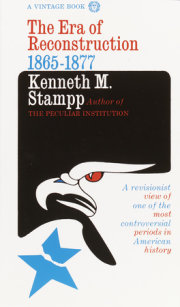
Kenneth M. Stampp was an acclaimed scholar, teacher, and historian of the Civil War period. He is best known for The Peculiar Institution: Slavery in the Antebellum South and The Era of Reconstruction, 1865–1877, two books that staunchly challenged previous historians' romanticized depictions of slave-owner relationships and the state of the South during the Reconstruction. These works helped revolutionize the study of the period and remain staples of university classrooms. Stampp, who was the Alexander F. and May T. Morrison Professor Emeritus of History at the University of California, Berkeley, died in 2009. View titles by Kenneth M. Stampp
"A thoughtful, deeply moving book....Mr. Stampp wants to show specifically what slavery was like, why it existed, and what it did to the American people .... There is a massive impact to this book-made all the more effective by the fact that its author writes with a dispassionate and scholarly objectivity -- which helps to make it one of the most valuable and memorable books ever written in this field."-- Bruce Catton

"In ten sparkling chapters the book details and illuminates every aspect of slavery....Slavery is viewed not as a method of regulating race relations, not as an arrangement that was in its essence paternalistic, but as a practical system of controlling and exploiting labor. How the slaves worked, how they resisted bondage, how they were disciplined, how they lived their lives in the quarters, and how they behaved toward each other and toward their masters are themes which receive full exploration.... The materials are handled with imagination and verve, the style is polished, the factual evidence is precise and accurate. Some scholars will disagree with the conclusions. No one can afford to disregard them."-- Frank W. Klingberg, American Historical Review

"The Peculiar Institution is one of the most important and provocative works on Southern history to appear in our generation."-- David Donald, Commentary

About

Winner of the Lincoln Prize

Stampp’s classic study of American slavery as a deliberately chosen, practical system of controlling and exploiting labor is one of the most important and influential works of American history written in our time.

“A thoughtful and deeply moving book. . . . Mr. Stampp wants to show specifically what slavery was like, why it existed, and what it did to the American people.”—Bruce Catton

Table of Contents

1. The Setting

2. From Day Clean to First Dark

3. A Troublesome Property

4. To Make Them Stand in Fear

5. Chattels Personal

6. Slavemongering

7. Maintenance, Morbidity, Mortality

8. Between Two Cultures

9. Profit and Loss

10. He Who Has Endured

Awards

  • SUBMITTED | 1993
    Lincoln Prize

Author

Kenneth M. Stampp was an acclaimed scholar, teacher, and historian of the Civil War period. He is best known for The Peculiar Institution: Slavery in the Antebellum South and The Era of Reconstruction, 1865–1877, two books that staunchly challenged previous historians' romanticized depictions of slave-owner relationships and the state of the South during the Reconstruction. These works helped revolutionize the study of the period and remain staples of university classrooms. Stampp, who was the Alexander F. and May T. Morrison Professor Emeritus of History at the University of California, Berkeley, died in 2009. View titles by Kenneth M. Stampp

Praise

"A thoughtful, deeply moving book....Mr. Stampp wants to show specifically what slavery was like, why it existed, and what it did to the American people .... There is a massive impact to this book-made all the more effective by the fact that its author writes with a dispassionate and scholarly objectivity -- which helps to make it one of the most valuable and memorable books ever written in this field."-- Bruce Catton

"In ten sparkling chapters the book details and illuminates every aspect of slavery....Slavery is viewed not as a method of regulating race relations, not as an arrangement that was in its essence paternalistic, but as a practical system of controlling and exploiting labor. How the slaves worked, how they resisted bondage, how they were disciplined, how they lived their lives in the quarters, and how they behaved toward each other and toward their masters are themes which receive full exploration.... The materials are handled with imagination and verve, the style is polished, the factual evidence is precise and accurate. Some scholars will disagree with the conclusions. No one can afford to disregard them."-- Frank W. Klingberg, American Historical Review

"The Peculiar Institution is one of the most important and provocative works on Southern history to appear in our generation."-- David Donald, Commentary