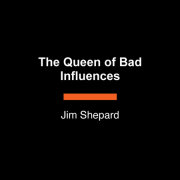
The Queen of Bad Influences

Stories

Hardcover
$30.00 US
On sale Sep 15, 2026 | 320 Pages | 9780593804414

See Additional Formats
Eleven short masterworks from this great American writer of catastrophe fiction, in which lives are upended by broken hearts and dams, vainglorious wars, fires, and shipwrecks

"Built on twin foundations of nostalgia for the never-was, and of that millennial American optimism that is indistinguishable from despair." —Michael Chabon on Jim Shepard's short stories

"A deft, audacious artist." —Norman Rush, Pulitzer Prize-winning author of Whites


Across several centuries and diverse American landscapes, Shepard holds us in his grip. We witness the 1935 Labor Day hurricane in Florida unfolding from multiple points of view; we read the letters of 1864 between Lucy in Boone, NC ("Three privates are currently sleeping soundly on our porch in their muddy blankets") and her great love William, on the march along the Franklin & Columbia Turnpike ("I can't write much for it seems we are looking for a fight every minute"). In "The Devil's Broom," we meet the men battling the Northwest wildfires of 1910 and in the title story, the stubborn Constance, who had "no gift for flirtation" with men, preferring Minna, her best friend and "queen of bad influences"; the reckoning between them unfolds in part on the great Cunard liner Lusitania. 

These profound stories are much more than historical fictions; they bring into shining relief all that acts of God or human-engineered disasters will render fleeting and terribly precious; they expose our proud convictions as vain in the face of the forces that come to sweep us away. In the midst of ill winds and sinking ships, Shepard raises up what is best in us: the friendships that comfort and sustain, the consolations of our written words to one another, the curiosities of our love for one another on a beleaguered planet.
© Barry Goldstein
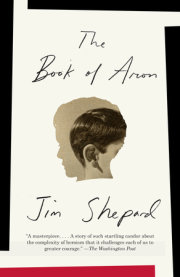
JIM SHEPARD is the author of seven previous novels, most recently The Book of Aron (winner of the 2016 PEN New England Award, the Sophie Brody medal for achievement in Jewish literature, the Ribalow Prize for Jewish literature, the Clark Fiction Prize, and a finalist for the National Jewish Book Award) and five story collections, including Like You'd Understand, Anyway, which was a finalist for the National Book Award and won The Story Prize. His short fiction has appeared in, among other magazines, The New Yorker, Harper's Magazine, McSweeney's, The Paris Review, The Atlantic, Esquire, Tin House, Granta, Zoetrope, Electric Literature, and Vice, and has often been selected for The Best American Short Stories and The PEN/O. Henry Prize Stories. He lives in Williamstown, Massachusetts, with his wife, three children, and three beagles, and he teaches at Williams College. View titles by Jim Shepard

About

Eleven short masterworks from this great American writer of catastrophe fiction, in which lives are upended by broken hearts and dams, vainglorious wars, fires, and shipwrecks

"Built on twin foundations of nostalgia for the never-was, and of that millennial American optimism that is indistinguishable from despair." —Michael Chabon on Jim Shepard's short stories

"A deft, audacious artist." —Norman Rush, Pulitzer Prize-winning author of Whites


Across several centuries and diverse American landscapes, Shepard holds us in his grip. We witness the 1935 Labor Day hurricane in Florida unfolding from multiple points of view; we read the letters of 1864 between Lucy in Boone, NC ("Three privates are currently sleeping soundly on our porch in their muddy blankets") and her great love William, on the march along the Franklin & Columbia Turnpike ("I can't write much for it seems we are looking for a fight every minute"). In "The Devil's Broom," we meet the men battling the Northwest wildfires of 1910 and in the title story, the stubborn Constance, who had "no gift for flirtation" with men, preferring Minna, her best friend and "queen of bad influences"; the reckoning between them unfolds in part on the great Cunard liner Lusitania. 

These profound stories are much more than historical fictions; they bring into shining relief all that acts of God or human-engineered disasters will render fleeting and terribly precious; they expose our proud convictions as vain in the face of the forces that come to sweep us away. In the midst of ill winds and sinking ships, Shepard raises up what is best in us: the friendships that comfort and sustain, the consolations of our written words to one another, the curiosities of our love for one another on a beleaguered planet.

Author

© Barry Goldstein
JIM SHEPARD is the author of seven previous novels, most recently The Book of Aron (winner of the 2016 PEN New England Award, the Sophie Brody medal for achievement in Jewish literature, the Ribalow Prize for Jewish literature, the Clark Fiction Prize, and a finalist for the National Jewish Book Award) and five story collections, including Like You'd Understand, Anyway, which was a finalist for the National Book Award and won The Story Prize. His short fiction has appeared in, among other magazines, The New Yorker, Harper's Magazine, McSweeney's, The Paris Review, The Atlantic, Esquire, Tin House, Granta, Zoetrope, Electric Literature, and Vice, and has often been selected for The Best American Short Stories and The PEN/O. Henry Prize Stories. He lives in Williamstown, Massachusetts, with his wife, three children, and three beagles, and he teaches at Williams College. View titles by Jim Shepard