Download high-resolution image Look inside
Listen to a clip from the audiobook
audio play button
0:00
0:00

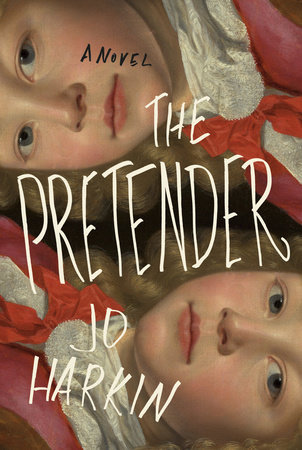
The Pretender

A Novel

Author Jo Harkin
Look inside
Listen to a clip from the audiobook
audio play button
0:00
0:00
Hardcover
$30.00 US
On sale Apr 22, 2025 | 496 Pages | 9780593803301

See Additional Formats
Set in the tumultuous period of the Tudors' ascent, The Pretender brings to life the little-known story of Lambert Simnel. From humble beginnings as a peasant boy, Lambert's life takes an astonishing turn when, at just ten years old, he becomes a claimant to the English throne as one of the last of the Plantagenet line. As Lambert navigates the treacherous waters of royal intrigue and court life, complex themes of identity, power, and destiny unfold, weaving a tapestry of ambition and survival in a world where the stakes couldn't be higher.

“A...transporting feat of imagination and storytelling.”—Maggie Shipstead, New York Times bestselling-author of Great Circle

NAMED A NOTABLE BOOK OF THE YEAR: The Guardian, The Sunday Times


In 1483, John Collan’s greatest anxiety is how to circumvent the village’s devilish goat on his way to collect water. But the arrival of a well-dressed stranger from London upends his life forever: John discovers he is not the son of a farmer but Edward, Earl of Warwick, the son of the long-deceased Duke of Clarence, and has been hidden in the countryside after a brotherly rift over the crown—and because Richard III has a habit of disappearing his nephews. But now the time has come for him to take his place as rightful heir to the throne and overthrow Henry VII, the first Tudor king.

Abruptly removed from his humble origins, John is put into play by his masters: learning Latin in Oxford, aris­tocratic manners in Burgundy, and courtly machinations in Ireland, where he encounters Joan, the delightfully strong-willed and manipulative daughter of his Irish patrons, a girl imbued with both extraordinary political savvy and occa­sional murderous tendencies. Joan has two paths available to her: marry or become a nun. Lambert’s choices are similarly stark: He will either become king or die in battle. Together they form an alliance that will change the fate of the English monarchy.

Inspired by a footnote to history—the true story of the little-known Simnel, who was a figurehead of the 1487 Yorkist rebellion and ended up working in the court of King Henry VII—The Pretender is historical fiction at its finest, a gripping, exuberant, irreverent portrait of British monarchy and life within the court, with a cast of unforgettable he­roes and villains drawn from fifteenth-century England. A masterful new work from a major new author.
One

. . . Was this the first thing he wrote of his own?

I am John Collan

today in the yere 1483 I will defeat the goat.

In the name of honnour and glory to god highest & for reson that it knocked me in the mud again today

& has TRODDEN churlishly over my back

has despoiled

!

an insult that cannot be borne.

John has made a plan of battle. According to the ancient art of the famous Vegetius, who set out in his book how the Roman Empire toppled and suborned all enemies. According to his brother Tom.

Tom did not read that book, but he told John what he was told was in it.

Tom had a favorite military stratagem of his own. This was the goose trap. He’d stand in front of something and call, Little John! Oh, little Johnny John John! You are a pink pig’s arsehole, a hairy ball sack, a shitbeetle—­and then, when John, sore wroth, would charge at him, Tom would dodge and John would run into that thing he was standing in front of, which was usually a cow shit. And then Tom would shout: Goose trap!

Now Tom is gone to be an apprentice, and John is goose no longer.

John is a general.

. . .

The wise general uses the ground to his advantage when laying his snare. He positions his light infantry (himself) ahead of the enemy’s advancing cavalry (the goat), with the stream at his rear. From this position, the infantry will make a feint attack with an artillery of pebbles. The cavalry, incensed, will charge—­whereupon the infantry will leap up, take hold of a willow tree branch, and swing to safety above the water. The cavalry, unable to halt his charge, will plunge headlong into the stream, and be thusly carried away, probably ending up in the sea.

Toppled and suborned.

And the wise general shall obtain the victory and pass unmolested through the farm to fetch water and weed the herbs and feed the chickens ever after: praise be to God.

John walks with his water bucket and a bag of pebbles toward the stream, whistling.

There are primroses on the bright grass edging the mud tracks, which have dried and cracked. The pigs trample through the richly fetid midden. Bluebells in the wood; wood pigeons flapping on top of each other; blossom crowded onto tree branches, silky, lavish, deeply pink. Above it all, the sky a flawless blue, intensely perfect, like a lid that could be flipped, to show God looking down, saying: Go forward, my son.

This spring you are a man.

This spring you show the goat who is master.

John goes into the kitchen, a small room leaning against the main house like a laborer taking a nap. It’s hot in here, and smells of baking bread, meat cooking in the iron pot above the fire, and a bitter scorch of something starting to burn, because Jennott, as she always tells them, is a head dairymaid and not a fucking cook.

John stands in the door with the water. Jennott’s growling at the bread, which she shovels out of the oven and piles onto the table. The rising heat waves the lines of light and dim that divide the room. She turns around and sees John.

“Old Gaspard got you again, did he?”

Her pretense is that the goat is French. She mislikes the French. They killed her dad.

She takes the water from him.

“You’re covered in scratches. And so wet. Did you fall into the stream?”

John isn’t going to discuss military strategy with plebeians, but calling Jennott a plebeian might get him one of her blind­ingly fast smacks around the head, so he doesn’t say anything.

“He knows you’re frightened, that’s what it is,” she says. “You’ve got to steel your balls, stand up straight, and stare him out.”

“You can’t stare something out when its eyes go in different directions.”

Jennott laughs. She picks up a loaf of bread and puts it on her head, tucks her lower lip under her teeth, and says, “Who am I?”

“Sir Nicholas,” says John.

Sir Nicholas the parish priest and John’s father, Will, are enemies. In the past, John’s dad said some heretical-­flavored things, and Sir Nicholas accused him of being a secret Lollard and threatened to get him burned.

And it’s true, said Will Collan, that my grandfather was a Lollard who didn’t see why knavish priests like Sir Nicholas should be called Sir any more than a cobbler should, or why they should take the confession of honest men, nor their sweated-­for money, neither—­and then he joined the revolt of the peasants, and was killed just before his own son, my dad, was born.

Will doesn’t hide his bitterness when he says it. But it’s not for any turdly priest to accuse him of sympathies. So Will Collan put manure through Sir Nicholas’s windows. The act was anonymous but also, in a small village, completely nonymous, or whatever the word is. (John, small village boy, is often short of words.)

“Correct,” says Jennott. “The old fart-­smeller. That’s what he does in confession. Smells farts.”

“Is that lawful to say?” asks John.

“It is if you cross yourself after and say, ‘Hail Mary, full of grace, the Lord is with thee,’ ” Jennott says, and, as ever, John can’t tell if she’s joking.

Things John Collan’s father shouts at him in the daytime:

For God’s sakes John pick up your feet stand straight stop bothering the women stop bothering the cows stop bothering Jennott where in the holy hell were you don’t wipe your mouth on your sleeve don’t blaspheme quieten down stand straight how many times where the devil is he now—­

Things his father says at night:

Get to bed my boy, sleep sweetly.

(And a pat, on the head.)
© J Robaczynski
JO HARKIN’s first novel, Tell Me an Ending, was published in 2022. She lives in Berkshire, England. View titles by Jo Harkin
“This sympathetic and brilliantly executed book beguiles to the very end." The Wall Street Journal

The Pretender is a rollicking account of a befuddled boy’s pillar-to-post existence as a political pawn.” —The New York Times

“[The Pretender] contains some of the most authentic writing in a child’s voice I’ve ever read. And while the book is a deeply engaging read, it underlines profoundly the experience of those who must try to forge and keep their identity without agency, caught in the powerful maw of history.” —NPR

"A poignant odyssey." The Washington Post

The Pretender reimagines how a child was plucked out of obscurity to be groomed as a royal during the tumultuous Tudor era. Villains! Intrigue! Tons of humor! This is historical fiction at its finest.” —Real Simple

“Fantastically accomplished. . . . A bold and brilliant comedy of royal intrigue. . . . There’s a deep love for literature here, and a desire to showcase the formation of the late-medieval mind, which elevates The Pretender above other novels about this period. . . . Scattered with fine knobbly period language and witty dialogue, and this stylish delivery brings with it considerable substance.” The Guardian

"Funny, moving, and filthy in equal measure." —The Times (London)

“Dazzling. . . . The Pretender is a stylish, profane, hilarious read, and Harkin is the proverbial writer to watch." The Minnesota Star Tribune

“What Jo Harkin has accomplished in The Pretender left me awestruck on every page. I had no idea that a medieval historical novel could be this wickedly funny, this timely and timeless. A work of genius, a wellspring of laughter and sorrow, a feat of time-travel, and a feast of language.” —Karen Russell, author of The Antidote

The Pretender is a vivid, transporting feat of imagination and storytelling, so alive I felt Jo Harkin might be a time traveler.” —Maggie Shipstead, author of Great Circle

“A brilliant piece of historical storytelling that’s also gorgeously irreverent, contemporary, and fun. Witty, poignant, wildly engaging, and with a huge heart—I loved it.” —Sarah Waters, author of Fingersmith

“The Pretender
had me under its spell from the very first page. I read it with the dedicated fervour of a kid discovering literature for the first time—the magic of it, the way it transports you, the way you don’t want to say goodbye to the pages as you turn them. I took it with me everywhere for months, I read it on trains and buses and laughed and cried in public many times. A genuinely brilliant voice. I will recommend this to everyone for years to come: to hear what they think, to enrich their lives, and so that they in turn can understand something about me that can only be communicated through the passing on of a good book.” —Yael van der Wouden, author of The Safekeep

"Jo Harkin’s writing is consistently original, vivid, and witty. [The Pretender is] Glorious Exploits meets Wolf Hall—and I completely loved it.” —Joanna Quinn, author of The Whalebone Theatre

“The Pretender is the real deal—nimble, vibrant, playful, and daring. It pulses with life. I loved it.” —Kiran Millwood Hargrave, author of The Mercies

“I blazed through full of wonder and admiration. . . . The writing is searingly confident, the sense of time and place dizzyingly good, the dialogue ribald and the description elegant. . . . I loved every single page. . . . The Pretender has everything: history richly drawn, amazing characterization, humor, wit, vigor, and bravery. It's magnificent.” —Emma Stonex, author of The Lamplighters

“Harkin skillfully evokes the foreboding and intrigue that surrounds the throne with rough-hewn language and fistfuls of bawdy humor. . . . [a] rollicking saga of royalty, loyalty, lechery and treachery." BookPage

“Harkin’s imaginative take on a calculated hoax in English history and portrait of a curious young personage is a wildly entertaining and satirical comedy full of interesting characters.” Booklist (starred review)

“This razor-sharp historical is on par with Hilary Mantel's Wolf Hall." —Publishers Weekly (starred review)

About

Set in the tumultuous period of the Tudors' ascent, The Pretender brings to life the little-known story of Lambert Simnel. From humble beginnings as a peasant boy, Lambert's life takes an astonishing turn when, at just ten years old, he becomes a claimant to the English throne as one of the last of the Plantagenet line. As Lambert navigates the treacherous waters of royal intrigue and court life, complex themes of identity, power, and destiny unfold, weaving a tapestry of ambition and survival in a world where the stakes couldn't be higher.

“A...transporting feat of imagination and storytelling.”—Maggie Shipstead, New York Times bestselling-author of Great Circle

NAMED A NOTABLE BOOK OF THE YEAR: The Guardian, The Sunday Times


In 1483, John Collan’s greatest anxiety is how to circumvent the village’s devilish goat on his way to collect water. But the arrival of a well-dressed stranger from London upends his life forever: John discovers he is not the son of a farmer but Edward, Earl of Warwick, the son of the long-deceased Duke of Clarence, and has been hidden in the countryside after a brotherly rift over the crown—and because Richard III has a habit of disappearing his nephews. But now the time has come for him to take his place as rightful heir to the throne and overthrow Henry VII, the first Tudor king.

Abruptly removed from his humble origins, John is put into play by his masters: learning Latin in Oxford, aris­tocratic manners in Burgundy, and courtly machinations in Ireland, where he encounters Joan, the delightfully strong-willed and manipulative daughter of his Irish patrons, a girl imbued with both extraordinary political savvy and occa­sional murderous tendencies. Joan has two paths available to her: marry or become a nun. Lambert’s choices are similarly stark: He will either become king or die in battle. Together they form an alliance that will change the fate of the English monarchy.

Inspired by a footnote to history—the true story of the little-known Simnel, who was a figurehead of the 1487 Yorkist rebellion and ended up working in the court of King Henry VII—The Pretender is historical fiction at its finest, a gripping, exuberant, irreverent portrait of British monarchy and life within the court, with a cast of unforgettable he­roes and villains drawn from fifteenth-century England. A masterful new work from a major new author.

Excerpt

One

. . . Was this the first thing he wrote of his own?

I am John Collan

today in the yere 1483 I will defeat the goat.

In the name of honnour and glory to god highest & for reson that it knocked me in the mud again today

& has TRODDEN churlishly over my back

has despoiled

!

an insult that cannot be borne.

John has made a plan of battle. According to the ancient art of the famous Vegetius, who set out in his book how the Roman Empire toppled and suborned all enemies. According to his brother Tom.

Tom did not read that book, but he told John what he was told was in it.

Tom had a favorite military stratagem of his own. This was the goose trap. He’d stand in front of something and call, Little John! Oh, little Johnny John John! You are a pink pig’s arsehole, a hairy ball sack, a shitbeetle—­and then, when John, sore wroth, would charge at him, Tom would dodge and John would run into that thing he was standing in front of, which was usually a cow shit. And then Tom would shout: Goose trap!

Now Tom is gone to be an apprentice, and John is goose no longer.

John is a general.

. . .

The wise general uses the ground to his advantage when laying his snare. He positions his light infantry (himself) ahead of the enemy’s advancing cavalry (the goat), with the stream at his rear. From this position, the infantry will make a feint attack with an artillery of pebbles. The cavalry, incensed, will charge—­whereupon the infantry will leap up, take hold of a willow tree branch, and swing to safety above the water. The cavalry, unable to halt his charge, will plunge headlong into the stream, and be thusly carried away, probably ending up in the sea.

Toppled and suborned.

And the wise general shall obtain the victory and pass unmolested through the farm to fetch water and weed the herbs and feed the chickens ever after: praise be to God.

John walks with his water bucket and a bag of pebbles toward the stream, whistling.

There are primroses on the bright grass edging the mud tracks, which have dried and cracked. The pigs trample through the richly fetid midden. Bluebells in the wood; wood pigeons flapping on top of each other; blossom crowded onto tree branches, silky, lavish, deeply pink. Above it all, the sky a flawless blue, intensely perfect, like a lid that could be flipped, to show God looking down, saying: Go forward, my son.

This spring you are a man.

This spring you show the goat who is master.

John goes into the kitchen, a small room leaning against the main house like a laborer taking a nap. It’s hot in here, and smells of baking bread, meat cooking in the iron pot above the fire, and a bitter scorch of something starting to burn, because Jennott, as she always tells them, is a head dairymaid and not a fucking cook.

John stands in the door with the water. Jennott’s growling at the bread, which she shovels out of the oven and piles onto the table. The rising heat waves the lines of light and dim that divide the room. She turns around and sees John.

“Old Gaspard got you again, did he?”

Her pretense is that the goat is French. She mislikes the French. They killed her dad.

She takes the water from him.

“You’re covered in scratches. And so wet. Did you fall into the stream?”

John isn’t going to discuss military strategy with plebeians, but calling Jennott a plebeian might get him one of her blind­ingly fast smacks around the head, so he doesn’t say anything.

“He knows you’re frightened, that’s what it is,” she says. “You’ve got to steel your balls, stand up straight, and stare him out.”

“You can’t stare something out when its eyes go in different directions.”

Jennott laughs. She picks up a loaf of bread and puts it on her head, tucks her lower lip under her teeth, and says, “Who am I?”

“Sir Nicholas,” says John.

Sir Nicholas the parish priest and John’s father, Will, are enemies. In the past, John’s dad said some heretical-­flavored things, and Sir Nicholas accused him of being a secret Lollard and threatened to get him burned.

And it’s true, said Will Collan, that my grandfather was a Lollard who didn’t see why knavish priests like Sir Nicholas should be called Sir any more than a cobbler should, or why they should take the confession of honest men, nor their sweated-­for money, neither—­and then he joined the revolt of the peasants, and was killed just before his own son, my dad, was born.

Will doesn’t hide his bitterness when he says it. But it’s not for any turdly priest to accuse him of sympathies. So Will Collan put manure through Sir Nicholas’s windows. The act was anonymous but also, in a small village, completely nonymous, or whatever the word is. (John, small village boy, is often short of words.)

“Correct,” says Jennott. “The old fart-­smeller. That’s what he does in confession. Smells farts.”

“Is that lawful to say?” asks John.

“It is if you cross yourself after and say, ‘Hail Mary, full of grace, the Lord is with thee,’ ” Jennott says, and, as ever, John can’t tell if she’s joking.

Things John Collan’s father shouts at him in the daytime:

For God’s sakes John pick up your feet stand straight stop bothering the women stop bothering the cows stop bothering Jennott where in the holy hell were you don’t wipe your mouth on your sleeve don’t blaspheme quieten down stand straight how many times where the devil is he now—­

Things his father says at night:

Get to bed my boy, sleep sweetly.

(And a pat, on the head.)

Author

© J Robaczynski
JO HARKIN’s first novel, Tell Me an Ending, was published in 2022. She lives in Berkshire, England. View titles by Jo Harkin

Praise

“This sympathetic and brilliantly executed book beguiles to the very end." The Wall Street Journal

The Pretender is a rollicking account of a befuddled boy’s pillar-to-post existence as a political pawn.” —The New York Times

“[The Pretender] contains some of the most authentic writing in a child’s voice I’ve ever read. And while the book is a deeply engaging read, it underlines profoundly the experience of those who must try to forge and keep their identity without agency, caught in the powerful maw of history.” —NPR

"A poignant odyssey." The Washington Post

The Pretender reimagines how a child was plucked out of obscurity to be groomed as a royal during the tumultuous Tudor era. Villains! Intrigue! Tons of humor! This is historical fiction at its finest.” —Real Simple

“Fantastically accomplished. . . . A bold and brilliant comedy of royal intrigue. . . . There’s a deep love for literature here, and a desire to showcase the formation of the late-medieval mind, which elevates The Pretender above other novels about this period. . . . Scattered with fine knobbly period language and witty dialogue, and this stylish delivery brings with it considerable substance.” The Guardian

"Funny, moving, and filthy in equal measure." —The Times (London)

“Dazzling. . . . The Pretender is a stylish, profane, hilarious read, and Harkin is the proverbial writer to watch." The Minnesota Star Tribune

“What Jo Harkin has accomplished in The Pretender left me awestruck on every page. I had no idea that a medieval historical novel could be this wickedly funny, this timely and timeless. A work of genius, a wellspring of laughter and sorrow, a feat of time-travel, and a feast of language.” —Karen Russell, author of The Antidote

The Pretender is a vivid, transporting feat of imagination and storytelling, so alive I felt Jo Harkin might be a time traveler.” —Maggie Shipstead, author of Great Circle

“A brilliant piece of historical storytelling that’s also gorgeously irreverent, contemporary, and fun. Witty, poignant, wildly engaging, and with a huge heart—I loved it.” —Sarah Waters, author of Fingersmith

“The Pretender
had me under its spell from the very first page. I read it with the dedicated fervour of a kid discovering literature for the first time—the magic of it, the way it transports you, the way you don’t want to say goodbye to the pages as you turn them. I took it with me everywhere for months, I read it on trains and buses and laughed and cried in public many times. A genuinely brilliant voice. I will recommend this to everyone for years to come: to hear what they think, to enrich their lives, and so that they in turn can understand something about me that can only be communicated through the passing on of a good book.” —Yael van der Wouden, author of The Safekeep

"Jo Harkin’s writing is consistently original, vivid, and witty. [The Pretender is] Glorious Exploits meets Wolf Hall—and I completely loved it.” —Joanna Quinn, author of The Whalebone Theatre

“The Pretender is the real deal—nimble, vibrant, playful, and daring. It pulses with life. I loved it.” —Kiran Millwood Hargrave, author of The Mercies

“I blazed through full of wonder and admiration. . . . The writing is searingly confident, the sense of time and place dizzyingly good, the dialogue ribald and the description elegant. . . . I loved every single page. . . . The Pretender has everything: history richly drawn, amazing characterization, humor, wit, vigor, and bravery. It's magnificent.” —Emma Stonex, author of The Lamplighters

“Harkin skillfully evokes the foreboding and intrigue that surrounds the throne with rough-hewn language and fistfuls of bawdy humor. . . . [a] rollicking saga of royalty, loyalty, lechery and treachery." BookPage

“Harkin’s imaginative take on a calculated hoax in English history and portrait of a curious young personage is a wildly entertaining and satirical comedy full of interesting characters.” Booklist (starred review)

“This razor-sharp historical is on par with Hilary Mantel's Wolf Hall." —Publishers Weekly (starred review)

Books for Women’s History Month

In honor of Women’s History Month in March, we are sharing books by women who have shaped history and have fought for their communities. Our list includes books about women who fought for racial justice, abortion rights, equality in the workplace, and ranges in topics from women in politics and prominent women in history to

Read more