Download high-resolution image Look inside
Listen to a clip from the audiobook
audio play button
0:00
0:00

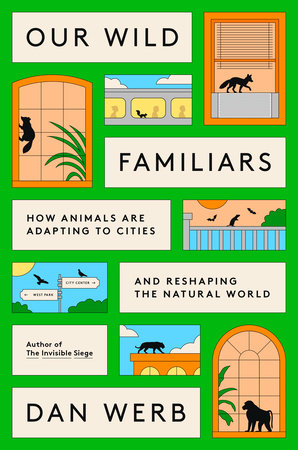
Our Wild Familiars

How Animals Are Adapting to Cities and Reshaping the Natural World

Author Dan Werb On Tour
Look inside
Listen to a clip from the audiobook
audio play button
0:00
0:00
Hardcover
$30.00 US
On sale Jul 14, 2026 | 336 Pages | 9780593799635

See Additional Formats
A dazzling journey into the hidden lives of synanthropes, the wild animals who’ve found ingenious ways to survive and thrive in human communities—from award-winning writer and scientist Dan Werb

Synanthropes have always been an immutable part of the tapestry of our lives. They are the reason we hear birdsong in the morning and skittering throughout the day, and why we take such pains to fix lids to our garbage cans. But they are so much more than that, too: epidemic vectors, churners of soil, ecosystem evolvers, spiritual lodestars, and, sometimes, sharp-toothed marauders making their way through our most intimate spaces with cruel intent. But beyond their quotidian impact on our lives, synanthropes have a critical part to play in how our communities are shaped and how sustainably they function. These creatures are ambassadors from nature, arbiters of our planet’s future, and a key influence on our species’ ongoing evolution; and recently, something essential has shifted with them.

We are in a fraught era of environmental disruption, habitat destruction, and human population expansion that is ravaging formerly wild and untouched habitats. That’s caused us to become ever more inundated with synanthropes, which are bringing delight, chaos and danger to our doorstep. These species, so long dismissed, are forcing us to reckon with them—from the hundreds of thousands of raccoons in urban spaces that spread our refuse no matter how many "raccoon-proof" bags and bins we invent, to the invasive kudzu plants that grow a foot a day, enveloping houses, telephone poles, trees, and any other structures into their green abyss. Now, as urban spaces increasingly become wild spaces, we have a choice: continue to resist them by any means necessary, or take the opportunity to promote a more harmonious coexistence.

Through vivid storytelling, Our Wild Familiars brings to spectacular life the world’s most successful synanthropes, from bats, raccoons, and crows, to some of its weirdest, including the Giant Pacific Octopus. Acting as a guide to the curious, Werb reveals how the cracks in our millennia-long efforts to shield ourselves against the outside world might just lead us to a new and necessary balance with nature—or to an ever more savage future.
Chapter 1

Puzzles

Our perfect companions never have fewer than four feet. —­Sidonie-Gabrielle Colette, attributed

Cities Expand the Animal Mind. Urban animals use a variety of tools to adapt to the dazzling complexity of cities, but cognition—­ the ways in which organisms process information and interpret the world—­is among the most powerful. Like so many qualities of successful synanthropes, though, heightened intelligence isn’t enough on its own. Instead, animals that survive and thrive in cities must sometimes transform the very way they think—­a process that is unsettling how we understand our own evolutionary journey.

■ ■ ■

It was a brazen murder on the morning of July 9, 2015, in the heart of downtown Toronto. Was it a targeted killing? A hit-­and-­run? If there was a witness to the crime, they had long since fled. No one had dialed 911 for medical help. Fear—­or was it apathy?—­had made another life expendable, not even worth the brief phone call it would have taken to try to save him. And so, at around six in the morning, with a light wind stroking his face, the victim gazed toward the rising sun, obscured behind gray clouds, which were themselves blocked out by glass, brick, and steel monoliths casting shadows that inched slowly toward him as the light spread through the sky. And it was then that he yielded to the ineffable, unrelenting momentum of death. He was just another unremarkable victim in the heart of the city. Afterward, all that remained was the body—­huge, by all accounts—­splayed on the corner of Yonge and Church, a busy commercial intersection. Here, in this diverse city of almost 3 million people, long considered a haven of safety, equality, and community, with a murder rate among the lowest of big cities in the world, the body was an aberration.

It lay there throughout the morning rush in a shocking and obscene pose, naked, supine, legs spread apart shamelessly, thin purplish-­brown lips pulled into a rictus. The mouth was agape, the tongue like a hard, blunt arrowhead held between dirty teeth, the hands hanging limply from stiff bent wrists. This body, a reminder of the basest laws of nature, in contravention to the lies we’ve swallowed that life is static and society’s rules will protect us at all costs—­it was this body that transformed the city.

Noon. The sun had climbed in the sky, its diaphanous rays spilling gently onto the metal, plastic, and concrete admixtures that make up downtown Toronto. Filaments of light, finding narrow paths between the patchwork of summer clouds, covered the city like a cobweb. Six hours after the death, workers began filing out of local office buildings for lunch and noticing the body, pressed against the concrete curb, impossible to miss in the rising summer heat, its flesh now stiff and emitting a gentle odor of decay. Some passersby stopped in shock but were soon pulled back into the pedestrian flow sidestepping the corpse, every­one too preoccupied with their own lives to take on yet another problem.

From a second-­floor tech start-­up across the street, four men peered down with a mixture of bemusement and horror. How long would the body be left to rot? Who—­or what—­was responsible for taking it away? And how uncaring did a city have to get before its spirit died? The men, all in their twenties and thirties, didn’t have the skills to solve the problem of an enduring corpse. But moved by the moment, they mustered something that none of them realized they possessed: an innate sense of decorum.

One of the men visited a nearby flower shop and purchased a single rose wrapped in cheap cellophane. Another headed to a nearby pharmacy to get a card. “The warmest wish / That I could send,” read the printed text on the card, “would only begin to show you / how much / I wish you good health.” Underneath, the men had added their own message: “Hang in there! The Gang.” They brought the gifts to the corpse, sliding the card under its left foot and placing the rose in the crook of its left armpit, careful not to touch the body itself in deference to the deep biological imperative to separate the living from the dead.

Satisfied, the men returned to their office to renew their dedication to code writing, data security issues, email communication, and inter­net consumption. But having pierced the ontological plane, they found that reality had been transformed. Before the card and the rose, the victim was an anonymous corpse. Now? A cult figure in the making. After a few minutes, the men peered back out the window and, to their surprise, saw that the body was now obscured by a crowd.

People were taking photos, phones bent at impossible angles, the victim given a second life online in death. The card filled up with messages. “RIP beautiful soul! ”; “Hope it was quick! I miss ya!”; “ Ruby”; “Rest in peace”; “Sorry buddy —­Sara”; and finally, just three simple letters that seemed to sum up the complicated feelings of all those who were coming to pay their respects: “BYE!”

By 2:15 p.m., news of the corpse and the makeshift memorial had spread across the world. A framed photo that looked uncannily like the corpse itself was added to the memorial. A votive candle appeared, its flickering flame imbuing a sense of the sacred. A cigarette appeared in its hand. The crowd had even honored the victim—­still unknown, just another John Doe in a city full of them—­with a name: Conrad. Online, images of Conrad and his spontaneous wake were like some new disease: highly transmissible and slightly gross. And that is how, on a defining day for the city of Toronto, a simple motto was born: hashtagDeadRaccoonTO.

Day collapsed into night. One candle became many. The crowd became so dense that people began to organize themselves into a line to write condolences and pose for photos with Conrad. A waning crescent moon took its place in the sky and a handful of stars shone down weakly through the light pollution that covered the city like a weighted blanket. And still the people came to pay their respects. It was as if the dead raccoon had become a midsummer version of a mall Santa: fat, clever, covered in fur, and obsessed with sneaking into people’s homes.

Finally, mercifully, at 11:23 p.m., roughly seventeen hours after his death, a white Toronto Animal Services van languidly drove up, stopping four feet from where Conrad lay. With the votive candles lending the scene a quiet solemnity, an unsmiling sanitation worker descended from the passenger side holding two extra-­large black garbage bags. A small crowd remained, watching as the worker brusquely grabbed the corpse and, careful to avoid touching it directly, wrapped in the garbage bags, then threw it into the van. The crowd gasped in horror; the sanitation worker looked up, clearly exasperated by the scene. “Seriously, man?” he asked with barely concealed disdain. “It’s a dead raccoon.”

Within ten minutes, the deed was done. It was now 11:35 p.m., and all that remained of the drama was the cigarette, the now-­wilted cellophane-­wrapped rose, an empty donation box, and an extinguished votive candle, all of it just trash on the ground. “Damn,” read the last hashtagDeadRaccoonTO tweet of the night. “Life’s so short.”
© Joe Fuda
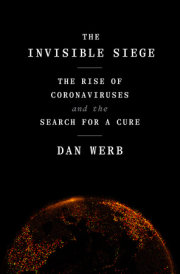
Dan Werb, PhD is an award-winning writer and epidemiologist whose work has appeared in The Globe and Mail, The New York Times, Salon, Believer Magazine, and many other outlets in Canada and the US. He is an Assistant Professor in the School of Public Health at the University of Toronto, and Assistant Professor in the Division of Infectious Diseases and Global Public Health at the University of California San Diego. Werb is the author of two previous books, City of Omens and The Invisible Siege, which won the Hilary Weston Writers' Trust Prize for Nonfiction. Dan Werb lives in Toronto. View titles by Dan Werb
“In Our Wild Familiars, Dan Werb invites us to explore the challenging new world of synanthropes, the plants and animals that now share our urban spaces with us. And explore it you should, if not to learn about these fascinating new relationships with nature, then simply to enjoy spectacular writing and thorough research. Highly recommended!”—Douglass Tallamy, New York Times bestselling author of Bringing Nature Home and Nature’s Best Hope

Our Wild Familiars delivers a revealing tour of civilization’s hidden corners—the untamed niches in our human-dominated landscapes. The book is dazzling, astute, and desperately needed. At a time when the global environment hangs in the balance, Dan Werb offers a welcome message of hope. Look closely at our broken world and you’ll find resilience amid the wreckage.”—David Baron, author of The Beast in the Garden

“In a wide-ranging, delightfully surprising, and often counterintuitive survey, journalist and epidemiologist Werb examines the question of how cities change and are changed by the behavior of the undomesticated animals that make their homes in them . . . Dazzling insights into the cohabitants of our daily lives.”Kirkus Reviews, starred review

“[A] buoyant overview of how animals adapt to urban spaces, framing cities as sites of biodiversity and evolutionary change . . . Enlightening and entertaining, this is a winning snapshot of wildlife that thrives in not-so-wild spaces.”Publishers Weekly

About

A dazzling journey into the hidden lives of synanthropes, the wild animals who’ve found ingenious ways to survive and thrive in human communities—from award-winning writer and scientist Dan Werb

Synanthropes have always been an immutable part of the tapestry of our lives. They are the reason we hear birdsong in the morning and skittering throughout the day, and why we take such pains to fix lids to our garbage cans. But they are so much more than that, too: epidemic vectors, churners of soil, ecosystem evolvers, spiritual lodestars, and, sometimes, sharp-toothed marauders making their way through our most intimate spaces with cruel intent. But beyond their quotidian impact on our lives, synanthropes have a critical part to play in how our communities are shaped and how sustainably they function. These creatures are ambassadors from nature, arbiters of our planet’s future, and a key influence on our species’ ongoing evolution; and recently, something essential has shifted with them.

We are in a fraught era of environmental disruption, habitat destruction, and human population expansion that is ravaging formerly wild and untouched habitats. That’s caused us to become ever more inundated with synanthropes, which are bringing delight, chaos and danger to our doorstep. These species, so long dismissed, are forcing us to reckon with them—from the hundreds of thousands of raccoons in urban spaces that spread our refuse no matter how many "raccoon-proof" bags and bins we invent, to the invasive kudzu plants that grow a foot a day, enveloping houses, telephone poles, trees, and any other structures into their green abyss. Now, as urban spaces increasingly become wild spaces, we have a choice: continue to resist them by any means necessary, or take the opportunity to promote a more harmonious coexistence.

Through vivid storytelling, Our Wild Familiars brings to spectacular life the world’s most successful synanthropes, from bats, raccoons, and crows, to some of its weirdest, including the Giant Pacific Octopus. Acting as a guide to the curious, Werb reveals how the cracks in our millennia-long efforts to shield ourselves against the outside world might just lead us to a new and necessary balance with nature—or to an ever more savage future.

Excerpt

Chapter 1

Puzzles

Our perfect companions never have fewer than four feet. —­Sidonie-Gabrielle Colette, attributed

Cities Expand the Animal Mind. Urban animals use a variety of tools to adapt to the dazzling complexity of cities, but cognition—­ the ways in which organisms process information and interpret the world—­is among the most powerful. Like so many qualities of successful synanthropes, though, heightened intelligence isn’t enough on its own. Instead, animals that survive and thrive in cities must sometimes transform the very way they think—­a process that is unsettling how we understand our own evolutionary journey.

■ ■ ■

It was a brazen murder on the morning of July 9, 2015, in the heart of downtown Toronto. Was it a targeted killing? A hit-­and-­run? If there was a witness to the crime, they had long since fled. No one had dialed 911 for medical help. Fear—­or was it apathy?—­had made another life expendable, not even worth the brief phone call it would have taken to try to save him. And so, at around six in the morning, with a light wind stroking his face, the victim gazed toward the rising sun, obscured behind gray clouds, which were themselves blocked out by glass, brick, and steel monoliths casting shadows that inched slowly toward him as the light spread through the sky. And it was then that he yielded to the ineffable, unrelenting momentum of death. He was just another unremarkable victim in the heart of the city. Afterward, all that remained was the body—­huge, by all accounts—­splayed on the corner of Yonge and Church, a busy commercial intersection. Here, in this diverse city of almost 3 million people, long considered a haven of safety, equality, and community, with a murder rate among the lowest of big cities in the world, the body was an aberration.

It lay there throughout the morning rush in a shocking and obscene pose, naked, supine, legs spread apart shamelessly, thin purplish-­brown lips pulled into a rictus. The mouth was agape, the tongue like a hard, blunt arrowhead held between dirty teeth, the hands hanging limply from stiff bent wrists. This body, a reminder of the basest laws of nature, in contravention to the lies we’ve swallowed that life is static and society’s rules will protect us at all costs—­it was this body that transformed the city.

Noon. The sun had climbed in the sky, its diaphanous rays spilling gently onto the metal, plastic, and concrete admixtures that make up downtown Toronto. Filaments of light, finding narrow paths between the patchwork of summer clouds, covered the city like a cobweb. Six hours after the death, workers began filing out of local office buildings for lunch and noticing the body, pressed against the concrete curb, impossible to miss in the rising summer heat, its flesh now stiff and emitting a gentle odor of decay. Some passersby stopped in shock but were soon pulled back into the pedestrian flow sidestepping the corpse, every­one too preoccupied with their own lives to take on yet another problem.

From a second-­floor tech start-­up across the street, four men peered down with a mixture of bemusement and horror. How long would the body be left to rot? Who—­or what—­was responsible for taking it away? And how uncaring did a city have to get before its spirit died? The men, all in their twenties and thirties, didn’t have the skills to solve the problem of an enduring corpse. But moved by the moment, they mustered something that none of them realized they possessed: an innate sense of decorum.

One of the men visited a nearby flower shop and purchased a single rose wrapped in cheap cellophane. Another headed to a nearby pharmacy to get a card. “The warmest wish / That I could send,” read the printed text on the card, “would only begin to show you / how much / I wish you good health.” Underneath, the men had added their own message: “Hang in there! The Gang.” They brought the gifts to the corpse, sliding the card under its left foot and placing the rose in the crook of its left armpit, careful not to touch the body itself in deference to the deep biological imperative to separate the living from the dead.

Satisfied, the men returned to their office to renew their dedication to code writing, data security issues, email communication, and inter­net consumption. But having pierced the ontological plane, they found that reality had been transformed. Before the card and the rose, the victim was an anonymous corpse. Now? A cult figure in the making. After a few minutes, the men peered back out the window and, to their surprise, saw that the body was now obscured by a crowd.

People were taking photos, phones bent at impossible angles, the victim given a second life online in death. The card filled up with messages. “RIP beautiful soul! ”; “Hope it was quick! I miss ya!”; “ Ruby”; “Rest in peace”; “Sorry buddy —­Sara”; and finally, just three simple letters that seemed to sum up the complicated feelings of all those who were coming to pay their respects: “BYE!”

By 2:15 p.m., news of the corpse and the makeshift memorial had spread across the world. A framed photo that looked uncannily like the corpse itself was added to the memorial. A votive candle appeared, its flickering flame imbuing a sense of the sacred. A cigarette appeared in its hand. The crowd had even honored the victim—­still unknown, just another John Doe in a city full of them—­with a name: Conrad. Online, images of Conrad and his spontaneous wake were like some new disease: highly transmissible and slightly gross. And that is how, on a defining day for the city of Toronto, a simple motto was born: hashtagDeadRaccoonTO.

Day collapsed into night. One candle became many. The crowd became so dense that people began to organize themselves into a line to write condolences and pose for photos with Conrad. A waning crescent moon took its place in the sky and a handful of stars shone down weakly through the light pollution that covered the city like a weighted blanket. And still the people came to pay their respects. It was as if the dead raccoon had become a midsummer version of a mall Santa: fat, clever, covered in fur, and obsessed with sneaking into people’s homes.

Finally, mercifully, at 11:23 p.m., roughly seventeen hours after his death, a white Toronto Animal Services van languidly drove up, stopping four feet from where Conrad lay. With the votive candles lending the scene a quiet solemnity, an unsmiling sanitation worker descended from the passenger side holding two extra-­large black garbage bags. A small crowd remained, watching as the worker brusquely grabbed the corpse and, careful to avoid touching it directly, wrapped in the garbage bags, then threw it into the van. The crowd gasped in horror; the sanitation worker looked up, clearly exasperated by the scene. “Seriously, man?” he asked with barely concealed disdain. “It’s a dead raccoon.”

Within ten minutes, the deed was done. It was now 11:35 p.m., and all that remained of the drama was the cigarette, the now-­wilted cellophane-­wrapped rose, an empty donation box, and an extinguished votive candle, all of it just trash on the ground. “Damn,” read the last hashtagDeadRaccoonTO tweet of the night. “Life’s so short.”

Author

© Joe Fuda
Dan Werb, PhD is an award-winning writer and epidemiologist whose work has appeared in The Globe and Mail, The New York Times, Salon, Believer Magazine, and many other outlets in Canada and the US. He is an Assistant Professor in the School of Public Health at the University of Toronto, and Assistant Professor in the Division of Infectious Diseases and Global Public Health at the University of California San Diego. Werb is the author of two previous books, City of Omens and The Invisible Siege, which won the Hilary Weston Writers' Trust Prize for Nonfiction. Dan Werb lives in Toronto. View titles by Dan Werb

Praise

“In Our Wild Familiars, Dan Werb invites us to explore the challenging new world of synanthropes, the plants and animals that now share our urban spaces with us. And explore it you should, if not to learn about these fascinating new relationships with nature, then simply to enjoy spectacular writing and thorough research. Highly recommended!”—Douglass Tallamy, New York Times bestselling author of Bringing Nature Home and Nature’s Best Hope

Our Wild Familiars delivers a revealing tour of civilization’s hidden corners—the untamed niches in our human-dominated landscapes. The book is dazzling, astute, and desperately needed. At a time when the global environment hangs in the balance, Dan Werb offers a welcome message of hope. Look closely at our broken world and you’ll find resilience amid the wreckage.”—David Baron, author of The Beast in the Garden

“In a wide-ranging, delightfully surprising, and often counterintuitive survey, journalist and epidemiologist Werb examines the question of how cities change and are changed by the behavior of the undomesticated animals that make their homes in them . . . Dazzling insights into the cohabitants of our daily lives.”Kirkus Reviews, starred review

“[A] buoyant overview of how animals adapt to urban spaces, framing cities as sites of biodiversity and evolutionary change . . . Enlightening and entertaining, this is a winning snapshot of wildlife that thrives in not-so-wild spaces.”Publishers Weekly