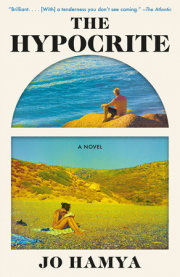
Download high-resolution image Look inside
Listen to a clip from the audiobook
audio play button
0:00
0:00

The Hypocrite

A Novel

Author Jo Hamya
Look inside
Listen to a clip from the audiobook
audio play button
0:00
0:00
ONE OF THE ATLANTIC'S 10 BEST BOOKS OF THE YEAR • DAKOTA JOHNSON’S TEATIME PICTURES SEPTEMBER BOOK CLUB PICK ● From a fiercely talented writer poised to be a new generation’s Rachel Cusk or Deborah Levy, a novel set between the London stage and Sicily, about a daughter who turns her novelist father’s fall from grace into a play, and a father who increasingly fears his precocious daughter’s voice.

“A sharp book, beautifully written.” —Rumaan Alam, author of Leave the World Behind and Entitlement

"Excellent...I enjoyed the novel hugely...Like Edward St Aubyn and Anne Enright, Hamya is so good on generational conflict, the friction of family, and the damage done by charming but complacent men. But The Hypocrite is a strikingly original book too. I tore through it, shoulders clenched but full of admiration."
—David Nicholls, author of One Day, in Electric Literature


August 2020. Sophia, a young playwright, awaits her father’s verdict on her new show. A famous author whose novels haven’t aged as gracefully into the modern era as he might have hoped, he is completely unaware that the play centers around a vacation the two took years earlier to an island off Sicily, where he dictated to her a new book. Sophia’s play has been met with rave reviews, but her father has studiously avoided reading any of them. When the house lights dim however, he understands that his daughter has laid him bare, has used the events of their summer to create an incisive, witty, skewering critique of the attitudes and sexual mores of the men of his generation.  

Set through one staging of the play, The Hypocrite seamlessly and scorchingly shifts time and perspective, illuminating an argument between a father and his daughter that, with impeccable nuance, examines the fraught inheritances each generation is left to contend with and the struggle to nurture empathy in a world changing at lightning-speed.
In his North London kitchen, Sophia’s father measures out two teaspoons of sugar and stirs them into his cup. There is a leftover plate in front of him smeared with apple preserves and dough. He takes it to the sink. On the counter, the Evening Standard urges him to take advantage of the country’s new-found freedom by tucking into oysters at VinegarYard, by seeing Titian conquer love and death at the National Gallery; it asks him to eat out to help out, a phrase even he has grown bored of turning into a joke by way of past lovers’ genitalia. The paper extols the benefits of a UK-based ‘staycation’ – a word he has crossed out by hand in vermilion pen.

One evening in April, after a month of making small-talk in his local corner shop with whoever could bear to stand near him for an hour, he sat in front of a pixelated image of the foreign secretary, whose hands conducted such nightly proceedings in absence of the prime minister – he had fallen ill. A gold wedding band had flashed forward with statesmanlike authority while Sophia’s father heard change to our social-distancing measures now would risk a significant increase in the spread; while he heard damage to the economy over a longer period; while he heard measures must remain in place for at least the next three weeks. The hazmat-inspired podium on-screen played on with other speakers for the duration of an hour. He’d called Sophia first. When she didn’t pick up, he called her mother instead and howled. It’s not something his daughter knows about. She’d sent him a text the following morning with a smiley face, having only just recharged her phone. His ex-wife was already in the guest bedroom, unpacking a suitcase into its wardrobe when he cried in slower, longer breaths the second time, and lingered over the typed-out emoticon. With great patience, she taught him how to install a popular new form of video-call software as a way to breach this new form of distance.

Not seeing Sophia, in itself, was not an uncommon event. When his ex-wife left him, there were no arguments about who their daughter would go with. She had been small enough to need constant care he felt it was more natural for her mother to give, and which he couldn’t, because of his work. Gaps in contact became part of their relationship. He took care to mend them – with humour, with presents, and affection. He always wanted to know what she was turning into while she was gone.

During the months in which it had been unclear whether it was safe to see Sophia in person or not, his ex-wife had tactfully left the house once a week under the guise of shopping for food while his daughter moved haltingly across his screen, voice cutting and returning out of sync, face bleached by light coming in from a window in her background. When the calls finished, his ex-wife would reappear with stems of tulips he’d never have thought to buy for himself when alone. He’d watched her move about the house in clothes she’d worn when they were married.

She left him again yesterday. Today, he sets his coffee down on the fat lip of the bathroom’s sink and rakes a comb through his hair. He clips his nails and rubs cream into his hands, takes a clothes brush over the light wool of his grey suit. Twenty minutes later, a cab dispenses him in
front of a theatre in Covent Garden.

Quarter to two in the afternoon. The first thing he does is text Sophia to say he has made it. He sends a smiley face as an afterthought. Then, he lights a cigarette by the building’s edge and searches the crossing to his right.Traffic. Horns coming up from the Strand. People’s sandals, jackets, bags, scurrying past. There’s a woman with her head bent and her thumb on her phone – such an ugly position, he finds. But she has a beautiful olive face and he likes the red colour of her shoes, so he counts her in the composition. She has stopped on the pavement. Now, he is outlining her: making more manifest the jewel drop earrings among her hair and the bangles on her wrist. There’s her calf, her thigh. There’s the twist of summer dress on her chest. As though she knows it would please him, she puts her phone in her pocket and tips her head back at the sky. He has the sun on her face. Who else could make her beautiful like this?

He does it for everyone: today is a benevolent day. A waiter in the restaurant to his left drops a tray he is using to lay silverware on the tables outside, and it’s not unpercussive, the noise it makes – he can add it, somehow, to the thrum, to the music he imagines in his head. It might be excessive, but he makes the silk anemones on the restaurant’s win- dows shake in their pots when it happens, little purple-pink shivers in green. The inside of the theatre ahead is visible through glass walls: the people within are like marionettes, waiting to be moved.When the cigarette goes out, he puts on a cotton mask and goes in.

Now, the presence of others. He waits in a queue elongated by the space individuals keep between themselves and others. Collects his ticket, stub of stiff white; is given an orange plastic square in exchange for his suit jacket. It’s a trade down rather than off, but the room is hot. He is approached, gingerly, on whether he would like to buy a programme for £10 and accepts. Then he is served bad-wedding kind of wine at the bar, cold-misted glass smeared by hot fingers and not enough poured in: he regrets asking for it. It costs £10.25. Still, he enjoys himself. It’s the contained way everything exists in a theatre. Everyone around him is doing the same: ticket, bag check, programme, drinks. Everyone is sipping the same sweating, overpriced alcohol and comparing notes on their pamphlets. If he came here tomorrow, he would find everything identical. It’s a relief that things are normal, with only slight alterations. The half-faces, with eyes peering over cloth. The arrows on the floor, directing movement.They go mostly ignored.

The thing about the theatre foyer is that it has been recently renovated. The open-plan glass extension that spills seamlessly into the old front of house is new: there was less space before. The wall that has been taken down used to display posters of past and ongoing performances. There had been a greater sense of being ushered into the depths of the building, of exiting the world for a few hours to see something less real than what was outside. There had been no windows.The embrace of artificial light. How it is now, transparent, and stippled with other buildings’ shadows, with London streaming in full view, is, he supposes, a new sensibility being asked of the arts. But even so, there are good things about the building’s new set-up. At almost two o’clock, in the height of summer, the sun comes in. The foyer, where it meets the theatre’s front of house, turns everything into a glasshouse where he can watch things grow.

Three-quarters of Sophia’s audience is made up of young people in their twenties and early thirties. They cluster in groups, leaving around them empty space.They know each other’s presence is the potential for sickness or death, and so they display an exquisitely exaggerated consideration in keeping to themselves. They take pictures of everything. The gold balustrades on stairways, the carved walls. They take pictures of themselves. Everything about them is as immaculate as a painting: colour, pose, poise. Their fingers and dexterous wrists, managing their camera phones. None of them lean back, or let their mouths unconsciously drop open. They take off their masks and become plastic, perfectly suspended with arched backs and pursed lips. He sees them pretend to do things like drink wine or read their programme before tucking away their devices to drink wine and read their programmes. He enjoys watching them, and so it is almost a shame when a woman wearing a headset touches his elbow. But he likes the way she tunes her eyes fluidly into a smile above her mask. He has attempted this before and failed. She does it well. She does it so it looks real; instructs him by her example to match the same quick change of pace. She’s head of brand engagement and social media for the theatre, she says. She is working on his daughter’s play. They have half an hour until it starts.Would he like a quick tour?

-

She leads him to a wood-panelled lift. Its doors open instantly for her. She points at his drink, apologises and says, you’ll have to leave this; turns her head like a saint while he unhooks the cotton around his mouth and drains his medium measure of white in two awkward slugs. He leaves the glass next to a bouquet of lilies on the table beside them.

Plum carpets and mirrors on the surrounding walls. He must be very proud of Sophia following after him, the woman tells him while the lift takes them up. If she had a famous author for a father, she’s not sure she would do the same.

Yes, of course, he says, he is very proud, though he doesn’t know how accurate the word ‘famous’ is. She assumes he’s being modest; tells him she had to google his name for a picture reference of who to find in the foyer. The results had turned up his Desert Island Discs, a Telegraph article ranking him one of a hundred most important people in twentieth-century British culture, a well-stocked Wikipedia page.

Sophia’s father demurs. For all this so-called fame, she still had to google what he looked like, who he was.

It was meant as a joke, but he can see he’s embarrassed her. He starts to say, and Sophia’s play? Do you like it? – only for the lift doors to open. She looks at him expectantly, says, Please, and waits for him to step out. Two awkward steps. He’s sorry, he pleads with her. He doesn’t know where to go.

Now she smiles in that same skilful way, with all of the uncovered parts of her face, as though something has been restored. It’s just this way, she allows, and leads him forward. He watches the back of her head recede for a moment. It has acquired, inexplicably, a kind of malevolence.

She likes his daughter’s play very much, she tells him once he has caught up. It’s very generous of him to come.

He wants to ask her what she means by this, but they are at the doorway of a booth now, where the woman in charge of social media tells him to feel free to look around from the entrance, but not to go in. She points out screens, which project the stage below. Crew members run in front of the camera. Bits of music play: loud, then not. What he is seeing is the preparation to stream that afternoon’s show on their website, his companion explains. Since mentions of the play had been doing so well on various social media, they thought they should try to broadcast it online. Audience members had become so used to replicating life on a screen thanks to the pandemic, thanks to video calls and home cinema, remote parties and kitchen discos.

To Sophia’s father, each black-clad production member is a ghost ensuring his daughter’s work haunts the internet. But he nods.

No, that is very good, he concedes, and means it. He tries to override the sudden clench of muscles in his stomach.

The tech booth, with its dimmed light and damp smell, has none of the glamour of the rest of the theatre. Rust-coloured carpet has clots of mud and glitter in it; gunmetal and plastic equipment with raised black and red buttons protrudes from everywhere. It is a small, claustrophobic space with him lingering in the doorway. It enables everything. It does not feel right to be in it. He thinks of how beautiful the photos taken by audience members in the light-filled foyer must have been, and how ugly it is in here. On a Tannoy overhead, a woman’s voice asks him to take his seat: she tells him the afternoon’s performance will begin soon. And dimly, on a Tannoy overhead, Sophia hears a woman’s voice asking the theatre’s relevant visitors to take their seats. She tells them the afternoon’s perform- ance will begin soon.
© Sophie Davidson
JO HAMYA is the author of Three Rooms and has written for The New York Times, The Guardian, and the Financial Times, among other publications. View titles by Jo Hamya
Shortlisted for the Nero Book Award for Fiction
Longlisted for the Dylan Thomas Prize


Named a Best Book of the Year by TIME, The Atlantic, The Boston Globe, Vanity Fair, Town & Country Magazine, Broadway Direct, and the Brooklyn Public Library

New York Times Book Review September Book Club Pick Dakota Johnson’s TeaTime Pictures September Book Club Pick


One of the Best Books of August from The New York Times and The Week
A Most Anticipated Book from Town and Country, Lit Hub, Electric Literature, and The Millions

"A brilliant litmus test of a novel...What Hamya brings to this modern debacle, besides a precision of language and an aptitude for structure that ought to make her contemporaries quake, is a tenderness you don’t see coming."
The Atlantic

“Sharp and agile…Hamya’s staging is savvy; each scene is packed with implication and, often, wit.”
New York Times Book Review

"Impressive...[The Hypocrite's] pleasures are in the swift, agile way that Ms. Hamya flits between the characters’ thoughts and the past and present...This is an intense, onrushing, highly pressurized book, best experienced in a single sitting, like a play."
Wall Street Journal

“Hamya deploys a fluid prose style…What is real, what is imagined, what is performed: In Hamya’s confident hands, it all becomes productively confused…When Hamya allows her characters to live, breathe, spit and snarl, her fiction soars.”
Washington Post

"Excellent...I enjoyed the novel hugely...Like Edward St Aubyn and Anne Enright, Hamya is so good on generational conflict, the friction of family, and the damage done by charming but complacent men. But The Hypocrite is a strikingly original book too. I tore through it, shoulders clenched but full of admiration."
David Nicholls, author of One Day, in Electric Literature

The Hypocrite is a sharp book, beautifully written. Jo Hamya poses complex questions—about art and ethics, family life and sexual mores—and withholds from her reader any easy answers.”
Rumaan Alam, author of Leave the World Behind

“Hamya’s insightful, specific descriptions complicate these familiar types…The Hypocrite ticks out new information through brief, cinematic scenes that, though often spare, remain well tuned to the distinct voices of Sophia and her family throughout…The Hypocrite is wise about art and writing, tender about family and the bewildering march of time, and smart about the ways cultural conflicts touch individual lives. At once ironic and humane, it trades most satisfyingly on tragedies and comedies of self-delusion—the truth that we all have the minority view of ourselves, particularly when it comes to our intentions—and the inevitability that we will get others even more wrong.”
New York Review of Books


“[A] slippery, excellent exploration of sexual politics, creative appropriation, and family dynamics…It’s stylish and thoughtful and, as a story so thoroughly interested in perspective, lands its ending with all the force of a sharp knife hurled at a bullseye.”
Vanity Fair

The Hypocrite features Hamya’s astute insights into millennials as she grapples with the generational divide in responding to our post-#MeToo world.”
—Town & Country Magazine

"Hamya’s complex and nuanced work invites both her characters and readers to ask questions that linger after the play’s third act."
Minneapolis Star-Tribune

“Immaculate...A novel chalk full of wrongdoings, generational feuds, and rude awakenings, The Hypocrite is a story that will stick with you long after you put it down.”
—Chicago Review of Books

"In essence, this is a novel about a play about a novel. But really, it’s about so much more than that: father-daughter relationships, misogyny, generational differences, feminism, and more. Hamya makes it work."
Ms. Magazine

“A work critics are dazzled by.”
Broadway Direct

“Witty and devastatingly acute.”
The Guardian

“A smooth and often witty portrait of the upper-middle-class London art scene…The novel is closer in spirit to HBO’s The White Lotus…Rather than skewering the careless interlopers, [Hamya] aims for a bit more nuance.”
Foreign Policy

“I was instantly pulled in by the ingenious structure of this novel…All the various strands braid into a fraught, compelling conversation, not just between parents and children, but between generations, and even between modes of art and understanding.”
Lit Hub

"Family dysfunction at its peak in an amazing location. Think 'White Lotus' on steroids."
BK Reader

“I have rarely underlined so many passages in a book…Hamya’s writing is tightly wound, and continually constricting: no one escapes her judgement. There is empathy amid the cool critique…But all the characters are also revealed to have their own hypocrisies, and a powerful sense of self-righteous victimhood…From curtain up, The Hypocrite offers forensic and pitiless insights into an embodied generation gap—everyone believing they’re in the right; everyone, of course, still getting things wrong. So who is the hypocrite of the title? Oh, probably all of them.”
iNews

“Lots of writers have tried to tackle the post-MeToo, post-‘woke’ landscape of interpersonal relationships, but this novel does it with more nuance than most…The Hypocrite elegantly shifts between points of view to reveal the blind spots of both of her characters.”
Maris Kreizman, The Maris Review

"The layered narratives gradually create a collective moral clarity that transcends any individual perspective...I closed the novel with the strange feeling that the characters might have benefited from an experience only accessible to the reader—that of studying each other’s scripts on the same page."
Los Angeles Review of Books

“Acerbic…Hamya writes with real wit. Her descriptions are rich…Since the publication of her debut novel, Three Rooms, her style has rightly been compared to Rachel Cusk’s. With this original novel—sensitively observed and artfully paced—she breaks out into something of her own.”
Literary Review

“Sharp, witty and astute about parents and children, but never cruel; I enjoyed it hugely.”
David Nicholls, author of One Day

“Brilliant. Thrilling and unpredictable, it struck me as a story of misunderstanding and failed connection, told with a dreamy, Sofia Coppola-esque quality. As a portrayal of artistic creation fuelled by bitterness, The Hypocrite uncovers an uncomfortable truth: how a piece of art can both unify and alienate.”
Natasha Brown, author of Assembly

The Hypocrite is an acid chamber piece that skewers the father, mother and daughter at its heart without denying them their messy, affecting humanity. It’s tense, it’s painful, it’s funny. I loved it.”
—Chris Power, author of A Lonely Man

“A darkly comic family drama that keeps us guessing right up to the end…Hamya’s prose is crisp and fluid.”
Times Literary Supplement

“The drama of the story’s intergenerational strife keeps us rapt on its own terms, but also functions as an even-handed cultural satire targeting social media-powered morality in the 21st century. Written with cool precision as well as barely veiled glee, it confirms Hamya as one of the sharpest new writers around.”
Daily Mail

The Hypocrite poses the conundrum with wit, tension and unsparing insight into the generational divide. Here, Jo Hamya has written a powerful allegory for the culture wars at large.”
Prospect Magazine

“I loved Jo Hamya’s elegantly plotted and wickedly funny The Hypocrite. A perfect and perfectly merciless novel.”
Sarah Bernstein, author of Study for Obedience

The Hypocrite is engrossing, acerbic and elegantly executed. Jo Hamya artfully reveals her characters' flaws and vulnerabilities with humour, wit and style.”
—Lauren Aimee Curtis, author of Dolores

“Jo Hamya writes beautiful sentences, with The Hypocrite showing off such impeccable descriptions as, ‘on a small white boat that rocked like a bell towards a catalogue of blistered cliff faces.’ The Hypocrite also asks excellent questions about race and class…These gems illuminate the plot, which moves between the present and the past with ease…The Hypocrite offers much to think about regarding being a writer, creating worlds from memory and imagination, and how that affects all parties potentially involved…At its heart, though, this is a novel about familiar and familial pain, the hurts those closest can inflict, even when the harm is unintended or goes completely unnoticed. And it packs a punch, despite its small size. Hamya certainly calls into question the version of masculinity performed by Sophia's father, but she doesn't completely negate him, rendering his embarrassment and confusion beautifully…Impeccable.”
Shelf Awareness

“This is a book that tells so much about power and imperialism even though it’s just about three members of a family…Hamya is incredible. She’s a writer to watch.”
—Bethannne Patrick, "Keen On" podcast


"Taut, poised."
The Bookseller, Editors' Choice

“Gender roles, generation gaps, the nature of genius: Hamya explores big ideas but is at her best offering precise observations…A biting novel of art, inheritance, and evolving mores.”
Kirkus

“Provocative… None of the characters escape Hamya’s bemused and excoriating view, nor are there any easy answers to the questions raised about expressions of gender and privilege in art. Fans of Anne Enright’s The Wren, the Wren ought to take note.”
Publishers Weekly

About

ONE OF THE ATLANTIC'S 10 BEST BOOKS OF THE YEAR • DAKOTA JOHNSON’S TEATIME PICTURES SEPTEMBER BOOK CLUB PICK ● From a fiercely talented writer poised to be a new generation’s Rachel Cusk or Deborah Levy, a novel set between the London stage and Sicily, about a daughter who turns her novelist father’s fall from grace into a play, and a father who increasingly fears his precocious daughter’s voice.

“A sharp book, beautifully written.” —Rumaan Alam, author of Leave the World Behind and Entitlement

"Excellent...I enjoyed the novel hugely...Like Edward St Aubyn and Anne Enright, Hamya is so good on generational conflict, the friction of family, and the damage done by charming but complacent men. But The Hypocrite is a strikingly original book too. I tore through it, shoulders clenched but full of admiration."
—David Nicholls, author of One Day, in Electric Literature


August 2020. Sophia, a young playwright, awaits her father’s verdict on her new show. A famous author whose novels haven’t aged as gracefully into the modern era as he might have hoped, he is completely unaware that the play centers around a vacation the two took years earlier to an island off Sicily, where he dictated to her a new book. Sophia’s play has been met with rave reviews, but her father has studiously avoided reading any of them. When the house lights dim however, he understands that his daughter has laid him bare, has used the events of their summer to create an incisive, witty, skewering critique of the attitudes and sexual mores of the men of his generation.  

Set through one staging of the play, The Hypocrite seamlessly and scorchingly shifts time and perspective, illuminating an argument between a father and his daughter that, with impeccable nuance, examines the fraught inheritances each generation is left to contend with and the struggle to nurture empathy in a world changing at lightning-speed.

Excerpt

In his North London kitchen, Sophia’s father measures out two teaspoons of sugar and stirs them into his cup. There is a leftover plate in front of him smeared with apple preserves and dough. He takes it to the sink. On the counter, the Evening Standard urges him to take advantage of the country’s new-found freedom by tucking into oysters at VinegarYard, by seeing Titian conquer love and death at the National Gallery; it asks him to eat out to help out, a phrase even he has grown bored of turning into a joke by way of past lovers’ genitalia. The paper extols the benefits of a UK-based ‘staycation’ – a word he has crossed out by hand in vermilion pen.

One evening in April, after a month of making small-talk in his local corner shop with whoever could bear to stand near him for an hour, he sat in front of a pixelated image of the foreign secretary, whose hands conducted such nightly proceedings in absence of the prime minister – he had fallen ill. A gold wedding band had flashed forward with statesmanlike authority while Sophia’s father heard change to our social-distancing measures now would risk a significant increase in the spread; while he heard damage to the economy over a longer period; while he heard measures must remain in place for at least the next three weeks. The hazmat-inspired podium on-screen played on with other speakers for the duration of an hour. He’d called Sophia first. When she didn’t pick up, he called her mother instead and howled. It’s not something his daughter knows about. She’d sent him a text the following morning with a smiley face, having only just recharged her phone. His ex-wife was already in the guest bedroom, unpacking a suitcase into its wardrobe when he cried in slower, longer breaths the second time, and lingered over the typed-out emoticon. With great patience, she taught him how to install a popular new form of video-call software as a way to breach this new form of distance.

Not seeing Sophia, in itself, was not an uncommon event. When his ex-wife left him, there were no arguments about who their daughter would go with. She had been small enough to need constant care he felt it was more natural for her mother to give, and which he couldn’t, because of his work. Gaps in contact became part of their relationship. He took care to mend them – with humour, with presents, and affection. He always wanted to know what she was turning into while she was gone.

During the months in which it had been unclear whether it was safe to see Sophia in person or not, his ex-wife had tactfully left the house once a week under the guise of shopping for food while his daughter moved haltingly across his screen, voice cutting and returning out of sync, face bleached by light coming in from a window in her background. When the calls finished, his ex-wife would reappear with stems of tulips he’d never have thought to buy for himself when alone. He’d watched her move about the house in clothes she’d worn when they were married.

She left him again yesterday. Today, he sets his coffee down on the fat lip of the bathroom’s sink and rakes a comb through his hair. He clips his nails and rubs cream into his hands, takes a clothes brush over the light wool of his grey suit. Twenty minutes later, a cab dispenses him in
front of a theatre in Covent Garden.

Quarter to two in the afternoon. The first thing he does is text Sophia to say he has made it. He sends a smiley face as an afterthought. Then, he lights a cigarette by the building’s edge and searches the crossing to his right.Traffic. Horns coming up from the Strand. People’s sandals, jackets, bags, scurrying past. There’s a woman with her head bent and her thumb on her phone – such an ugly position, he finds. But she has a beautiful olive face and he likes the red colour of her shoes, so he counts her in the composition. She has stopped on the pavement. Now, he is outlining her: making more manifest the jewel drop earrings among her hair and the bangles on her wrist. There’s her calf, her thigh. There’s the twist of summer dress on her chest. As though she knows it would please him, she puts her phone in her pocket and tips her head back at the sky. He has the sun on her face. Who else could make her beautiful like this?

He does it for everyone: today is a benevolent day. A waiter in the restaurant to his left drops a tray he is using to lay silverware on the tables outside, and it’s not unpercussive, the noise it makes – he can add it, somehow, to the thrum, to the music he imagines in his head. It might be excessive, but he makes the silk anemones on the restaurant’s win- dows shake in their pots when it happens, little purple-pink shivers in green. The inside of the theatre ahead is visible through glass walls: the people within are like marionettes, waiting to be moved.When the cigarette goes out, he puts on a cotton mask and goes in.

Now, the presence of others. He waits in a queue elongated by the space individuals keep between themselves and others. Collects his ticket, stub of stiff white; is given an orange plastic square in exchange for his suit jacket. It’s a trade down rather than off, but the room is hot. He is approached, gingerly, on whether he would like to buy a programme for £10 and accepts. Then he is served bad-wedding kind of wine at the bar, cold-misted glass smeared by hot fingers and not enough poured in: he regrets asking for it. It costs £10.25. Still, he enjoys himself. It’s the contained way everything exists in a theatre. Everyone around him is doing the same: ticket, bag check, programme, drinks. Everyone is sipping the same sweating, overpriced alcohol and comparing notes on their pamphlets. If he came here tomorrow, he would find everything identical. It’s a relief that things are normal, with only slight alterations. The half-faces, with eyes peering over cloth. The arrows on the floor, directing movement.They go mostly ignored.

The thing about the theatre foyer is that it has been recently renovated. The open-plan glass extension that spills seamlessly into the old front of house is new: there was less space before. The wall that has been taken down used to display posters of past and ongoing performances. There had been a greater sense of being ushered into the depths of the building, of exiting the world for a few hours to see something less real than what was outside. There had been no windows.The embrace of artificial light. How it is now, transparent, and stippled with other buildings’ shadows, with London streaming in full view, is, he supposes, a new sensibility being asked of the arts. But even so, there are good things about the building’s new set-up. At almost two o’clock, in the height of summer, the sun comes in. The foyer, where it meets the theatre’s front of house, turns everything into a glasshouse where he can watch things grow.

Three-quarters of Sophia’s audience is made up of young people in their twenties and early thirties. They cluster in groups, leaving around them empty space.They know each other’s presence is the potential for sickness or death, and so they display an exquisitely exaggerated consideration in keeping to themselves. They take pictures of everything. The gold balustrades on stairways, the carved walls. They take pictures of themselves. Everything about them is as immaculate as a painting: colour, pose, poise. Their fingers and dexterous wrists, managing their camera phones. None of them lean back, or let their mouths unconsciously drop open. They take off their masks and become plastic, perfectly suspended with arched backs and pursed lips. He sees them pretend to do things like drink wine or read their programme before tucking away their devices to drink wine and read their programmes. He enjoys watching them, and so it is almost a shame when a woman wearing a headset touches his elbow. But he likes the way she tunes her eyes fluidly into a smile above her mask. He has attempted this before and failed. She does it well. She does it so it looks real; instructs him by her example to match the same quick change of pace. She’s head of brand engagement and social media for the theatre, she says. She is working on his daughter’s play. They have half an hour until it starts.Would he like a quick tour?

-

She leads him to a wood-panelled lift. Its doors open instantly for her. She points at his drink, apologises and says, you’ll have to leave this; turns her head like a saint while he unhooks the cotton around his mouth and drains his medium measure of white in two awkward slugs. He leaves the glass next to a bouquet of lilies on the table beside them.

Plum carpets and mirrors on the surrounding walls. He must be very proud of Sophia following after him, the woman tells him while the lift takes them up. If she had a famous author for a father, she’s not sure she would do the same.

Yes, of course, he says, he is very proud, though he doesn’t know how accurate the word ‘famous’ is. She assumes he’s being modest; tells him she had to google his name for a picture reference of who to find in the foyer. The results had turned up his Desert Island Discs, a Telegraph article ranking him one of a hundred most important people in twentieth-century British culture, a well-stocked Wikipedia page.

Sophia’s father demurs. For all this so-called fame, she still had to google what he looked like, who he was.

It was meant as a joke, but he can see he’s embarrassed her. He starts to say, and Sophia’s play? Do you like it? – only for the lift doors to open. She looks at him expectantly, says, Please, and waits for him to step out. Two awkward steps. He’s sorry, he pleads with her. He doesn’t know where to go.

Now she smiles in that same skilful way, with all of the uncovered parts of her face, as though something has been restored. It’s just this way, she allows, and leads him forward. He watches the back of her head recede for a moment. It has acquired, inexplicably, a kind of malevolence.

She likes his daughter’s play very much, she tells him once he has caught up. It’s very generous of him to come.

He wants to ask her what she means by this, but they are at the doorway of a booth now, where the woman in charge of social media tells him to feel free to look around from the entrance, but not to go in. She points out screens, which project the stage below. Crew members run in front of the camera. Bits of music play: loud, then not. What he is seeing is the preparation to stream that afternoon’s show on their website, his companion explains. Since mentions of the play had been doing so well on various social media, they thought they should try to broadcast it online. Audience members had become so used to replicating life on a screen thanks to the pandemic, thanks to video calls and home cinema, remote parties and kitchen discos.

To Sophia’s father, each black-clad production member is a ghost ensuring his daughter’s work haunts the internet. But he nods.

No, that is very good, he concedes, and means it. He tries to override the sudden clench of muscles in his stomach.

The tech booth, with its dimmed light and damp smell, has none of the glamour of the rest of the theatre. Rust-coloured carpet has clots of mud and glitter in it; gunmetal and plastic equipment with raised black and red buttons protrudes from everywhere. It is a small, claustrophobic space with him lingering in the doorway. It enables everything. It does not feel right to be in it. He thinks of how beautiful the photos taken by audience members in the light-filled foyer must have been, and how ugly it is in here. On a Tannoy overhead, a woman’s voice asks him to take his seat: she tells him the afternoon’s performance will begin soon. And dimly, on a Tannoy overhead, Sophia hears a woman’s voice asking the theatre’s relevant visitors to take their seats. She tells them the afternoon’s perform- ance will begin soon.

Author

© Sophie Davidson
JO HAMYA is the author of Three Rooms and has written for The New York Times, The Guardian, and the Financial Times, among other publications. View titles by Jo Hamya

Praise

Shortlisted for the Nero Book Award for Fiction
Longlisted for the Dylan Thomas Prize


Named a Best Book of the Year by TIME, The Atlantic, The Boston Globe, Vanity Fair, Town & Country Magazine, Broadway Direct, and the Brooklyn Public Library

New York Times Book Review September Book Club Pick Dakota Johnson’s TeaTime Pictures September Book Club Pick


One of the Best Books of August from The New York Times and The Week
A Most Anticipated Book from Town and Country, Lit Hub, Electric Literature, and The Millions

"A brilliant litmus test of a novel...What Hamya brings to this modern debacle, besides a precision of language and an aptitude for structure that ought to make her contemporaries quake, is a tenderness you don’t see coming."
The Atlantic

“Sharp and agile…Hamya’s staging is savvy; each scene is packed with implication and, often, wit.”
New York Times Book Review

"Impressive...[The Hypocrite's] pleasures are in the swift, agile way that Ms. Hamya flits between the characters’ thoughts and the past and present...This is an intense, onrushing, highly pressurized book, best experienced in a single sitting, like a play."
Wall Street Journal

“Hamya deploys a fluid prose style…What is real, what is imagined, what is performed: In Hamya’s confident hands, it all becomes productively confused…When Hamya allows her characters to live, breathe, spit and snarl, her fiction soars.”
Washington Post

"Excellent...I enjoyed the novel hugely...Like Edward St Aubyn and Anne Enright, Hamya is so good on generational conflict, the friction of family, and the damage done by charming but complacent men. But The Hypocrite is a strikingly original book too. I tore through it, shoulders clenched but full of admiration."
David Nicholls, author of One Day, in Electric Literature

The Hypocrite is a sharp book, beautifully written. Jo Hamya poses complex questions—about art and ethics, family life and sexual mores—and withholds from her reader any easy answers.”
Rumaan Alam, author of Leave the World Behind

“Hamya’s insightful, specific descriptions complicate these familiar types…The Hypocrite ticks out new information through brief, cinematic scenes that, though often spare, remain well tuned to the distinct voices of Sophia and her family throughout…The Hypocrite is wise about art and writing, tender about family and the bewildering march of time, and smart about the ways cultural conflicts touch individual lives. At once ironic and humane, it trades most satisfyingly on tragedies and comedies of self-delusion—the truth that we all have the minority view of ourselves, particularly when it comes to our intentions—and the inevitability that we will get others even more wrong.”
New York Review of Books


“[A] slippery, excellent exploration of sexual politics, creative appropriation, and family dynamics…It’s stylish and thoughtful and, as a story so thoroughly interested in perspective, lands its ending with all the force of a sharp knife hurled at a bullseye.”
Vanity Fair

The Hypocrite features Hamya’s astute insights into millennials as she grapples with the generational divide in responding to our post-#MeToo world.”
—Town & Country Magazine

"Hamya’s complex and nuanced work invites both her characters and readers to ask questions that linger after the play’s third act."
Minneapolis Star-Tribune

“Immaculate...A novel chalk full of wrongdoings, generational feuds, and rude awakenings, The Hypocrite is a story that will stick with you long after you put it down.”
—Chicago Review of Books

"In essence, this is a novel about a play about a novel. But really, it’s about so much more than that: father-daughter relationships, misogyny, generational differences, feminism, and more. Hamya makes it work."
Ms. Magazine

“A work critics are dazzled by.”
Broadway Direct

“Witty and devastatingly acute.”
The Guardian

“A smooth and often witty portrait of the upper-middle-class London art scene…The novel is closer in spirit to HBO’s The White Lotus…Rather than skewering the careless interlopers, [Hamya] aims for a bit more nuance.”
Foreign Policy

“I was instantly pulled in by the ingenious structure of this novel…All the various strands braid into a fraught, compelling conversation, not just between parents and children, but between generations, and even between modes of art and understanding.”
Lit Hub

"Family dysfunction at its peak in an amazing location. Think 'White Lotus' on steroids."
BK Reader

“I have rarely underlined so many passages in a book…Hamya’s writing is tightly wound, and continually constricting: no one escapes her judgement. There is empathy amid the cool critique…But all the characters are also revealed to have their own hypocrisies, and a powerful sense of self-righteous victimhood…From curtain up, The Hypocrite offers forensic and pitiless insights into an embodied generation gap—everyone believing they’re in the right; everyone, of course, still getting things wrong. So who is the hypocrite of the title? Oh, probably all of them.”
iNews

“Lots of writers have tried to tackle the post-MeToo, post-‘woke’ landscape of interpersonal relationships, but this novel does it with more nuance than most…The Hypocrite elegantly shifts between points of view to reveal the blind spots of both of her characters.”
Maris Kreizman, The Maris Review

"The layered narratives gradually create a collective moral clarity that transcends any individual perspective...I closed the novel with the strange feeling that the characters might have benefited from an experience only accessible to the reader—that of studying each other’s scripts on the same page."
Los Angeles Review of Books

“Acerbic…Hamya writes with real wit. Her descriptions are rich…Since the publication of her debut novel, Three Rooms, her style has rightly been compared to Rachel Cusk’s. With this original novel—sensitively observed and artfully paced—she breaks out into something of her own.”
Literary Review

“Sharp, witty and astute about parents and children, but never cruel; I enjoyed it hugely.”
David Nicholls, author of One Day

“Brilliant. Thrilling and unpredictable, it struck me as a story of misunderstanding and failed connection, told with a dreamy, Sofia Coppola-esque quality. As a portrayal of artistic creation fuelled by bitterness, The Hypocrite uncovers an uncomfortable truth: how a piece of art can both unify and alienate.”
Natasha Brown, author of Assembly

The Hypocrite is an acid chamber piece that skewers the father, mother and daughter at its heart without denying them their messy, affecting humanity. It’s tense, it’s painful, it’s funny. I loved it.”
—Chris Power, author of A Lonely Man

“A darkly comic family drama that keeps us guessing right up to the end…Hamya’s prose is crisp and fluid.”
Times Literary Supplement

“The drama of the story’s intergenerational strife keeps us rapt on its own terms, but also functions as an even-handed cultural satire targeting social media-powered morality in the 21st century. Written with cool precision as well as barely veiled glee, it confirms Hamya as one of the sharpest new writers around.”
Daily Mail

The Hypocrite poses the conundrum with wit, tension and unsparing insight into the generational divide. Here, Jo Hamya has written a powerful allegory for the culture wars at large.”
Prospect Magazine

“I loved Jo Hamya’s elegantly plotted and wickedly funny The Hypocrite. A perfect and perfectly merciless novel.”
Sarah Bernstein, author of Study for Obedience

The Hypocrite is engrossing, acerbic and elegantly executed. Jo Hamya artfully reveals her characters' flaws and vulnerabilities with humour, wit and style.”
—Lauren Aimee Curtis, author of Dolores

“Jo Hamya writes beautiful sentences, with The Hypocrite showing off such impeccable descriptions as, ‘on a small white boat that rocked like a bell towards a catalogue of blistered cliff faces.’ The Hypocrite also asks excellent questions about race and class…These gems illuminate the plot, which moves between the present and the past with ease…The Hypocrite offers much to think about regarding being a writer, creating worlds from memory and imagination, and how that affects all parties potentially involved…At its heart, though, this is a novel about familiar and familial pain, the hurts those closest can inflict, even when the harm is unintended or goes completely unnoticed. And it packs a punch, despite its small size. Hamya certainly calls into question the version of masculinity performed by Sophia's father, but she doesn't completely negate him, rendering his embarrassment and confusion beautifully…Impeccable.”
Shelf Awareness

“This is a book that tells so much about power and imperialism even though it’s just about three members of a family…Hamya is incredible. She’s a writer to watch.”
—Bethannne Patrick, "Keen On" podcast


"Taut, poised."
The Bookseller, Editors' Choice

“Gender roles, generation gaps, the nature of genius: Hamya explores big ideas but is at her best offering precise observations…A biting novel of art, inheritance, and evolving mores.”
Kirkus

“Provocative… None of the characters escape Hamya’s bemused and excoriating view, nor are there any easy answers to the questions raised about expressions of gender and privilege in art. Fans of Anne Enright’s The Wren, the Wren ought to take note.”
Publishers Weekly

Books for Women’s History Month

In honor of Women’s History Month in March, we are sharing books by women who have shaped history and have fought for their communities. Our list includes books about women who fought for racial justice, abortion rights, equality in the workplace, and ranges in topics from women in politics and prominent women in history to

Read more