Download high-resolution image Look inside
Listen to a clip from the audiobook
audio play button
0:00
0:00

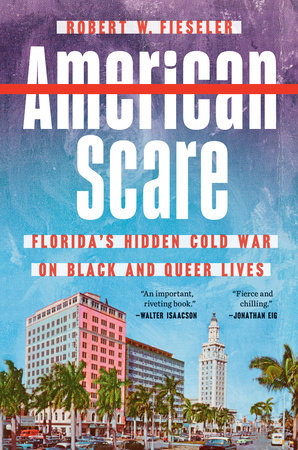
American Scare

Florida's Hidden Cold War on Black and Queer Lives

Look inside
Listen to a clip from the audiobook
audio play button
0:00
0:00
**Stonewall Book Awards - Israel Fishman Nonfiction Honor Book**
**American Bar Association Silver Gavel Award Finalist**
**The Publishing Triangle - Randy Shilts Gay Nonfiction Award Finalist**
**A Kirkus Best Book of 2025**

A vital exposé for both our history and our present day, American Scare tells the riveting story of how the Florida government destroyed the lives of Black and queer citizens in the twentieth century.


In January 1959, Art Copleston was escorted out of his college accounting class by three police officers. In a motel room, blinds drawn, he sat in front of a state senator and the legal counsel for the Florida Legislative Investigation Committee, nicknamed the “Johns Committee.” His crime? Being a suspected homosexual. And the government of Florida would use any tactic at their disposal—legal or not—to get Copleston to admit it.

Using a secret trove of primary source documents that have been decoded and de-censored for the first time in history, journalist Robert Fieseler unravels the mystery of what actually happened behind the closed doors of an inquisition that held ordinary citizens ransom to its extraordinary powers.

The state of Florida would prefer that this history remain buried. But for nearly a decade, the Florida Legislature founded, funded, and supported the Johns Committee—an organization using the cover of communism to viciously attack members of the NAACP and queer professors and students. Spearheaded by Charley Johns, a multi-term politician in a gerrymandered legislature, the Committee was determined to eliminate any threats to the state's white, conservative regime.

Fieseler describes the heartbreaking ramifications for citizens of Florida whose lives were imperiled, profiling marginalized residents with compassion and a determination to bring their devasting experiences to light at last. A propulsive, human-centered drama, with fascinating insight into Florida politics, American Scare is a page-turning reckoning of our racist and homophobic past—and its chilling parallels to today.
I.

Race

November 13, 1961
(Box 2, Mississippi Papers, FBI Records)

There was little a white man couldn't do in the name of the law in Florida, especially when exercising his duties through an appointed or elected position, especially when he wore a uniform or an insignia. High in a conference room of the Di Lido Hotel, an eleven-story tower overlooking Miami Beach, these white men met in secret. Intelligence agents from ten southern states in still-segregated America, they gathered pursuant to orders from their governors and legislatures for the purpose of defending, in their own language, "our own States' rights against any and all enemies."

More than five years since Virginia senator Harry F. Byrd's call for "massive resistance" in Dixieland toward the second U.S. Supreme Court Brown v. Board of Education ruling for public schools to integrate "with all deliberate speed," these were the lawmen and watchmen holding the line against federal overreach.

Through brute force and legal chicanery, states like Louisiana, North Carolina, and Tennessee had mostly held back the tide of intermixing. Florida, with just five desegregated school districts (out of sixty-seven) into the 1960 school year, accommodated so-called integration mongers among the least, with only hard-liners like Alabama and Mississippi beating them out for full boasting rights: zero desegregated schools. Florida lawmen in particular understood that the best way to be above the law was to be a legal white knight and/or an extralegal enforcer. For example, a white official could close down public pools rather than permit a court-ordered integration and face no backlash. This was a great oversight in American jurisprudence: a condition of lawlessness within the law, through which southern whites could not be penalized when the law, from state constitutions on downward, existed chiefly to advantage them over others.

The law of the South could contort in knots to avoid white guilt. Agents of "law and order" exploited these situational loopholes with no small swagger. For centuries, with a few decades of federally enforced exceptions during Reconstruction, the racial status quo of the South reigned as a near-feudal fiefdom of white dominion. Into the early 1960s, Black men were still expected to step in the gutter and avert their eyes whenever a white woman passed on the sidewalk. No Black man, not even a Black convict speaking to a white convict in a prison yard, could safely address a white man without calling him "mister." In Florida courtrooms, Black citizens were commonly called "darky" by prosecutors, and the official anthem of the State of Florida, "Old Folks at Home," hailed "darkies" of the "old plantation" at diplomatic meetings and gubernatorial inaugurations.

"Racial agitation" largely sprang from the rare circumstance in which a so-called uppity Black denied genuflection to a low-status white, who then rallied a mob to restore essential order. At its zenith, the law of Florida could best be represented by whatever a white sheriff, elected through voter suppression in Black majority counties, told a browbeaten Black man in an isolated room as that man etched an X signature upon a confession already typewritten. Between 1924 and 1941, if the Black "confessee" was convicted of a capital crime in the State of Florida, the white county sheriff who compelled that confession received the honor (and public relations windfall) of throwing the switch at the ritual electrocution.

But by November 1961, these white leaders, defenders of the segregated order, felt themselves besieged. National sentiment was slowly shifting, with Freedom Riders on Greyhounds testing interstate travel, southern universities being desegregated by court order, Blacks conducting "wade-ins" at beaches, and Dr. Martin Luther King Jr. becoming a well-known figure. White lawmen from Florida and Georgia expressed a need for a new forum "in order to better exchange information between the Southern States, which outside forces are now attacking." Some forty lawmen answered the call to come to Miami Beach for a three-day summit. Most brought along their white wives, who spent afternoons browsing boutiques. Some wives hauled their kids along.

Meanwhile, on Cape Canaveral farther up the coast, NASA was propelling Florida's newfound status as a cultural and scientific gem. In the spirit of these times, southern agents fancied themselves as a bit like the astronauts: exemplars and defenders of the American Man. "The Magic City, the Tropical Playland of the world," wrote famed University of Florida geography professor Sigismond Diettrich of this 1950s metropolis. "The Mecca of millionaires striving for health-giving sunshine, palms and tropical skies, the blue waters teeming with marine life, the white sandy beaches teeming with sun bronzed humanity. . . . This is Miami, more a dream and an idea than a stark reality."

Here at the De Lido Hotel, a 329-room modernist wonder built by architect Morris Lapidus, assembled heads of southern sovereignty commissions, chiefs of "state FBIs," representatives of state legislative committees on un-American subversion, and generals of major police forces. All led on-the-ground resistances, some known to the wider public and some clandestine within state and county borders. All traveled to Miami in their official capacities. Few would turn down an invitation to a table such as this one, set by the likes of the Florida Legislative Investigation Committee (FLIC) and its power broker: Florida state senator Charley Johns, although Charley knew not to show his face at the confab, lest he be pulled into intrigue himself. Democrat Charley Johns, attendees knew, was leading the so-called anti-Communist purge in his home state as chairman of an independent committee that, through open hearings and secret interrogations, aimed to shed light on Reds trying to integrate schools, foster chaos, and pervert the American family.

Post-federal Red Scare, southern populists like Charley had adapted the term Communist to mean a white race traitor or a nonwhite challenger to the "southern way of life" (defined by historian Charles Reagan Wilson as a racial dog whistle that "encouraged white southerners to invest enormous meaning in the southern identity," reinforced by "belief in the moral superiority of white southerners surrounded by allegedly savage Black people"). FLIC agents bandied the C-term cavalierly to give their social agendas the semblance of a national security emergency. They in truth possessed none of the competencies needed to spot a single legitimate Soviet agent, though it was hard to parse if they hid awareness of this insufficiency or convinced themselves the opposite through their own ego-stroking. "Not strong, not open," Remus J. Strickland, chief investigator for the FLIC, later admitted of Communism in Florida without additional self-analysis. "Hard to detect."

Shrewdly, Charley Johns preferred to do his harshest work through proxies, and so he dispatched from the state capitol of Tallahassee an intermediary: Florida house representative Richard O. Mitchell. Promptly at nine o'clock in the morning of Monday, November 13, in a conference room with a view of the Atlantic, the convention of investigators began. Host Remus Strickland of the FLIC called the meeting to order. Emphasizing the highly confidential nature of what was about to be shared, Strickland welcomed into their hushed chamber Florida assistant attorney general George R. Georgieff, special prosecutor for "all crimes of subversion" in the Sunshine State. Georgieff briefed the room on Florida's "Cuban problem," relative to the hundreds of Cuban refugees fleeing the Castro regime and flooding Miami. Forebodingly, he estimated that at least 10 percent of those who landed in the United States were Communists planted by Castro for subversive purposes-part of the notorious "Red" plan to hasten a Cold War victory for the Soviet Union.

Next, Lieutenant H. A. Poole of the Georgia Bureau of Investigation, a state spy division modeled on J. Edgar Hoover's Federal Bureau of Investigation (FBI), reported on the southern racial situation. Priming the group, Poole stated how "we southern states cannot rely on the FBI to exchange any information with us on agitative groups." The assertion met with knowing nods. With federal intelligence untrustworthy, Poole stressed the "importance of keeping the information furnished by one state to another confidential."

Hitting his stride, Poole categorized the Southern Christian Leadership Conference, a Black minister-based organization in the forefront of the Black civil rights movement, as a subversive organization. Poole named its leader, Dr. Martin Luther King Jr., as a driving force of racial agitation, a walking terror who fundraised for Communist-affiliated teachers running radical workshops, such as the Highlander Folk School in Monteagle, Tennessee, where the lawbreaker Rosa Parks received training. Poole cited Communist agitators as the true menace behind that summer's interstate Freedom Rider bus fiasco-a challenge of the federal Interstate Commerce Commission's prohibition of segregation in interstate bus travel that ended in a blazing Greyhound on an Alabama roadside and a beatdown at the hands of a chain-wielding white mob in Birmingham-"as well as most all other racial agitation carried on." To shouts of agreement and "Hear! Hear!" Lieutenant Poole closed by declaring Dr. Martin Luther King Jr. "the most dangerous agitator running loose today."

Representatives of other segregated states followed Poole with similar reports of unrest compounded by federal interference. Gwin Cole, investigator for the Mississippi Highway Patrol, proudly discussed how Freedom Riders near the state capital of Jackson were manhandled "from the time they were arrested in Mississippi until they were convicted and made bond or were imprisoned." Present in the room, Brigadier General T. B. Birdsong, who led the arresting charge against the offenders, beamed proudly. Howard Chandler of the Arkansas State Police, representing the state where President Eisenhower had called in federal troops to escort the Little Rock Nine of Black students integrating the local Central High School in 1957, spoke with optimism of white vigilante Minute Men in Arkansas, Georgia, Louisiana, and southern Illinois organizing "to resist the Communists, should they take over." A confidential Mississippi State Sovereignty Commission report noted the room's support for the Minute Men network: "It would not be any trouble for them to get armed."

Last to speak, convention host Remus J. Strickland of the FLIC rose to touch on a groundbreaking subject in southern law enforcement. Strickland had recently concluded an investigation, he shared, into homosexual perverts teaching in Florida schools and colleges, which resulted in at least 140 teachers and 15 professors being fired for moral lapses. This homosexual "purge," as it was called by Florida lawmakers as well as the few homosexual activists in existence in the United States, had never been more popular among Florida parents, who largely viewed homosexuals as insidious devils and godless Communists keen to tempt their children into an underworld of sex criminality. Strickland described how Florida agents "revoked a sex pervert's teachers license to teach in Florida for life" and promised lists of fired sex deviates to his fellow colleagues, lest those former teachers be so shameless as to reapply for licensure in other states. Many in the room had never heard the taboo of homosexuality discussed so openly before or presented as an attack on southern society on par with Dr. King. Those in the conference room applauded Strickland's savvy.

The totality of the day's presentations sent a resounding message: Blacks, Cubans, Communists, and homosexuals, aligning treasonously behind federal rights and privileges, constituted a societal infestation. This unholy cabal of subversives intended to annihilate the almighty "southern way of life." The United States, attendees believed, was en route to collapse from within, like Weimar Germany. The irony that they themselves were conspiring to subvert the U.S. government, while projecting that claim upon their enemies, escaped them. Strickland adjourned the day's conference for drinks on the hotel cabana and a dip in the Di Lido's Olympic-size pool, where more was discussed in earnest while wives sunbathed.

After recovering from their hangovers, the lawmen reconvened late the following afternoon, November 14, to adopt the bylaws of a new alliance: the Southern Association of Intelligence Agents. Unanimously, they signed their names to an alternate group "Constitution" that promised to "always be on alert and ready to take proper action against any person or persons who propose to overthrow our form of government." With their founding documents passed unanimously, the confederation elected officers. Lieutenant H. A. Poole of the Georgia Bureau of Investigation was named president for his demonstrated expertise on racial topics. Conference host Remus J. Strickland was unanimously elevated as the group's executive director for the deep impression he'd made concerning the sex pervert crisis.

The interstate alliance agreed to meet again that upcoming June in Hot Springs, Arkansas, a popular southern spa town. Group president H. A. Poole, cautioning confidentiality in all matters going forward, praised attendees for their productivity. In celebration, Strickland hosted a soiree that night for the agents and their wives at Café Le Can Can in a nearby tower. They dined on broiled young squab chicken followed by a showstopping dessert called the Chantilly Wedge Fantasia. By special instruction of state senator Charley Johns, all charges were "paid the same evening by Mr. Dick Mitchell," the Florida state house representative attending to the group's needs. Taxpayers of the Sunshine State (including the Black integrationists they pilloried) footed the bill through their contributions to the state treasury. Members of the Southern Association of Intelligence Agents had already begun the practice of passing confidential reports, but now their back-channeling was authorized and official.

The Louisiana Bureau of Criminal Identification and Information gave Strickland a lead on an integrationist preacher who had been run out of Baton Rouge and was now pastor of a Congregational church in Daytona Beach. Strickland had already mailed the Mississippi Sovereignty Commission an educational blacklist naming all teachers suspended on suspicion of homosexuality from Florida schools. As supplementary intel, Strickland provided for reference to all signatory members of the Southern Association of Intelligence Agents a hush-hush list of known racial organizations "either Communist altogether, Communist-front, or heavily Communist infiltrated." Since the U.S. Supreme Court had struck down federal sedition laws, which made it hard to prosecute agitators, Strickland implored his fellow investigators to "expose and let the public itself destroy the movements as they are brought out into the open" through public hearings.

Even after unfavorable coverage in northern media concerning wanton violence toward the Freedom Riders, state agents like Strickland argued that the battle for order could be won in a wider court of publicity by disgracing the presumed guilty. As the sun set behind the Di Lido Hotel and the distant city, throwing long shadows toward the crystal blues of the Gulf Stream and the first emerging stars, the men toasted each other and their powers of solidarity. "On behalf of my wife and myself, I wish to express to you and Mrs. Strickland my thanks for your most gracious hospitality," gushed President H. A. Poole in a letter to Strickland. President Poole wrote separately to Florida state senator Charley Johns, in a gesture playing up to Strickland's boss, "Mr. R. J. Strickland, your chief investigator, exerted every effort possible to make our visit to your state a pleasure." Despite all overtones of secrecy, The New York Times sniffed out the covert meeting in Miami within six days. The headline announced: "Security Bureau Formed in South."
© Portrait by Annie Flanagan
Robert W. Fieseler is a journalist investigating marginalized groups and a scholar excavating forgotten histories. A National Lesbian and Gay Journalists Association Journalist of the Year and recipient of the Pulitzer Traveling Fellowship, his debut book Tinderbox won seven awards, including the Edgar Award, and his reporting has appeared in Slate, Commonweal, and River Teeth, among others. Fieseler graduated co-valedictorian from the Columbia Journalism School and is pursuing a PhD at Tulane University as a Mellon Fellow. He lives with his husband on the gayest street in New Orleans. View titles by Robert W. Fieseler
“Harrowing…. American Scare contains evocative portraits of Miami, Gainesville and other engines of the economic boom that propelled Florida from agricultural backwater to political power center, alongside compelling character studies of Johns committee victims.”
The Guardian US

“With the publication of American Scare, Fieseler… has joined the ranks of the nation’s top investigative reporters, chronicling our most tragic episodes while taking home multiple awards.”
LGBTQ Nation

“The most complete account... Adds important new dimensions.”
The Gay & Lesbian Review

“A masterpiece of archive activism… Bobby Fieseler, a queer historian, rescued the [Johns Committee] boxes and delivers readers their contents with history’s gale force.”
The Washington Blade

“Couldn’t possibly be more timely or pertinent.”
Lavender Magazine

“Fieseler’s reportage is riveting and shocking and will remind readers not to ignore the surveillant state of our own slick, serpentine government.”
Bay Area Reporter

“Riveting... a fresh and unredacted look into the harrowing Johns Committee.”
Shelf Awareness

“Fieseler tells a story that runs deeper than you may know. Here, you’ll read a historical expose with documented, newly released evidence of a systemic effort to ruin the lives of two groups of people that were perceived as a threat to a legislature full of white men. Prepared to be shocked.”
Terri Schlichenmeyer, The Los Angeles Blade

American Scare is an important history of how Black activists and gay teachers were targeted by a legislative inquest in Florida in the late 1950s. But it’s also something more: The story of how this history was recovered and revealed after authorities tried to hide it. An important, riveting book both for those who value history and for those who want to understand the process by which history is preserved—and the ways the past impacts the present.”
Walter Isaacson, #1 New York Times bestselling author of The Code Breaker and Elon Musk, professor of history at Tulane University, and recipient of the National Humanities Medal

American Scare is a fierce and chilling book, deeply reported and deftly written. Fieseler shines a bright light on injustices past and present, bringing a censored saga to life.”
—Jonathan Eig, author of the Pulitzer Prize winner and New York Times bestseller King: A Life

“With a historian's rigor and a novelist's mastery of story, Robert W. Fieseler uncovers a harrowing, hidden chapter of American history—exposing the machinery of fear, repression, and resistance in Cold War Florida. American Scare unmasks the full scale of state-sanctioned persecution of Black and queer lives while celebrating the courage of those who refused to be silenced. Amid a 21st-century effort to erase our history and return us to the horrific politics of this era, Fieseler delivers an essential and unshakable reminder of the past’s grip on our present. This book is historical nonfiction at its finest: urgent, unflinching, and impossible to put down.”
—Eric Cervini, New York Times bestselling author of the Pulitzer Prize finalist The Deviant’s War

“In an age of new and virulent attacks on queer citizens and people of color, Robert W. Fieseler’s American Scare: Florida's Hidden Cold War on Black and Queer Lives – an inquisition into the Florida witch hunts in the 1950s and 60s – is imperative reading. Half civil rights history, half investigative reporting, the story features purloined government documents exposing massive abuses of state power. Fieseler’s illuminating critique of the devastating intentions of the Florida Johns Committee is a thrilling read. We need this book now more than ever.”
Michael Bronski, Stonewall Book Award winning author of A Queer History of the United States

"Who are we now—and how did we get here? The origins of our fascist moment, defined by racism, homophobia, and the war against freedom, are brilliantly presented in American Scare. Profoundly researched, filled with moving personal details regarding the people Florida silenced, this most important book will inspire us all to rebuild the democracy we worked so hard to create. A splendid history—Robert Fieseler has gifted us with a powerful call to action."
Blanche Wiesen Cook, recipient of the Bill Whitehead Award and author of the LA Times Book Prize winner Eleanor Roosevelt

"In American Scare, Robert Fieseler uncovers a chilling, long-buried history of white politicians colluding to silence Black civil rights activists and queer educators. Through meticulous archival research, Fieseler exposes the deep roots of oppression that continue to shape today’s political landscape. Urgent and revelatory, this book is an essential read for anyone seeking to understand the intersections of race, sexuality, and power in America."
E. Patrick Johnson, author of the Stonewall Honor Book Sweet Tea: Black Gay Men of the South

“With eye-popping detail, American Scare shines a much-needed light on the notorious Johns Committee and its extralegal assault on civil rights activists and the gay community in 1950s and 1960s Florida. Robert Fieseler is to be commended for bringing this remarkable story—and that of the courageous Black, white, and LGBT Floridians who fought back—out into the open once and for all.”
Scott Ellsworth, author of the National Book Award longlister The Ground Breaking

“Robert Fieseler’s American Scare is a gripping, and deeply researched account of Florida’s hidden assault on Black and queer lives during the Cold War—a history that power tried to erase but refused to stay buried. With the sharp eye of an investigator and the skill of a storyteller, Fieseler uncovers long-lost records that reveal a decades-long campaign of surveillance, persecution, and repression against those who dared to live freely in the Sunshine State. At a time when history is being censored and distorted, American Scare brings the past into focus. This book is a necessary read for anyone who wants to understand the roots of today’s battles over race, gender, sexuality, and power.”
Tourmaline, artist, filmmaker, activist, and author of Marsha: The Joy and Defiance of Marsha P. Johnson

“All readers, in every state, have a right to this masterwork of journalism.”
Booklist, starred review

"Drawing from a trove of secret documents… Fieseler's dogged reporting and narrative gifts make the history as gripping as it is frightening. This timely account of political power run amok is not to be missed."
Publishers Weekly, starred review

"Fieseler's vital account shines a light on the Florida Legislative Investigation Committee... An essential work of recovering queer history."
Kirkus, starred review

About

**Stonewall Book Awards - Israel Fishman Nonfiction Honor Book**
**American Bar Association Silver Gavel Award Finalist**
**The Publishing Triangle - Randy Shilts Gay Nonfiction Award Finalist**
**A Kirkus Best Book of 2025**

A vital exposé for both our history and our present day, American Scare tells the riveting story of how the Florida government destroyed the lives of Black and queer citizens in the twentieth century.


In January 1959, Art Copleston was escorted out of his college accounting class by three police officers. In a motel room, blinds drawn, he sat in front of a state senator and the legal counsel for the Florida Legislative Investigation Committee, nicknamed the “Johns Committee.” His crime? Being a suspected homosexual. And the government of Florida would use any tactic at their disposal—legal or not—to get Copleston to admit it.

Using a secret trove of primary source documents that have been decoded and de-censored for the first time in history, journalist Robert Fieseler unravels the mystery of what actually happened behind the closed doors of an inquisition that held ordinary citizens ransom to its extraordinary powers.

The state of Florida would prefer that this history remain buried. But for nearly a decade, the Florida Legislature founded, funded, and supported the Johns Committee—an organization using the cover of communism to viciously attack members of the NAACP and queer professors and students. Spearheaded by Charley Johns, a multi-term politician in a gerrymandered legislature, the Committee was determined to eliminate any threats to the state's white, conservative regime.

Fieseler describes the heartbreaking ramifications for citizens of Florida whose lives were imperiled, profiling marginalized residents with compassion and a determination to bring their devasting experiences to light at last. A propulsive, human-centered drama, with fascinating insight into Florida politics, American Scare is a page-turning reckoning of our racist and homophobic past—and its chilling parallels to today.

Excerpt

I.

Race

November 13, 1961
(Box 2, Mississippi Papers, FBI Records)

There was little a white man couldn't do in the name of the law in Florida, especially when exercising his duties through an appointed or elected position, especially when he wore a uniform or an insignia. High in a conference room of the Di Lido Hotel, an eleven-story tower overlooking Miami Beach, these white men met in secret. Intelligence agents from ten southern states in still-segregated America, they gathered pursuant to orders from their governors and legislatures for the purpose of defending, in their own language, "our own States' rights against any and all enemies."

More than five years since Virginia senator Harry F. Byrd's call for "massive resistance" in Dixieland toward the second U.S. Supreme Court Brown v. Board of Education ruling for public schools to integrate "with all deliberate speed," these were the lawmen and watchmen holding the line against federal overreach.

Through brute force and legal chicanery, states like Louisiana, North Carolina, and Tennessee had mostly held back the tide of intermixing. Florida, with just five desegregated school districts (out of sixty-seven) into the 1960 school year, accommodated so-called integration mongers among the least, with only hard-liners like Alabama and Mississippi beating them out for full boasting rights: zero desegregated schools. Florida lawmen in particular understood that the best way to be above the law was to be a legal white knight and/or an extralegal enforcer. For example, a white official could close down public pools rather than permit a court-ordered integration and face no backlash. This was a great oversight in American jurisprudence: a condition of lawlessness within the law, through which southern whites could not be penalized when the law, from state constitutions on downward, existed chiefly to advantage them over others.

The law of the South could contort in knots to avoid white guilt. Agents of "law and order" exploited these situational loopholes with no small swagger. For centuries, with a few decades of federally enforced exceptions during Reconstruction, the racial status quo of the South reigned as a near-feudal fiefdom of white dominion. Into the early 1960s, Black men were still expected to step in the gutter and avert their eyes whenever a white woman passed on the sidewalk. No Black man, not even a Black convict speaking to a white convict in a prison yard, could safely address a white man without calling him "mister." In Florida courtrooms, Black citizens were commonly called "darky" by prosecutors, and the official anthem of the State of Florida, "Old Folks at Home," hailed "darkies" of the "old plantation" at diplomatic meetings and gubernatorial inaugurations.

"Racial agitation" largely sprang from the rare circumstance in which a so-called uppity Black denied genuflection to a low-status white, who then rallied a mob to restore essential order. At its zenith, the law of Florida could best be represented by whatever a white sheriff, elected through voter suppression in Black majority counties, told a browbeaten Black man in an isolated room as that man etched an X signature upon a confession already typewritten. Between 1924 and 1941, if the Black "confessee" was convicted of a capital crime in the State of Florida, the white county sheriff who compelled that confession received the honor (and public relations windfall) of throwing the switch at the ritual electrocution.

But by November 1961, these white leaders, defenders of the segregated order, felt themselves besieged. National sentiment was slowly shifting, with Freedom Riders on Greyhounds testing interstate travel, southern universities being desegregated by court order, Blacks conducting "wade-ins" at beaches, and Dr. Martin Luther King Jr. becoming a well-known figure. White lawmen from Florida and Georgia expressed a need for a new forum "in order to better exchange information between the Southern States, which outside forces are now attacking." Some forty lawmen answered the call to come to Miami Beach for a three-day summit. Most brought along their white wives, who spent afternoons browsing boutiques. Some wives hauled their kids along.

Meanwhile, on Cape Canaveral farther up the coast, NASA was propelling Florida's newfound status as a cultural and scientific gem. In the spirit of these times, southern agents fancied themselves as a bit like the astronauts: exemplars and defenders of the American Man. "The Magic City, the Tropical Playland of the world," wrote famed University of Florida geography professor Sigismond Diettrich of this 1950s metropolis. "The Mecca of millionaires striving for health-giving sunshine, palms and tropical skies, the blue waters teeming with marine life, the white sandy beaches teeming with sun bronzed humanity. . . . This is Miami, more a dream and an idea than a stark reality."

Here at the De Lido Hotel, a 329-room modernist wonder built by architect Morris Lapidus, assembled heads of southern sovereignty commissions, chiefs of "state FBIs," representatives of state legislative committees on un-American subversion, and generals of major police forces. All led on-the-ground resistances, some known to the wider public and some clandestine within state and county borders. All traveled to Miami in their official capacities. Few would turn down an invitation to a table such as this one, set by the likes of the Florida Legislative Investigation Committee (FLIC) and its power broker: Florida state senator Charley Johns, although Charley knew not to show his face at the confab, lest he be pulled into intrigue himself. Democrat Charley Johns, attendees knew, was leading the so-called anti-Communist purge in his home state as chairman of an independent committee that, through open hearings and secret interrogations, aimed to shed light on Reds trying to integrate schools, foster chaos, and pervert the American family.

Post-federal Red Scare, southern populists like Charley had adapted the term Communist to mean a white race traitor or a nonwhite challenger to the "southern way of life" (defined by historian Charles Reagan Wilson as a racial dog whistle that "encouraged white southerners to invest enormous meaning in the southern identity," reinforced by "belief in the moral superiority of white southerners surrounded by allegedly savage Black people"). FLIC agents bandied the C-term cavalierly to give their social agendas the semblance of a national security emergency. They in truth possessed none of the competencies needed to spot a single legitimate Soviet agent, though it was hard to parse if they hid awareness of this insufficiency or convinced themselves the opposite through their own ego-stroking. "Not strong, not open," Remus J. Strickland, chief investigator for the FLIC, later admitted of Communism in Florida without additional self-analysis. "Hard to detect."

Shrewdly, Charley Johns preferred to do his harshest work through proxies, and so he dispatched from the state capitol of Tallahassee an intermediary: Florida house representative Richard O. Mitchell. Promptly at nine o'clock in the morning of Monday, November 13, in a conference room with a view of the Atlantic, the convention of investigators began. Host Remus Strickland of the FLIC called the meeting to order. Emphasizing the highly confidential nature of what was about to be shared, Strickland welcomed into their hushed chamber Florida assistant attorney general George R. Georgieff, special prosecutor for "all crimes of subversion" in the Sunshine State. Georgieff briefed the room on Florida's "Cuban problem," relative to the hundreds of Cuban refugees fleeing the Castro regime and flooding Miami. Forebodingly, he estimated that at least 10 percent of those who landed in the United States were Communists planted by Castro for subversive purposes-part of the notorious "Red" plan to hasten a Cold War victory for the Soviet Union.

Next, Lieutenant H. A. Poole of the Georgia Bureau of Investigation, a state spy division modeled on J. Edgar Hoover's Federal Bureau of Investigation (FBI), reported on the southern racial situation. Priming the group, Poole stated how "we southern states cannot rely on the FBI to exchange any information with us on agitative groups." The assertion met with knowing nods. With federal intelligence untrustworthy, Poole stressed the "importance of keeping the information furnished by one state to another confidential."

Hitting his stride, Poole categorized the Southern Christian Leadership Conference, a Black minister-based organization in the forefront of the Black civil rights movement, as a subversive organization. Poole named its leader, Dr. Martin Luther King Jr., as a driving force of racial agitation, a walking terror who fundraised for Communist-affiliated teachers running radical workshops, such as the Highlander Folk School in Monteagle, Tennessee, where the lawbreaker Rosa Parks received training. Poole cited Communist agitators as the true menace behind that summer's interstate Freedom Rider bus fiasco-a challenge of the federal Interstate Commerce Commission's prohibition of segregation in interstate bus travel that ended in a blazing Greyhound on an Alabama roadside and a beatdown at the hands of a chain-wielding white mob in Birmingham-"as well as most all other racial agitation carried on." To shouts of agreement and "Hear! Hear!" Lieutenant Poole closed by declaring Dr. Martin Luther King Jr. "the most dangerous agitator running loose today."

Representatives of other segregated states followed Poole with similar reports of unrest compounded by federal interference. Gwin Cole, investigator for the Mississippi Highway Patrol, proudly discussed how Freedom Riders near the state capital of Jackson were manhandled "from the time they were arrested in Mississippi until they were convicted and made bond or were imprisoned." Present in the room, Brigadier General T. B. Birdsong, who led the arresting charge against the offenders, beamed proudly. Howard Chandler of the Arkansas State Police, representing the state where President Eisenhower had called in federal troops to escort the Little Rock Nine of Black students integrating the local Central High School in 1957, spoke with optimism of white vigilante Minute Men in Arkansas, Georgia, Louisiana, and southern Illinois organizing "to resist the Communists, should they take over." A confidential Mississippi State Sovereignty Commission report noted the room's support for the Minute Men network: "It would not be any trouble for them to get armed."

Last to speak, convention host Remus J. Strickland of the FLIC rose to touch on a groundbreaking subject in southern law enforcement. Strickland had recently concluded an investigation, he shared, into homosexual perverts teaching in Florida schools and colleges, which resulted in at least 140 teachers and 15 professors being fired for moral lapses. This homosexual "purge," as it was called by Florida lawmakers as well as the few homosexual activists in existence in the United States, had never been more popular among Florida parents, who largely viewed homosexuals as insidious devils and godless Communists keen to tempt their children into an underworld of sex criminality. Strickland described how Florida agents "revoked a sex pervert's teachers license to teach in Florida for life" and promised lists of fired sex deviates to his fellow colleagues, lest those former teachers be so shameless as to reapply for licensure in other states. Many in the room had never heard the taboo of homosexuality discussed so openly before or presented as an attack on southern society on par with Dr. King. Those in the conference room applauded Strickland's savvy.

The totality of the day's presentations sent a resounding message: Blacks, Cubans, Communists, and homosexuals, aligning treasonously behind federal rights and privileges, constituted a societal infestation. This unholy cabal of subversives intended to annihilate the almighty "southern way of life." The United States, attendees believed, was en route to collapse from within, like Weimar Germany. The irony that they themselves were conspiring to subvert the U.S. government, while projecting that claim upon their enemies, escaped them. Strickland adjourned the day's conference for drinks on the hotel cabana and a dip in the Di Lido's Olympic-size pool, where more was discussed in earnest while wives sunbathed.

After recovering from their hangovers, the lawmen reconvened late the following afternoon, November 14, to adopt the bylaws of a new alliance: the Southern Association of Intelligence Agents. Unanimously, they signed their names to an alternate group "Constitution" that promised to "always be on alert and ready to take proper action against any person or persons who propose to overthrow our form of government." With their founding documents passed unanimously, the confederation elected officers. Lieutenant H. A. Poole of the Georgia Bureau of Investigation was named president for his demonstrated expertise on racial topics. Conference host Remus J. Strickland was unanimously elevated as the group's executive director for the deep impression he'd made concerning the sex pervert crisis.

The interstate alliance agreed to meet again that upcoming June in Hot Springs, Arkansas, a popular southern spa town. Group president H. A. Poole, cautioning confidentiality in all matters going forward, praised attendees for their productivity. In celebration, Strickland hosted a soiree that night for the agents and their wives at Café Le Can Can in a nearby tower. They dined on broiled young squab chicken followed by a showstopping dessert called the Chantilly Wedge Fantasia. By special instruction of state senator Charley Johns, all charges were "paid the same evening by Mr. Dick Mitchell," the Florida state house representative attending to the group's needs. Taxpayers of the Sunshine State (including the Black integrationists they pilloried) footed the bill through their contributions to the state treasury. Members of the Southern Association of Intelligence Agents had already begun the practice of passing confidential reports, but now their back-channeling was authorized and official.

The Louisiana Bureau of Criminal Identification and Information gave Strickland a lead on an integrationist preacher who had been run out of Baton Rouge and was now pastor of a Congregational church in Daytona Beach. Strickland had already mailed the Mississippi Sovereignty Commission an educational blacklist naming all teachers suspended on suspicion of homosexuality from Florida schools. As supplementary intel, Strickland provided for reference to all signatory members of the Southern Association of Intelligence Agents a hush-hush list of known racial organizations "either Communist altogether, Communist-front, or heavily Communist infiltrated." Since the U.S. Supreme Court had struck down federal sedition laws, which made it hard to prosecute agitators, Strickland implored his fellow investigators to "expose and let the public itself destroy the movements as they are brought out into the open" through public hearings.

Even after unfavorable coverage in northern media concerning wanton violence toward the Freedom Riders, state agents like Strickland argued that the battle for order could be won in a wider court of publicity by disgracing the presumed guilty. As the sun set behind the Di Lido Hotel and the distant city, throwing long shadows toward the crystal blues of the Gulf Stream and the first emerging stars, the men toasted each other and their powers of solidarity. "On behalf of my wife and myself, I wish to express to you and Mrs. Strickland my thanks for your most gracious hospitality," gushed President H. A. Poole in a letter to Strickland. President Poole wrote separately to Florida state senator Charley Johns, in a gesture playing up to Strickland's boss, "Mr. R. J. Strickland, your chief investigator, exerted every effort possible to make our visit to your state a pleasure." Despite all overtones of secrecy, The New York Times sniffed out the covert meeting in Miami within six days. The headline announced: "Security Bureau Formed in South."

Author

© Portrait by Annie Flanagan
Robert W. Fieseler is a journalist investigating marginalized groups and a scholar excavating forgotten histories. A National Lesbian and Gay Journalists Association Journalist of the Year and recipient of the Pulitzer Traveling Fellowship, his debut book Tinderbox won seven awards, including the Edgar Award, and his reporting has appeared in Slate, Commonweal, and River Teeth, among others. Fieseler graduated co-valedictorian from the Columbia Journalism School and is pursuing a PhD at Tulane University as a Mellon Fellow. He lives with his husband on the gayest street in New Orleans. View titles by Robert W. Fieseler

Praise

“Harrowing…. American Scare contains evocative portraits of Miami, Gainesville and other engines of the economic boom that propelled Florida from agricultural backwater to political power center, alongside compelling character studies of Johns committee victims.”
The Guardian US

“With the publication of American Scare, Fieseler… has joined the ranks of the nation’s top investigative reporters, chronicling our most tragic episodes while taking home multiple awards.”
LGBTQ Nation

“The most complete account... Adds important new dimensions.”
The Gay & Lesbian Review

“A masterpiece of archive activism… Bobby Fieseler, a queer historian, rescued the [Johns Committee] boxes and delivers readers their contents with history’s gale force.”
The Washington Blade

“Couldn’t possibly be more timely or pertinent.”
Lavender Magazine

“Fieseler’s reportage is riveting and shocking and will remind readers not to ignore the surveillant state of our own slick, serpentine government.”
Bay Area Reporter

“Riveting... a fresh and unredacted look into the harrowing Johns Committee.”
Shelf Awareness

“Fieseler tells a story that runs deeper than you may know. Here, you’ll read a historical expose with documented, newly released evidence of a systemic effort to ruin the lives of two groups of people that were perceived as a threat to a legislature full of white men. Prepared to be shocked.”
Terri Schlichenmeyer, The Los Angeles Blade

American Scare is an important history of how Black activists and gay teachers were targeted by a legislative inquest in Florida in the late 1950s. But it’s also something more: The story of how this history was recovered and revealed after authorities tried to hide it. An important, riveting book both for those who value history and for those who want to understand the process by which history is preserved—and the ways the past impacts the present.”
Walter Isaacson, #1 New York Times bestselling author of The Code Breaker and Elon Musk, professor of history at Tulane University, and recipient of the National Humanities Medal

American Scare is a fierce and chilling book, deeply reported and deftly written. Fieseler shines a bright light on injustices past and present, bringing a censored saga to life.”
—Jonathan Eig, author of the Pulitzer Prize winner and New York Times bestseller King: A Life

“With a historian's rigor and a novelist's mastery of story, Robert W. Fieseler uncovers a harrowing, hidden chapter of American history—exposing the machinery of fear, repression, and resistance in Cold War Florida. American Scare unmasks the full scale of state-sanctioned persecution of Black and queer lives while celebrating the courage of those who refused to be silenced. Amid a 21st-century effort to erase our history and return us to the horrific politics of this era, Fieseler delivers an essential and unshakable reminder of the past’s grip on our present. This book is historical nonfiction at its finest: urgent, unflinching, and impossible to put down.”
—Eric Cervini, New York Times bestselling author of the Pulitzer Prize finalist The Deviant’s War

“In an age of new and virulent attacks on queer citizens and people of color, Robert W. Fieseler’s American Scare: Florida's Hidden Cold War on Black and Queer Lives – an inquisition into the Florida witch hunts in the 1950s and 60s – is imperative reading. Half civil rights history, half investigative reporting, the story features purloined government documents exposing massive abuses of state power. Fieseler’s illuminating critique of the devastating intentions of the Florida Johns Committee is a thrilling read. We need this book now more than ever.”
Michael Bronski, Stonewall Book Award winning author of A Queer History of the United States

"Who are we now—and how did we get here? The origins of our fascist moment, defined by racism, homophobia, and the war against freedom, are brilliantly presented in American Scare. Profoundly researched, filled with moving personal details regarding the people Florida silenced, this most important book will inspire us all to rebuild the democracy we worked so hard to create. A splendid history—Robert Fieseler has gifted us with a powerful call to action."
Blanche Wiesen Cook, recipient of the Bill Whitehead Award and author of the LA Times Book Prize winner Eleanor Roosevelt

"In American Scare, Robert Fieseler uncovers a chilling, long-buried history of white politicians colluding to silence Black civil rights activists and queer educators. Through meticulous archival research, Fieseler exposes the deep roots of oppression that continue to shape today’s political landscape. Urgent and revelatory, this book is an essential read for anyone seeking to understand the intersections of race, sexuality, and power in America."
E. Patrick Johnson, author of the Stonewall Honor Book Sweet Tea: Black Gay Men of the South

“With eye-popping detail, American Scare shines a much-needed light on the notorious Johns Committee and its extralegal assault on civil rights activists and the gay community in 1950s and 1960s Florida. Robert Fieseler is to be commended for bringing this remarkable story—and that of the courageous Black, white, and LGBT Floridians who fought back—out into the open once and for all.”
Scott Ellsworth, author of the National Book Award longlister The Ground Breaking

“Robert Fieseler’s American Scare is a gripping, and deeply researched account of Florida’s hidden assault on Black and queer lives during the Cold War—a history that power tried to erase but refused to stay buried. With the sharp eye of an investigator and the skill of a storyteller, Fieseler uncovers long-lost records that reveal a decades-long campaign of surveillance, persecution, and repression against those who dared to live freely in the Sunshine State. At a time when history is being censored and distorted, American Scare brings the past into focus. This book is a necessary read for anyone who wants to understand the roots of today’s battles over race, gender, sexuality, and power.”
Tourmaline, artist, filmmaker, activist, and author of Marsha: The Joy and Defiance of Marsha P. Johnson

“All readers, in every state, have a right to this masterwork of journalism.”
Booklist, starred review

"Drawing from a trove of secret documents… Fieseler's dogged reporting and narrative gifts make the history as gripping as it is frightening. This timely account of political power run amok is not to be missed."
Publishers Weekly, starred review

"Fieseler's vital account shines a light on the Florida Legislative Investigation Committee... An essential work of recovering queer history."
Kirkus, starred review

Books for Asian American, Native Hawaiian, and Pacific Islander Heritage Month

Each May, we honor the stories, histories, and cultures of Asian Americans, Native Hawaiians, and Pacific Islanders. Below is a selection of acclaimed fiction and nonfiction books by AANHPI creators to share with your students this month and throughout the year. Find our full collection of titles for Higher Education here.

Read more

Books for LGBTQIA+ Pride Month

In June we celebrate Lesbian, Gay, Bisexual, Transgender, Queer, Intersex, and Asexual + (LGBTQIA+) Pride Month, which honors the 1969 Stonewall riots in Manhattan. Pride Month is a time to both celebrate the accomplishments of those in the LGBTQ+ community and recognize the ongoing struggles faced by many across the world who wish to live

Read more