Download high-resolution image
Listen to a clip from the audiobook
audio play button
0:00
0:00

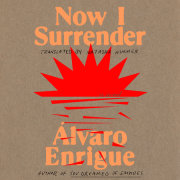
Now I Surrender

A Novel

Author Álvaro Enrigue On Tour
Translated by Natasha Wimmer On Tour
Listen to a clip from the audiobook
audio play button
0:00
0:00
NAMED A MOST ANTICIPATED BOOK OF 2026 BY THE NEW YORK TIMES, THE WASHINGTON POST AND LITHUB!

“This gifted Mexican writer … delivers novels that are steeped in history and have a hallucinatory sense of pageantry … He’s one of the best we have.” –Dwight Garner, The New York Times

A woman’s desperate flight from an Apache raid unfolds into a sweeping tale of the Mexico–US border wars.

Orchestrated with a stunningly imagined cast of characters, both historical and purely fictional, Now I Surrender radically recasts the story of how the West was “won.” In the contested borderlands between Mexico and the United States, a woman flees into the desert after a devastating raid on her dead husband’s ranch. A lieutenant colonel in service to the fledgling Republic, sent in pursuit of cattle rustlers, discovers he’s on the trail of a more dramatic abduction. Decades later, with political ambitions on the line, the American and Mexican militaries try to maneuver Geronimo, the most legendary of Apache warriors, into surrender. In our own day, a family travels through the region in search of a truer version of the past.

Part epic, part alt-Western, Now I Surrender is Álvaro Enrigue’s most expansive and impassioned novel yet. It weaves past and present, myth and history into a searing elegy for a way of life that was an incarnation of true liberty—and an homage to the spark in us that still thrills to its memory.
© Ahmed Gaber Photography
Álvaro Enrigue is a Mexican writer whose most recent novel is You Dreamed of Empires, which was a New York Times Top 10 Book of the Year. A former Fellow at the New York Public Library’s Cullman Center and at Princeton University’s Program in Latin American Studies, he has taught at New York University, Princeton University, the University of Maryland, Columbia University, and Hofstra University. His writing has appeared in The New York Times, The London Review of Books, and El País, among other publications.  He lives in New York City. View titles by Álvaro Enrigue
Praise for Now I Surrender

“Offer[s] the satisfactions of Westerns, historical epics, and metafiction even as [Enrigue] overturns all three traditions.” The Atlantic

“This gifted Mexican writer … delivers novels that are steeped in history and have a hallucinatory sense of pageantry. Reading him, you sense you are watching the passing of a long, antic, blood-flecked cortège, or a trans-hemispheric second-line parade, one threaded with the vestiges of old mythologies. … You can sense a bit of Bolaño in Enrigue: the postmodern playfulness, the cosmopolitanism, the historical conscience… Here’s one reason I love reading Enrigue…. The tough guys in his fiction often have effeminate sides (some of their boots have improbable heels) and they’re always taking miniature pratfalls. They sniff and wipe their earwax on their trousers; they have bits of scrambled egg stuck in their mustachios. If Enrigue were remaking High Noon, Gary Cooper would have pubic lice. This author has a natural appetite for subversion. Enrigue’s novels are not the places to come if you are nostalgic for notional simplicities of the American past. He’s one of the best we have, and he’s not done pushing against conventions.”—Dwight Garner, The New York Times

“By turns an impassioned anti-imperialist lament, a gripping alt-western, a meditation on human freedom, an autofictional travelogue.… As the novel reaches its conclusion, the author slowly binds the narrative threads tighter and tighter, collapsing the historical distance and revealing the pulsating truth at the heart of his book. For all that it might be the incarcerated Apaches who are at the sharp end of this tragedy, the forces that apparently necessitated their demise—the notion of manifest destiny, the hegemony of the nation state, the relentless march of modernity—have, Álvaro Enrigue suggests, denied us all the chance of achieving the highest forms of human flourishing.”—Times Literary Supplement

“Enrigue has a long career of writing brilliant and gripping literary accounts of Mexico’s history with a daring flair. His work is a moving and complex love letter to Mexico, mesmerizing anyone who has ever been awestruck by the country… It’s a slice of bloody American history with a timely edge.—Los Angeles Times

"A major work of historical reclamation. . . an eloquent rejoinder to the mythos that made two countries while erasing the lives of their original inhabitants."Publishers Weekly, STARRED review

"A thought-provoking meditation on defiance, defeat, and assimilation."Booklist

“As with Enrigue’s earlier books, he’s determined to upset narrative convention, and Wimmer, his longtime translator, handles his veering skillfully. Enrigue’s approach isn’t so much to lament the end of Apachería so much as to admire the steeliness of a tribe that survived centuries-long attempts to subdue it. A curious but effective treatment of an underappreciated effort to resist imperialism.”—Kirkus

“It’s refreshing to read the work of an author unafraid to challenge readers with an adventure that is as brainy as it is fun… it’s a treat for patient readers who love historical fiction.”Book Page

About

NAMED A MOST ANTICIPATED BOOK OF 2026 BY THE NEW YORK TIMES, THE WASHINGTON POST AND LITHUB!

“This gifted Mexican writer … delivers novels that are steeped in history and have a hallucinatory sense of pageantry … He’s one of the best we have.” –Dwight Garner, The New York Times

A woman’s desperate flight from an Apache raid unfolds into a sweeping tale of the Mexico–US border wars.

Orchestrated with a stunningly imagined cast of characters, both historical and purely fictional, Now I Surrender radically recasts the story of how the West was “won.” In the contested borderlands between Mexico and the United States, a woman flees into the desert after a devastating raid on her dead husband’s ranch. A lieutenant colonel in service to the fledgling Republic, sent in pursuit of cattle rustlers, discovers he’s on the trail of a more dramatic abduction. Decades later, with political ambitions on the line, the American and Mexican militaries try to maneuver Geronimo, the most legendary of Apache warriors, into surrender. In our own day, a family travels through the region in search of a truer version of the past.

Part epic, part alt-Western, Now I Surrender is Álvaro Enrigue’s most expansive and impassioned novel yet. It weaves past and present, myth and history into a searing elegy for a way of life that was an incarnation of true liberty—and an homage to the spark in us that still thrills to its memory.

Author

© Ahmed Gaber Photography
Álvaro Enrigue is a Mexican writer whose most recent novel is You Dreamed of Empires, which was a New York Times Top 10 Book of the Year. A former Fellow at the New York Public Library’s Cullman Center and at Princeton University’s Program in Latin American Studies, he has taught at New York University, Princeton University, the University of Maryland, Columbia University, and Hofstra University. His writing has appeared in The New York Times, The London Review of Books, and El País, among other publications.  He lives in New York City. View titles by Álvaro Enrigue

Praise

Praise for Now I Surrender

“Offer[s] the satisfactions of Westerns, historical epics, and metafiction even as [Enrigue] overturns all three traditions.” The Atlantic

“This gifted Mexican writer … delivers novels that are steeped in history and have a hallucinatory sense of pageantry. Reading him, you sense you are watching the passing of a long, antic, blood-flecked cortège, or a trans-hemispheric second-line parade, one threaded with the vestiges of old mythologies. … You can sense a bit of Bolaño in Enrigue: the postmodern playfulness, the cosmopolitanism, the historical conscience… Here’s one reason I love reading Enrigue…. The tough guys in his fiction often have effeminate sides (some of their boots have improbable heels) and they’re always taking miniature pratfalls. They sniff and wipe their earwax on their trousers; they have bits of scrambled egg stuck in their mustachios. If Enrigue were remaking High Noon, Gary Cooper would have pubic lice. This author has a natural appetite for subversion. Enrigue’s novels are not the places to come if you are nostalgic for notional simplicities of the American past. He’s one of the best we have, and he’s not done pushing against conventions.”—Dwight Garner, The New York Times

“By turns an impassioned anti-imperialist lament, a gripping alt-western, a meditation on human freedom, an autofictional travelogue.… As the novel reaches its conclusion, the author slowly binds the narrative threads tighter and tighter, collapsing the historical distance and revealing the pulsating truth at the heart of his book. For all that it might be the incarcerated Apaches who are at the sharp end of this tragedy, the forces that apparently necessitated their demise—the notion of manifest destiny, the hegemony of the nation state, the relentless march of modernity—have, Álvaro Enrigue suggests, denied us all the chance of achieving the highest forms of human flourishing.”—Times Literary Supplement

“Enrigue has a long career of writing brilliant and gripping literary accounts of Mexico’s history with a daring flair. His work is a moving and complex love letter to Mexico, mesmerizing anyone who has ever been awestruck by the country… It’s a slice of bloody American history with a timely edge.—Los Angeles Times

"A major work of historical reclamation. . . an eloquent rejoinder to the mythos that made two countries while erasing the lives of their original inhabitants."Publishers Weekly, STARRED review

"A thought-provoking meditation on defiance, defeat, and assimilation."Booklist

“As with Enrigue’s earlier books, he’s determined to upset narrative convention, and Wimmer, his longtime translator, handles his veering skillfully. Enrigue’s approach isn’t so much to lament the end of Apachería so much as to admire the steeliness of a tribe that survived centuries-long attempts to subdue it. A curious but effective treatment of an underappreciated effort to resist imperialism.”—Kirkus

“It’s refreshing to read the work of an author unafraid to challenge readers with an adventure that is as brainy as it is fun… it’s a treat for patient readers who love historical fiction.”Book Page

Books for Women’s History Month

In honor of Women’s History Month in March, we are sharing books by women who have shaped history and have fought for their communities. Our list includes books about women who fought for racial justice, abortion rights, equality in the workplace, and ranges in topics from women in politics and prominent women in history to

Read more