
Kinds of Power

A Guide to its Intelligent Uses

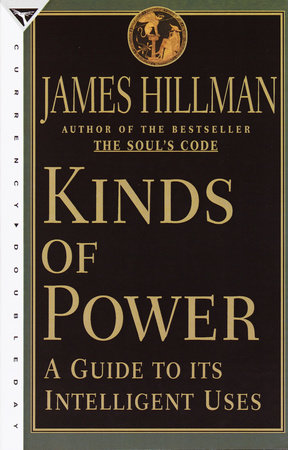
In the boldest expose on the nature of power since  Machiavelli, celebrated Jungian therapist James  Hillman shows how the artful leader uses each of two  dozen kinds of power with finesse and subtlety.  Power, we often forget, has many faces, many  different expressions. "Empowerment," writes  best-selling Jungian analyst James Hillman,  "comes from understanding the widest spectrum of  possibilities for embracing power." If food  means only meat and potatoes, your body suffers from  your ignorance. When your idea of food expands, so  does your strength. So it is with power.  "James Hillman," says Robert Bly, "is the  most lively and original psychologist we have had  in America since William James." In  Kinds Of Power, Hillman addresses  himself for the first time to a subject of great  interest to business people. He gives much needed  substance to the subject by showing us a broad  experience of power, rooted in the body, the rnind, and the  emotions, rather than the customary narrow  interpretation that simply equates power with strength.  Hillman's "anatomy" of power explores  two dozen expressions of power every artful leader  must understand and use, including: the language of  power, control, influence, resistance, leadership,  prestige, authority, exhibitionism, charisma,  ambition, reputation, fearsomeness, tyranny, purism,  subtle power, growth, and efficiency.
A world-renowned lecturer, teacher, author, Jungian analyst, and former director of the C. G. Jung Institute, James Hillman (1926–2011) was born in New Jersey and spent much of his life in Europe. He is the author of more than twenty books, translated into ten languages, including The Myth of Analysis and Reinventing Psychiatry, which was nominated for a Pulitzer Prize in 1975. View titles by James Hillman
"In some ways James Hillman is the most lively and original psychologist we have ever had in America since William James. I honor him and read something in his work almost every day." --Robert Bly

"Provocative, dangerous, and high-spirited." --Thomas Pynchon

"You can count on James Hillman to provide fresh, stimulating, and amazingly fertile imagination for whatever topic he takes up, in this case power in daily life. Kinds of Power is a radical book, tightly and gently argued. It excited me so that I'm eager to put into practice its promising new imagination of power." --Thomas Moore, author of Care of the Soul, Soul Mates, and Meditations

"If everyone in the Pentagon, in Congress, in the Senate, and in business read this book, the world would be greener, grander, more glorious, and godly. I recommend it to all governors and governed. It changed my way of thinking about the world in which we live." --Andre Gregory, star of My Dinner with Andre and codirector of Vanya on 42nd Street

About

In the boldest expose on the nature of power since  Machiavelli, celebrated Jungian therapist James  Hillman shows how the artful leader uses each of two  dozen kinds of power with finesse and subtlety.  Power, we often forget, has many faces, many  different expressions. "Empowerment," writes  best-selling Jungian analyst James Hillman,  "comes from understanding the widest spectrum of  possibilities for embracing power." If food  means only meat and potatoes, your body suffers from  your ignorance. When your idea of food expands, so  does your strength. So it is with power.  "James Hillman," says Robert Bly, "is the  most lively and original psychologist we have had  in America since William James." In  Kinds Of Power, Hillman addresses  himself for the first time to a subject of great  interest to business people. He gives much needed  substance to the subject by showing us a broad  experience of power, rooted in the body, the rnind, and the  emotions, rather than the customary narrow  interpretation that simply equates power with strength.  Hillman's "anatomy" of power explores  two dozen expressions of power every artful leader  must understand and use, including: the language of  power, control, influence, resistance, leadership,  prestige, authority, exhibitionism, charisma,  ambition, reputation, fearsomeness, tyranny, purism,  subtle power, growth, and efficiency.

Author

A world-renowned lecturer, teacher, author, Jungian analyst, and former director of the C. G. Jung Institute, James Hillman (1926–2011) was born in New Jersey and spent much of his life in Europe. He is the author of more than twenty books, translated into ten languages, including The Myth of Analysis and Reinventing Psychiatry, which was nominated for a Pulitzer Prize in 1975. View titles by James Hillman

Praise

"In some ways James Hillman is the most lively and original psychologist we have ever had in America since William James. I honor him and read something in his work almost every day." --Robert Bly

"Provocative, dangerous, and high-spirited." --Thomas Pynchon

"You can count on James Hillman to provide fresh, stimulating, and amazingly fertile imagination for whatever topic he takes up, in this case power in daily life. Kinds of Power is a radical book, tightly and gently argued. It excited me so that I'm eager to put into practice its promising new imagination of power." --Thomas Moore, author of Care of the Soul, Soul Mates, and Meditations

"If everyone in the Pentagon, in Congress, in the Senate, and in business read this book, the world would be greener, grander, more glorious, and godly. I recommend it to all governors and governed. It changed my way of thinking about the world in which we live." --Andre Gregory, star of My Dinner with Andre and codirector of Vanya on 42nd Street