

Books for Arab American Heritage Month
In honor of Arab American Heritage Month in April, we are sharing books by Arab and Arab American authors that share their culture, history, and personal lives.
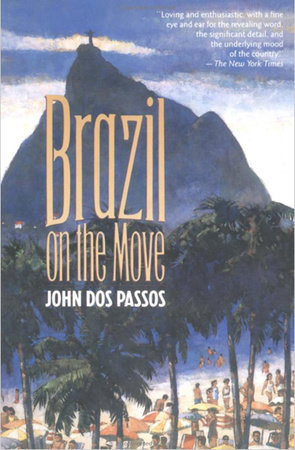
John Dos Passos, the distinguished American novelist and historian has been personally interested in Brazil for the last fifteen years. He first visited the country in 1948, and returned again in 1956 and 1962. This book, which is based on his experiences in Brazil, presents the people and landscapes of a young country on the move.
Here you will find several extraordinary reports on Brasilia, first in the planning stage, second in the wildly frantic period when it was a half-finished group of buildings, and, finally, as it appeared to Mr. Dos Passos in the summer of 1962 when it was at last beginning to function as a city. Here, too, is the story of Brazil’s great road building program designed to unify the country, and of the political battles in this enormous country which totters on the verge of a Communist takeover.
From traveling the length and breadth of the land and from interviewing all kinds of people: politicians like Carlos Lacerda and religious leaders like Bishop Sales, Mr. Dos Passos has been able to transmit some of the flavor of the most important of Latin American nations.
Mr. Dos Passos himself is of Portuguese descent, and he speaks Portuguese as well as Spanish. He begins this readable and fascinating book with a much needed short sketch of the history of Brazil and how the Portuguese tradition differs from the Spanish in South America.
John Dos Passos, the distinguished American novelist and historian has been personally interested in Brazil for the last fifteen years. He first visited the country in 1948, and returned again in 1956 and 1962. This book, which is based on his experiences in Brazil, presents the people and landscapes of a young country on the move.
Here you will find several extraordinary reports on Brasilia, first in the planning stage, second in the wildly frantic period when it was a half-finished group of buildings, and, finally, as it appeared to Mr. Dos Passos in the summer of 1962 when it was at last beginning to function as a city. Here, too, is the story of Brazil’s great road building program designed to unify the country, and of the political battles in this enormous country which totters on the verge of a Communist takeover.
From traveling the length and breadth of the land and from interviewing all kinds of people: politicians like Carlos Lacerda and religious leaders like Bishop Sales, Mr. Dos Passos has been able to transmit some of the flavor of the most important of Latin American nations.
Mr. Dos Passos himself is of Portuguese descent, and he speaks Portuguese as well as Spanish. He begins this readable and fascinating book with a much needed short sketch of the history of Brazil and how the Portuguese tradition differs from the Spanish in South America.
In honor of Arab American Heritage Month in April, we are sharing books by Arab and Arab American authors that share their culture, history, and personal lives.
For National Poetry Month in April, we are sharing poetry collections and books about poetry by authors who have their own stories to tell. These poets delve into history, reimagine the present, examine poetry itself—from traditional poems many know and love to poems and voices that are new and original.