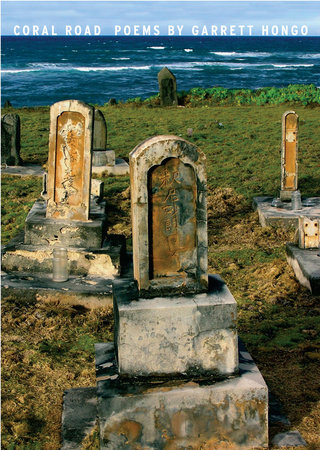
Coral Road

Poems

Garrett Hongo’s long-awaited third collection of poems is a beautiful, elegiac gathering of his Japanese-American ancestors in their Hawaiian landscape and a testament to the power of poetry, as it brings their marginalized yet heroic narratives into the realm of art.

In Coral Road Hongo explores the history of the impermanent homeland his ancestors found on the island of O‘ahu after their immigration from southern Japan, and meditates on the dramatic tales of the islands. In sumptuous narrative poems he takes up strands of family stories and what he calls “a long legacy of silence” about their experience as contract laborers along the North Shore of the island. In the opening sequence, he brings to life the story of his great-grandparents fleeing from one plantation to another, finding their way by moonlight along coral roads and railroad tracks. As his grandmother, a girl of ten with an infant on her back, traverses “twelve-score stands of cane / chittering like small birds, nocturnal harpies in the feral constancies of wind,” Hongo asks, “Where is the Virgil who might lead me through the shallow underworld of this history?” In fact, it is Hongo who guides himself—and us—as, in these devoted acts of recollection, he seeks to dispel the dislocation at the center of his legacy.

The love of art—making beauty in however provisional a culture—has clearly been a guiding principle in Hongo’s poetry. In this content-rich verse, Hongo hearkens to and delivers “the luminous and the anecdotal,” bringing forth a complete aesthetic experience from the shards that make up a life.
Coral Road

I keep wanting to go back, across an ocean, blue-gray and uncaring,
White cowlicks of waves at the continental shore, then the midsea combers
Like white centipedes far below the jetliner that takes me there.
And across time too, to 1919 and my ancestors fleeing Waialua Plantation,
Trekking across the northern coast of O`ahu, that whole family
                                                                                      of first Shigemitsu
Walking in geta and sandals along railroad ties and old roads at night,
Sleeping in the bushes by day, ha`alelehana—runaways
From the labor contract with Baldwin or American Factors.

My grandmother, ten at the time, hauling an infant brother on her back,
Said there was a white coral road in those days, pieces of crushed reef
Poured like gravel over the brown dirt, and, at night, with the moon up,
As it was those nights during their flight, silver shadows on the sea,
It lit their path like a roadway made of dust from the Ocean of Clouds.
Michiyuki is what they called it, the Moon Road from Waialua to Kahuku.

There is little to tell and few enough to tell it to—
A small circle of relatives gathered for reunion
At some beach barbecue or Elks Club veranda in Waikiki
All of us having survived that plantation sullenness
And two generations of labor in the sugar fields,
Having shed most all memory of travail and the shame of upbringing
In the clapboard shotguns of ancestral poverty.

                                                                         Who else would even listen?
Where is the Virgil who might lead me through the shallow underworld of this history?
And what demiurge can I say called to them, loveless ones,
               through twelve-score stands of cane
Chittering like small birds, nocturnal harpies in the feral constancies of wind?

All is diffuse, like knowledge at dusk, a veiled shimmer in the sea
As schools of baitfish boil and revolve in their iridescent globes,
Turning to the olive dark and the drop-off back to depth below,
Where they shiver like silver penitents—a cloud of thin, summer moths—
While rains chill the air and pockmark the surface of the sands at Sans Souci,
And we scatter back inside to a humble Chinese buffet and cool sushi
Spread on Melamine platters on a starched white ribbon of shining cloth.
© Anna Bohlmark
GARRETT HONGO was born in Volcano, Hawaiʻi, and grew up on the North Shore of Oʻahu and in Los Angeles. His most recent books are The Perfect Sound: A Memoir in Stereo, The Mirror Diary: Selected Essays, and Coral Road: Poems. He has been the recipient of several awards, including fellowships from the NEA and the Guggenheim Foundation. Hongo lives in Eugene, Oregon, and teaches at the University of Oregon, where he is Distinguished Professor in the College of Arts and Sciences. View titles by Garrett Hongo
“In Coral Road the landscape of Hawaii and his family’s history in the islands become a stage for him to examine broader questions of diaspora, art, and legacy and realize the vision he had been honing in his life and writing. . . . In these extravagant poems, Hongo transforms his longings for home into a masterpiece of tribute and remembrance.” —Teow Lim Gowh, The American Poetry Review

“This is deep music, and clear, as the poet carries us to those places in the heart that ground and guide us. Coral Road: Poems by Garrett Hongo is the strongest book of poems this reviewer has seen in years.” —Larry Smith, New York Journal of Books

“Garrett Hongo’s long-awaited third collection of poems is a beautiful, elegiac gathering of his Japanese-American ancestors in their Hawaiian landscape and a testament to the power of poetry, as it brings their marginalized yet heroic narratives into the realm of art.” IndieBound

“All throughout Coral Road there is a capaciousness and generosity as well as ascrupulousness of vision that is extremely rare in contemporary American poetry.” —Michael Collier, On the Seawall

“Lingering in every word is Hongo’s profound connection to and palpable homesicknessfor his family roots and childhood in Hawaii.” —Christine Thomas, Honolulu Star-Advertiser

“[Coral Road] is an intergenerational, multilayered, place-based search for home . . . Hongo sings from the graves of his people.” —Derek Sheffield, Orion

“There is rage and beauty alike in Garrett Hongo’s long-awaited and sublimely romanticbook of poems, Coral Road. Hongo dramatically inhabits the Hawaiian pastand honors his ancestors, both familial and literary, in a rich, triumphant, and indeliblework of imagination.” —Edward Hirsch

About

Garrett Hongo’s long-awaited third collection of poems is a beautiful, elegiac gathering of his Japanese-American ancestors in their Hawaiian landscape and a testament to the power of poetry, as it brings their marginalized yet heroic narratives into the realm of art.

In Coral Road Hongo explores the history of the impermanent homeland his ancestors found on the island of O‘ahu after their immigration from southern Japan, and meditates on the dramatic tales of the islands. In sumptuous narrative poems he takes up strands of family stories and what he calls “a long legacy of silence” about their experience as contract laborers along the North Shore of the island. In the opening sequence, he brings to life the story of his great-grandparents fleeing from one plantation to another, finding their way by moonlight along coral roads and railroad tracks. As his grandmother, a girl of ten with an infant on her back, traverses “twelve-score stands of cane / chittering like small birds, nocturnal harpies in the feral constancies of wind,” Hongo asks, “Where is the Virgil who might lead me through the shallow underworld of this history?” In fact, it is Hongo who guides himself—and us—as, in these devoted acts of recollection, he seeks to dispel the dislocation at the center of his legacy.

The love of art—making beauty in however provisional a culture—has clearly been a guiding principle in Hongo’s poetry. In this content-rich verse, Hongo hearkens to and delivers “the luminous and the anecdotal,” bringing forth a complete aesthetic experience from the shards that make up a life.

Excerpt

Coral Road

I keep wanting to go back, across an ocean, blue-gray and uncaring,
White cowlicks of waves at the continental shore, then the midsea combers
Like white centipedes far below the jetliner that takes me there.
And across time too, to 1919 and my ancestors fleeing Waialua Plantation,
Trekking across the northern coast of O`ahu, that whole family
                                                                                      of first Shigemitsu
Walking in geta and sandals along railroad ties and old roads at night,
Sleeping in the bushes by day, ha`alelehana—runaways
From the labor contract with Baldwin or American Factors.

My grandmother, ten at the time, hauling an infant brother on her back,
Said there was a white coral road in those days, pieces of crushed reef
Poured like gravel over the brown dirt, and, at night, with the moon up,
As it was those nights during their flight, silver shadows on the sea,
It lit their path like a roadway made of dust from the Ocean of Clouds.
Michiyuki is what they called it, the Moon Road from Waialua to Kahuku.

There is little to tell and few enough to tell it to—
A small circle of relatives gathered for reunion
At some beach barbecue or Elks Club veranda in Waikiki
All of us having survived that plantation sullenness
And two generations of labor in the sugar fields,
Having shed most all memory of travail and the shame of upbringing
In the clapboard shotguns of ancestral poverty.

                                                                         Who else would even listen?
Where is the Virgil who might lead me through the shallow underworld of this history?
And what demiurge can I say called to them, loveless ones,
               through twelve-score stands of cane
Chittering like small birds, nocturnal harpies in the feral constancies of wind?

All is diffuse, like knowledge at dusk, a veiled shimmer in the sea
As schools of baitfish boil and revolve in their iridescent globes,
Turning to the olive dark and the drop-off back to depth below,
Where they shiver like silver penitents—a cloud of thin, summer moths—
While rains chill the air and pockmark the surface of the sands at Sans Souci,
And we scatter back inside to a humble Chinese buffet and cool sushi
Spread on Melamine platters on a starched white ribbon of shining cloth.

Author

© Anna Bohlmark
GARRETT HONGO was born in Volcano, Hawaiʻi, and grew up on the North Shore of Oʻahu and in Los Angeles. His most recent books are The Perfect Sound: A Memoir in Stereo, The Mirror Diary: Selected Essays, and Coral Road: Poems. He has been the recipient of several awards, including fellowships from the NEA and the Guggenheim Foundation. Hongo lives in Eugene, Oregon, and teaches at the University of Oregon, where he is Distinguished Professor in the College of Arts and Sciences. View titles by Garrett Hongo

Praise

“In Coral Road the landscape of Hawaii and his family’s history in the islands become a stage for him to examine broader questions of diaspora, art, and legacy and realize the vision he had been honing in his life and writing. . . . In these extravagant poems, Hongo transforms his longings for home into a masterpiece of tribute and remembrance.” —Teow Lim Gowh, The American Poetry Review

“This is deep music, and clear, as the poet carries us to those places in the heart that ground and guide us. Coral Road: Poems by Garrett Hongo is the strongest book of poems this reviewer has seen in years.” —Larry Smith, New York Journal of Books

“Garrett Hongo’s long-awaited third collection of poems is a beautiful, elegiac gathering of his Japanese-American ancestors in their Hawaiian landscape and a testament to the power of poetry, as it brings their marginalized yet heroic narratives into the realm of art.” IndieBound

“All throughout Coral Road there is a capaciousness and generosity as well as ascrupulousness of vision that is extremely rare in contemporary American poetry.” —Michael Collier, On the Seawall

“Lingering in every word is Hongo’s profound connection to and palpable homesicknessfor his family roots and childhood in Hawaii.” —Christine Thomas, Honolulu Star-Advertiser

“[Coral Road] is an intergenerational, multilayered, place-based search for home . . . Hongo sings from the graves of his people.” —Derek Sheffield, Orion

“There is rage and beauty alike in Garrett Hongo’s long-awaited and sublimely romanticbook of poems, Coral Road. Hongo dramatically inhabits the Hawaiian pastand honors his ancestors, both familial and literary, in a rich, triumphant, and indeliblework of imagination.” —Edward Hirsch

Books for Women’s History Month

In honor of Women’s History Month in March, we are sharing books by women who have shaped history and have fought for their communities. Our list includes books about women who fought for racial justice, abortion rights, equality in the workplace, and ranges in topics from women in politics and prominent women in history to

Read more